The Beginning of Napoleon Bonaparte's Egyptian Campaign: July 1, 1798
1798 · Alexandria, Egypt
Napoleon Bonaparte's Egyptian campaign began with the capture of Alexandria after the French expeditionary forces landed in the country.
October 16, 2002
The Bibliotheca Alexandrina, a major library and cultural center, is officially inaugurated in Alexandria, Egypt, aiming to recapture the spirit of the ancient Library of Alexandria.
Alexandria, Egypt | Bibliotheca Alexandrina
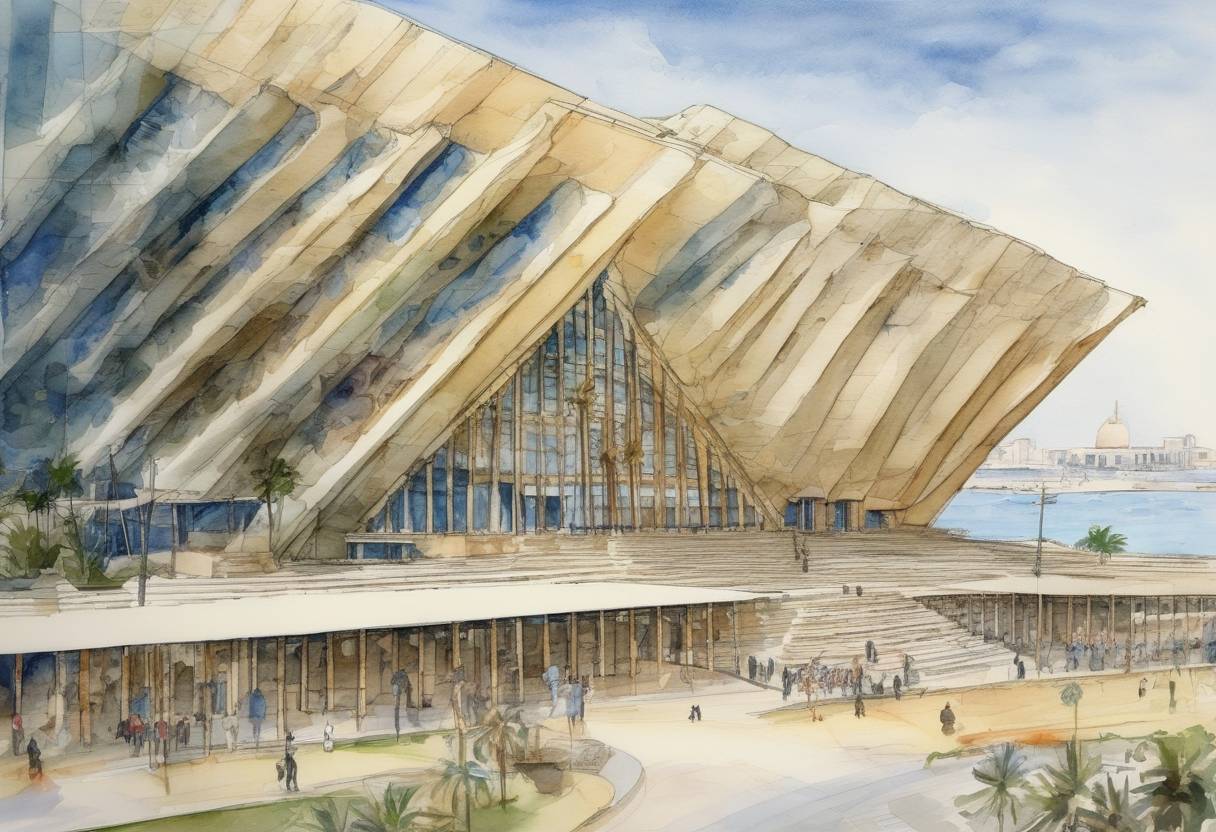
On October 16, 2002, the Bibliotheca Alexandrina was officially inaugurated in Alexandria, Egypt. This event marked a significant cultural and historical moment, as the library aimed to recapture the spirit and intellectual legacy of the ancient Library of Alexandria, one of the most famous libraries of the ancient world.
Ancient Library of Alexandria: Established in the 3rd century BCE, the original Library of Alexandria was a major center of scholarship and learning in the ancient world. It housed an extensive collection of works and attracted scholars from various cultures and disciplines. The library’s destruction, which occurred over several centuries due to various events, symbolized a great loss of knowledge.
Modern Revival: The idea to revive the library emerged in the late 20th century, driven by a desire to create a modern center for learning and cultural exchange. The project was initiated by the Egyptian government with support from UNESCO and various international partners.
Architecture: Designed by the Norwegian architectural firm Snøhetta, the library’s striking design features a large, tilted disc-shaped roof and a granite wall inscribed with characters from 120 different scripts. The architecture symbolizes the sun rising from the Mediterranean Sea, reflecting the library’s role as a beacon of knowledge.
Facilities: The library complex includes a main reading room that can accommodate up to 2,000 readers, specialized libraries for maps, multimedia, and rare books, as well as museums, art galleries, a planetarium, and a conference center.
Collections and Resources: The Bibliotheca Alexandrina houses millions of books, manuscripts, and digital resources. It serves as a hub for research and cultural activities, hosting exhibitions, lectures, and workshops.
Cultural Renaissance: The inauguration of the Bibliotheca Alexandrina represented a cultural renaissance for Egypt and the broader Arab world. It aimed to foster dialogue, understanding, and collaboration among scholars and cultural institutions globally.
Educational and Research Hub: The library has become a vital educational and research center, contributing to the preservation and dissemination of knowledge. It plays a crucial role in promoting literacy, education, and cultural heritage.
International Collaboration: The project exemplifies successful international cooperation, with contributions from numerous countries and organizations, highlighting the shared global commitment to cultural and intellectual development.
The opening of the Bibliotheca Alexandrina was a momentous occasion, symbolizing a bridge between the past and the future, and reaffirming Alexandria’s historical status as a center of learning and culture.
Source: www.bibalex.org