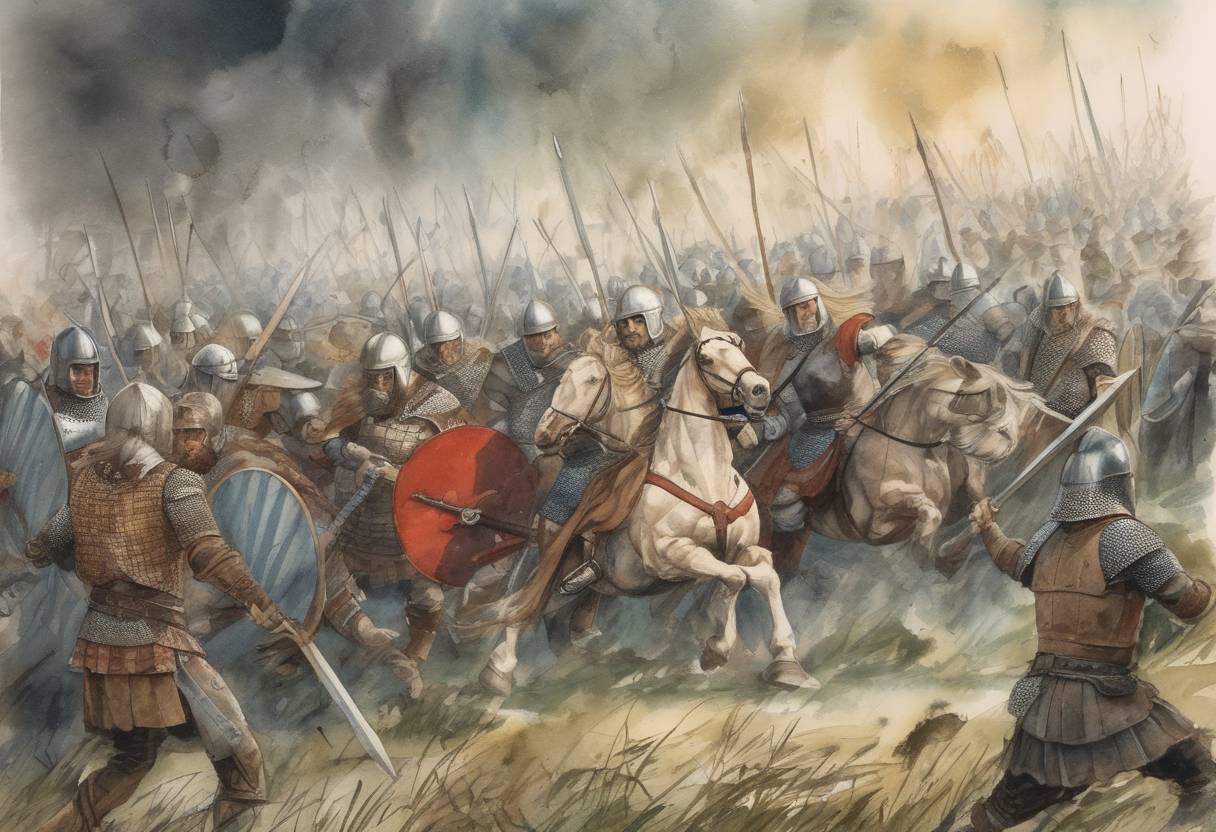
Battle of Marton: Æthelred of Wessex vs. Danish Vikings
Date and Location
- Date: March 22, 871
- Location: The exact location of the Battle of Marton is uncertain, but it is believed to have taken place in the region of modern-day Wiltshire, England.
Historical Context
The Battle of Marton was part of a series of conflicts during the Viking invasions of England in the late 9th century. The Danish Vikings, known for their seafaring prowess and raiding expeditions, had been a persistent threat to the Anglo-Saxon kingdoms. By 871, the Vikings had intensified their campaigns, aiming to conquer and settle in England.
- Æthelred of Wessex: The King of Wessex from 865 to 871, Æthelred was a key figure in the defense against the Viking incursions. He was the elder brother of Alfred the Great, who would later become one of England’s most renowned monarchs.
- Danish Viking Army: The Viking forces were led by various chieftains, part of the larger Great Heathen Army that had invaded England in 865.
The Battle
The Battle of Marton was one of several engagements between the forces of Wessex and the Danish Vikings in 871. The year was marked by intense military activity, with multiple battles occurring as the Vikings sought to expand their control.
- Prelude: Prior to Marton, Æthelred and his forces had already engaged the Vikings in several battles, including the notable Battle of Ashdown in January 871, where the Saxons achieved a significant victory.
- The Engagement: The details of the battle itself are sparse, but it is known that it was fiercely contested. The Anglo-Saxon Chronicle, a primary source for this period, records that the battle was indecisive, with heavy losses on both sides.
Aftermath and Consequences
- Continued Conflict: The Battle of Marton did not result in a decisive victory for either side. The Vikings continued their campaign, and Æthelred’s forces remained engaged in defending Wessex.
- Æthelred’s Death: Æthelred died shortly after the battle, in April 871. His death led to the ascension of his brother, Alfred, to the throne of Wessex.
- Alfred the Great: Alfred’s reign marked a turning point in the struggle against the Vikings. He would eventually secure a more lasting peace and lay the foundations for the unification of England.
Broader Historical Significance
The Battle of Marton, while not decisive, was part of the broader struggle that defined the period. The resilience of Wessex under Æthelred and later Alfred was crucial in preventing the complete domination of England by the Vikings. This period set the stage for the eventual emergence of a unified English kingdom and the cultural and political transformations that followed.
The ongoing conflicts of 871 highlighted the challenges faced by the Anglo-Saxon kingdoms and underscored the need for strong leadership and military innovation, themes that would resonate throughout English history.