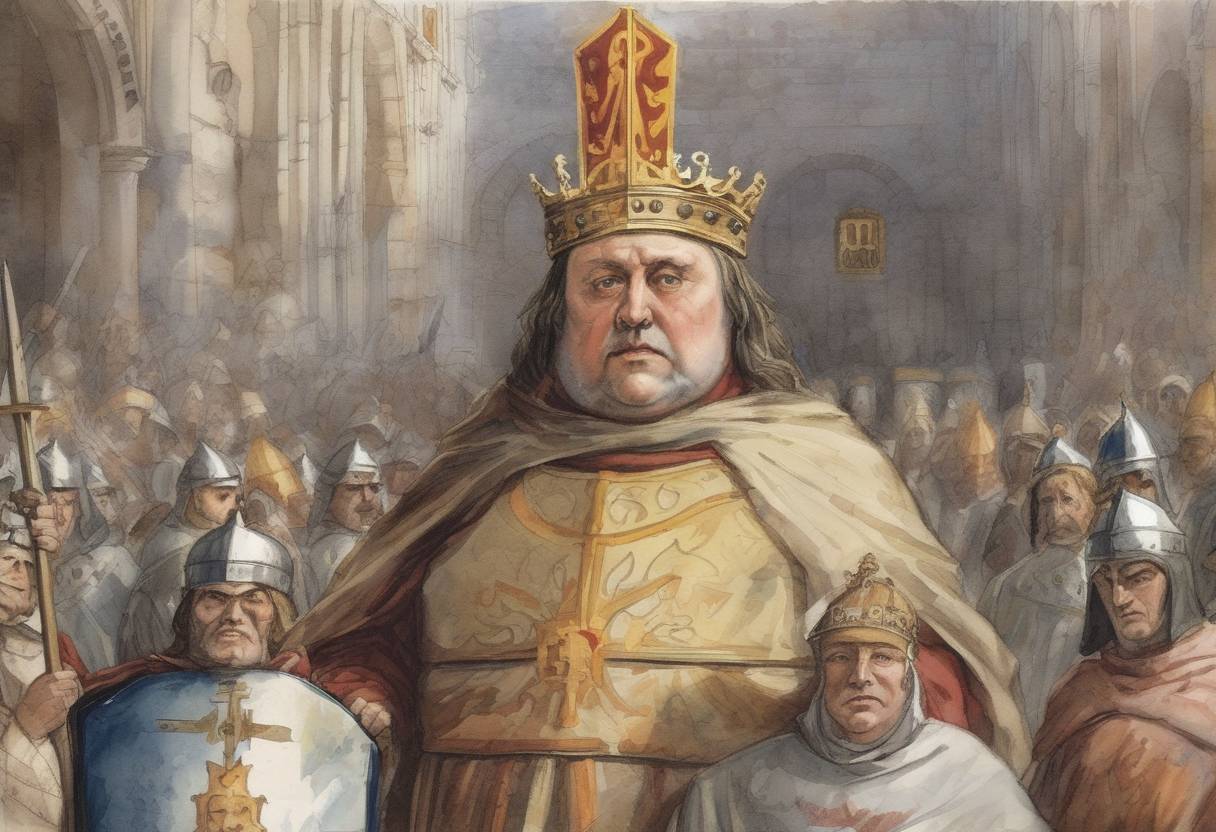
Deposition of Charles the Fat on November 11, 887
On November 11, 887, Charles the Fat, the last Carolingian Emperor to rule over a united Carolingian Empire, was deposed by the nobles of East Francia. This event marked a significant turning point in the history of the Carolingian dynasty and the political landscape of medieval Europe.
Background
Charles the Fat was born in 839, the youngest son of Louis the German, King of East Francia, and a grandson of Charlemagne. He became King of West Francia, East Francia, and Italy, and was crowned Emperor of the Carolingian Empire in 881. His reign was characterized by a series of challenges, including Viking invasions, internal dissent, and the complexities of ruling a vast and diverse empire.
Key Events Leading to the Deposition
Viking Threats: Charles’s reign was plagued by Viking incursions, most notably the Siege of Paris in 885-886. His inability to effectively deal with these threats eroded his support among the nobility.
Internal Strife: Charles struggled to maintain control over the various regions of his empire. His health issues, including possible epilepsy, and perceived indecisiveness further weakened his authority.
Noble Discontent: The nobles of East Francia grew increasingly dissatisfied with Charles’s leadership. His failure to secure the succession and his reliance on unpopular advisors fueled their discontent.
The Deposition
On November 11, 887, a council of East Frankish nobles, led by Arnulf of Carinthia, Charles’s illegitimate nephew, deposed Charles the Fat. This act effectively ended his reign as Emperor and marked the fragmentation of the Carolingian Empire.
Aftermath and Consequences
Division of the Empire: Following Charles’s deposition, the Carolingian Empire was divided into several separate kingdoms. Arnulf of Carinthia became King of East Francia, while other regions saw the rise of local rulers.
End of Carolingian Unity: The deposition signaled the end of any real attempt to maintain a unified Carolingian Empire. The political landscape of Europe shifted towards a more fragmented system of regional powers.
Legacy: Charles the Fat’s deposition underscored the challenges of maintaining a large empire in the face of external threats and internal divisions. It also highlighted the growing power and influence of regional nobility in shaping the political order of medieval Europe.
In summary, the deposition of Charles the Fat on November 11, 887, was a pivotal moment that led to the disintegration of the Carolingian Empire and set the stage for the emergence of new political entities in medieval Europe.