Capture and Execution of Che Guevara
1967 · La Higuera, Bolivia
Guerrilla leader Che Guevara and his men are captured in Bolivia by the Bolivian Army, with assistance from the CIA. Guevara is executed the following day.
October 9, 1967
Che Guevara, the Argentine Marxist revolutionary, was executed in Bolivia after being captured by the Bolivian army.
La Higuera, Bolivia | Bolivian Army
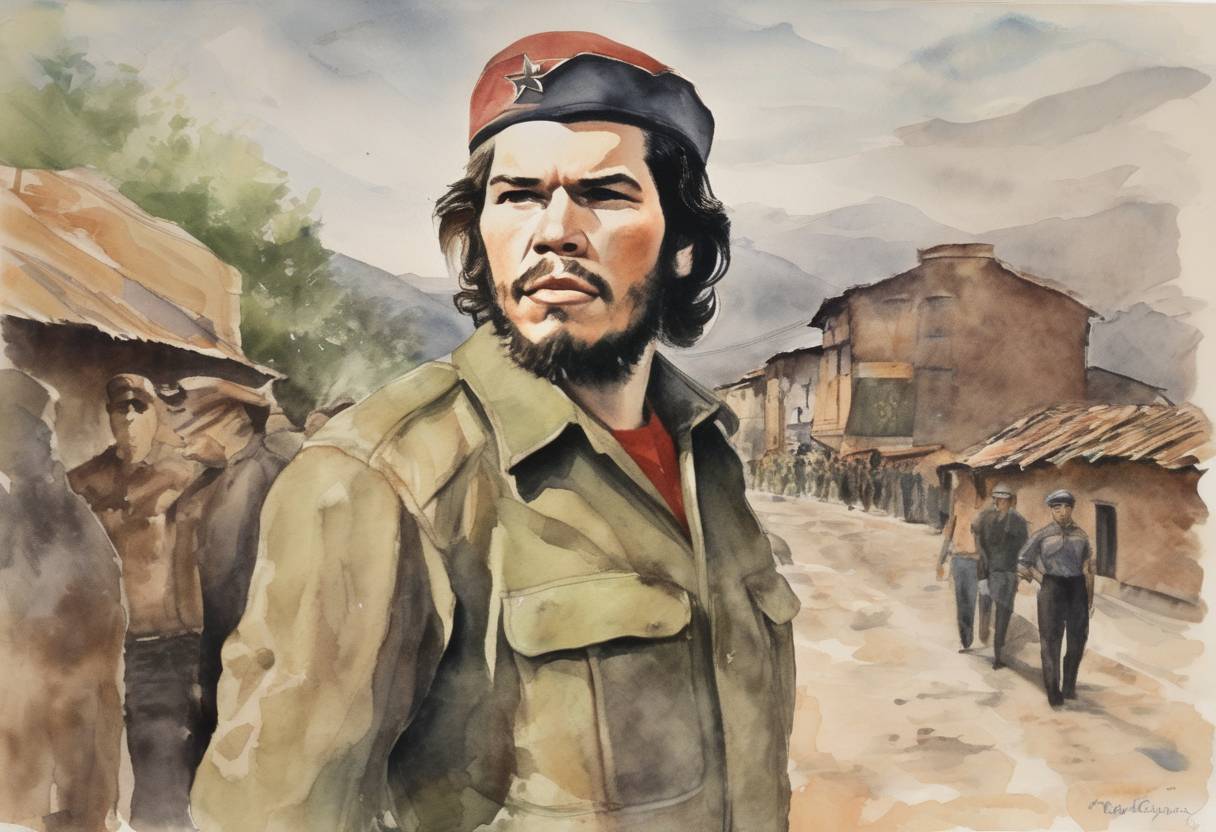
On October 9, 1967, Ernesto “Che” Guevara, the Argentine Marxist revolutionary, was executed by the Bolivian army. This event marked the end of Guevara’s efforts to incite a global revolutionary movement and had significant implications for leftist movements worldwide.
Che Guevara was born on June 14, 1928, in Rosario, Argentina. He became a prominent figure in the Cuban Revolution (1956-1959), which led to the overthrow of the Batista regime and the establishment of a communist government under Fidel Castro. Guevara held several key positions in the Cuban government, including Minister of Industries, and was instrumental in shaping Cuba’s socialist policies.
In the mid-1960s, Guevara left Cuba to promote revolutionary activities in other parts of the world. He believed that armed struggle was necessary to overthrow imperialist powers and establish socialism. His focus turned to Bolivia, where he aimed to ignite a continental revolution in Latin America.
Guevara entered Bolivia in November 1966 with a small group of Cuban and Bolivian fighters. They established a guerrilla base in the Ñancahuazú region. However, the campaign faced numerous challenges, including lack of local support, harsh terrain, and insufficient supplies.
On October 8, 1967, Guevara’s guerrilla force was ambushed by the Bolivian army in the Yuro ravine. Guevara was captured and taken to a schoolhouse in the nearby village of La Higuera. The following day, on October 9, he was executed by Bolivian soldiers on orders from the Bolivian government, which was supported by the United States.
Guevara’s execution was intended to quash revolutionary fervor in Latin America. However, it had the opposite effect, transforming him into a martyr and symbol of resistance against imperialism and oppression. His image and writings, particularly “The Motorcycle Diaries” and “Guerrilla Warfare,” continued to inspire leftist movements globally.
The circumstances of his death, including the involvement of the CIA in tracking Guevara, fueled anti-American sentiment and criticism of U.S. foreign policy in Latin America. Guevara’s legacy endures as a complex and controversial figure, revered by some as a champion of the oppressed and criticized by others for his advocacy of armed struggle.
The execution of Che Guevara on October 9, 1967, marked a pivotal moment in the history of revolutionary movements in Latin America. While it ended his immediate efforts to spread revolution, it cemented his status as an enduring icon of resistance and leftist ideology. His life and death continue to be subjects of study and debate, reflecting the complexities of revolutionary politics and the struggle for social justice.
Source: en.wikipedia.org