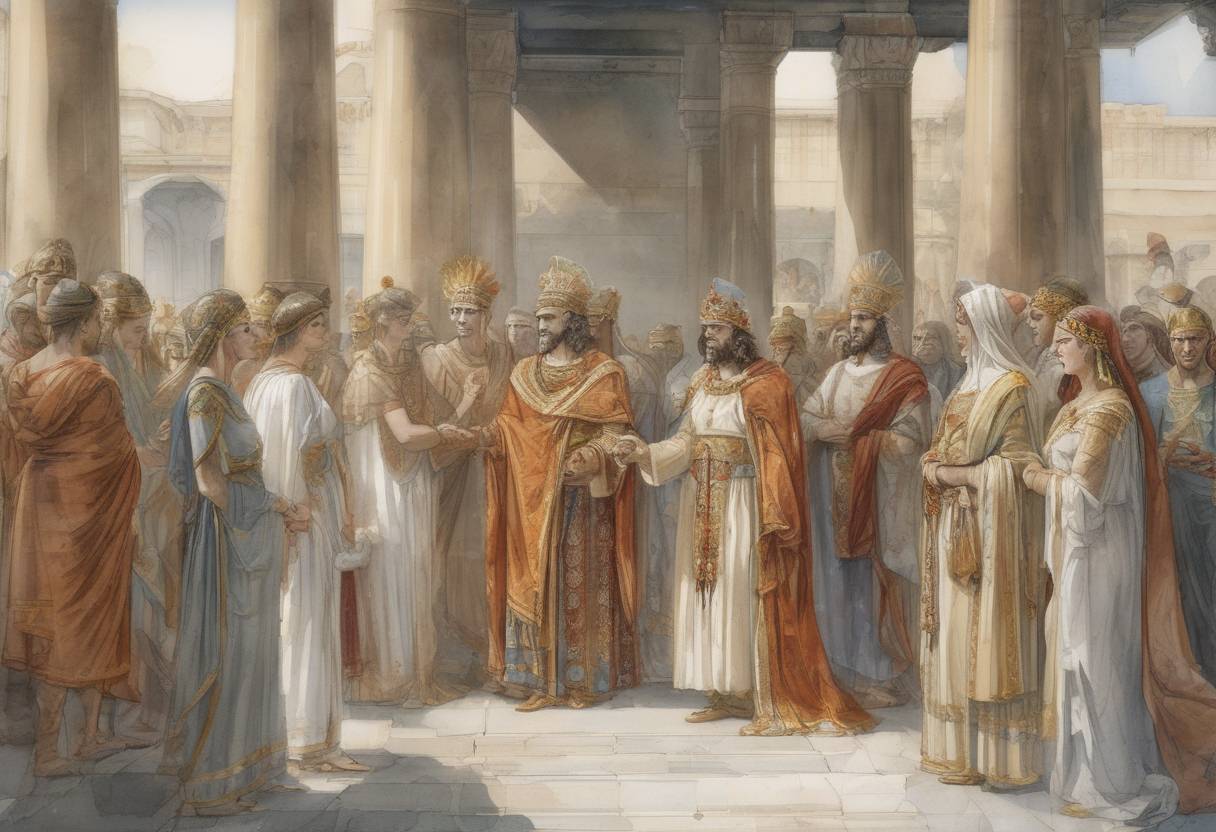
The Marriage of Emperor Theodosius II and Aelia Eudocia
On June 7, 421, a significant event took place in the Eastern Roman Empire: the marriage of Emperor Theodosius II to Aelia Eudocia, a Greek woman from Athens. This union was not only a personal milestone for the young emperor but also a strategic alliance that had lasting implications for the cultural and political landscape of the empire.
Background
Theodosius II
- Reign: Theodosius II became the Eastern Roman Emperor in 408 CE, following the death of his father, Arcadius. He was only seven years old at the time, and his reign was initially overseen by regents, including his sister Pulcheria.
- Governance: Known for his scholarly pursuits, Theodosius II’s reign is marked by the compilation of the Theodosian Code, a significant codification of Roman laws.
Aelia Eudocia
- Origins: Born as Athenais in Athens, Eudocia was the daughter of a pagan philosopher, Leontius. She was well-educated, particularly in rhetoric and philosophy, which was uncommon for women of her time.
- Conversion and Marriage: Before her marriage to Theodosius II, Athenais converted to Christianity and took the name Aelia Eudocia. Her marriage to the emperor was orchestrated by Pulcheria, who saw Eudocia’s intelligence and cultural background as assets to the imperial court.
The Marriage Ceremony
The marriage took place in Constantinople, the capital of the Eastern Roman Empire. The ceremony was a grand affair, reflecting the importance of the union. It was attended by high-ranking officials and dignitaries from across the empire, symbolizing the merging of Roman imperial authority with Greek cultural heritage.
Significance
Cultural Integration
- Hellenistic Influence: Eudocia’s Greek heritage and intellectual background brought a renewed emphasis on Hellenistic culture within the Eastern Roman Empire. Her influence helped to foster a cultural renaissance that celebrated Greek literature, philosophy, and art.
- Religious Harmony: As a convert to Christianity, Eudocia played a role in bridging the gap between the pagan traditions of her upbringing and the Christian faith of the empire, promoting religious tolerance and dialogue.
Political Implications
- Strengthening Ties: The marriage strengthened political ties between the Eastern Roman Empire and the Hellenistic world, particularly with regions that still held strong Greek cultural identities.
- Imperial Stability: Eudocia’s marriage to Theodosius II helped to solidify his rule by aligning him with influential Greek factions and intellectual circles, thereby enhancing his legitimacy as emperor.
Aftermath
Eudocia became an influential empress, known for her patronage of the arts and her involvement in religious and charitable activities. However, her later years were marked by political intrigue and eventual estrangement from the imperial court, leading to her retirement in Jerusalem.
The marriage of Theodosius II and Aelia Eudocia remains a notable example of how matrimonial alliances were used to consolidate power and influence in the Byzantine Empire, reflecting the complex interplay of culture, religion, and politics during this period.