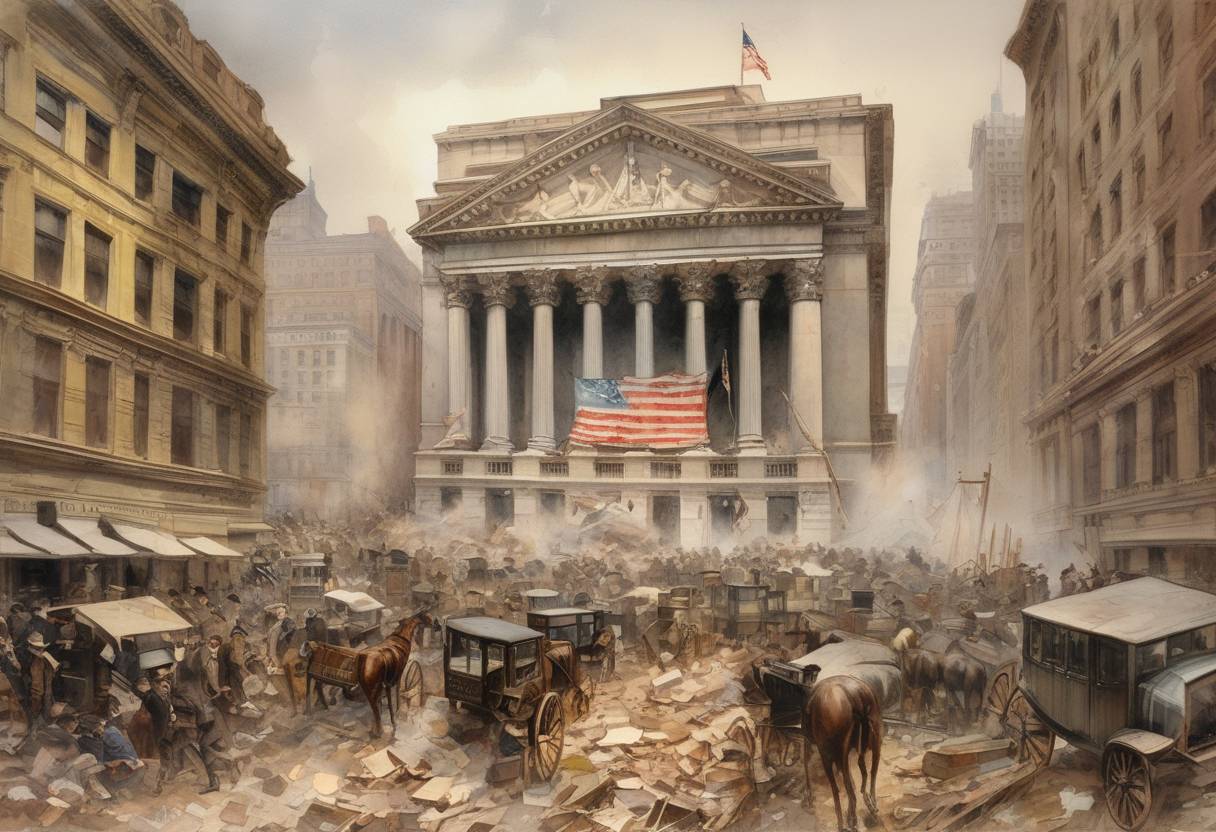
The Panic of 1893 and the New York Stock Exchange Crash
The Panic of 1893 was one of the most severe economic depressions in United States history, and its effects were felt for several years. The crisis was marked by the collapse of the New York Stock Exchange on June 27, 1893, which was a pivotal moment in the unfolding economic turmoil.
Background
The roots of the Panic of 1893 can be traced back to several factors:
Overexpansion and Speculation: The late 19th century was a period of rapid industrial expansion in the United States. Railroads, in particular, were overbuilt, and many companies were heavily financed through speculative investments.
Agricultural Distress: Farmers faced falling prices for their goods, which led to widespread financial distress in rural areas. This was exacerbated by a series of poor harvests.
Monetary Policy: The debate over the gold standard versus bimetallism (using both gold and silver as currency) created uncertainty. The Sherman Silver Purchase Act of 1890 increased the amount of silver the government was required to purchase, leading to concerns about the depletion of gold reserves.
Bank Failures: A series of bank failures in the early 1890s eroded public confidence in the financial system.
The Crash of June 27, 1893
On June 27, 1893, the New York Stock Exchange experienced a significant crash. This was not an isolated incident but rather the culmination of mounting financial pressures:
Railroad Bankruptcies: Several major railroads, including the Philadelphia and Reading Railroad, declared bankruptcy earlier in the year, which shook investor confidence.
Stock Market Decline: The stock market had been declining for months, and the crash on June 27 was a dramatic acceleration of this trend.
Withdrawal of Foreign Investments: European investors, concerned about the stability of the U.S. economy, began withdrawing their investments, further exacerbating the crisis.
Consequences
The Panic of 1893 had far-reaching consequences:
Economic Depression: The United States entered a deep economic depression that lasted until 1897. Unemployment soared, with estimates suggesting that up to 18% of the workforce was unemployed at the peak of the depression.
Bank Failures: Approximately 500 banks closed during the panic, leading to a loss of savings for many Americans.
Political Impact: The economic distress contributed to significant political changes, including the rise of the Populist movement, which advocated for monetary reform and other measures to support farmers and workers.
Repeal of the Sherman Silver Purchase Act: In response to the crisis, President Grover Cleveland called a special session of Congress, which resulted in the repeal of the Sherman Silver Purchase Act in 1893, aiming to stabilize the currency by halting the depletion of gold reserves.
Historical Significance
The Panic of 1893 highlighted the vulnerabilities of the rapidly industrializing American economy and underscored the need for financial reforms. It also set the stage for future debates over monetary policy and economic regulation, which would continue to shape U.S. economic policy into the 20th century.