The Spanish Armada Sets Sail - May 28, 1588
1588 · Lisbon, Portugal
The Spanish Armada, a fleet of 130 ships, sets sail from Lisbon, Portugal, under the command of the Duke of Medina Sidonia, with the intention of invading England.
May 30, 1588
The last ship of the Spanish Armada set sail from Lisbon, marking the beginning of the Spanish attempt to invade England. The Armada was ultimately defeated by the English fleet and adverse weather conditions.
Lisbon, Portugal | Spanish Navy
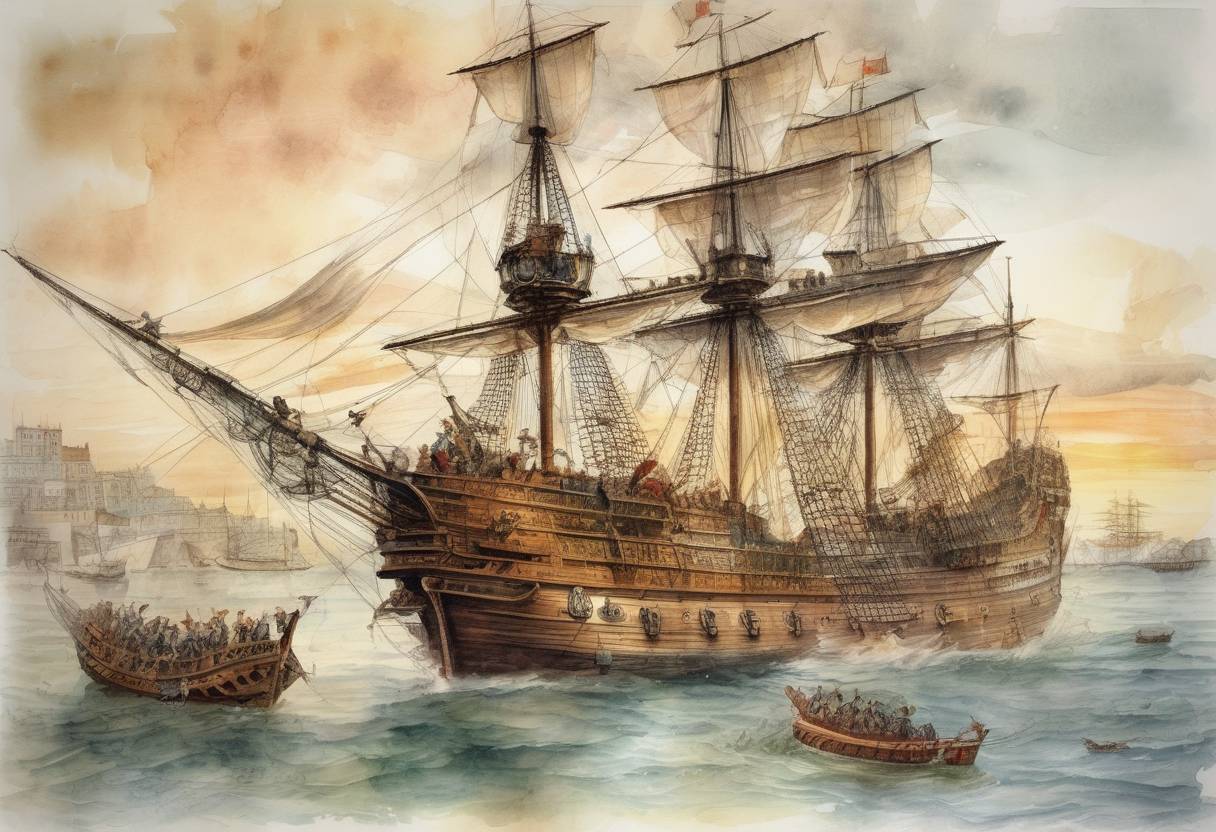
On May 30, 1588, the last ship of the Spanish Armada set sail from Lisbon, marking the commencement of Spain’s ambitious attempt to invade England. This event was a pivotal moment in European history, as it set the stage for a significant naval confrontation between Spain and England.
The Spanish Armada was assembled by King Philip II of Spain, who sought to overthrow Queen Elizabeth I of England. Several factors motivated this decision:
Religious Conflict: The Protestant Reformation had created deep religious divisions in Europe. Philip II, a staunch Catholic, aimed to restore Catholicism in England, which had embraced Protestantism under Elizabeth I.
Political Tensions: England’s support for the Dutch Revolt against Spanish rule in the Netherlands further strained relations. Additionally, English privateers, such as Sir Francis Drake, had been attacking Spanish treasure ships returning from the Americas.
Dynastic Ambitions: Philip II also had a personal claim to the English throne through his marriage to Mary I of England, Elizabeth’s half-sister.
The Spanish Armada was a formidable fleet, consisting of approximately 130 ships, including galleons, galleasses, and support vessels. It carried around 30,000 men, including sailors, soldiers, and support staff. The fleet was commanded by the Duke of Medina Sidonia, an experienced nobleman but not a seasoned naval commander.
The Armada’s journey was fraught with challenges from the outset:
Adverse Weather: The fleet encountered severe storms in the Bay of Biscay, which delayed its progress and damaged several ships.
English Tactics: The English fleet, led by Lord Charles Howard and Sir Francis Drake, employed innovative tactics. They used faster, more maneuverable ships to harass the Spanish fleet, employing long-range cannon fire to their advantage.
The Battle of Gravelines: On July 29, 1588, the two fleets clashed in the English Channel near Gravelines. The English used fireships to break the Spanish formation, causing chaos and confusion.
The defeat of the Spanish Armada had significant consequences:
Spanish Losses: The Armada suffered heavy losses, with many ships wrecked or captured. Of the original 130 ships, only about 60 returned to Spain.
English Victory: The victory bolstered England’s national pride and secured its position as a rising naval power. It also marked the decline of Spanish dominance on the seas.
Long-term Impact: The failure of the Armada did not end the Anglo-Spanish War, which continued until 1604. However, it marked a turning point in the balance of power in Europe, paving the way for England’s future colonial expansion.
The defeat of the Spanish Armada is often seen as a defining moment in the Elizabethan era, symbolizing the resilience and ingenuity of the English forces against a seemingly invincible opponent.
Source: en.wikipedia.org