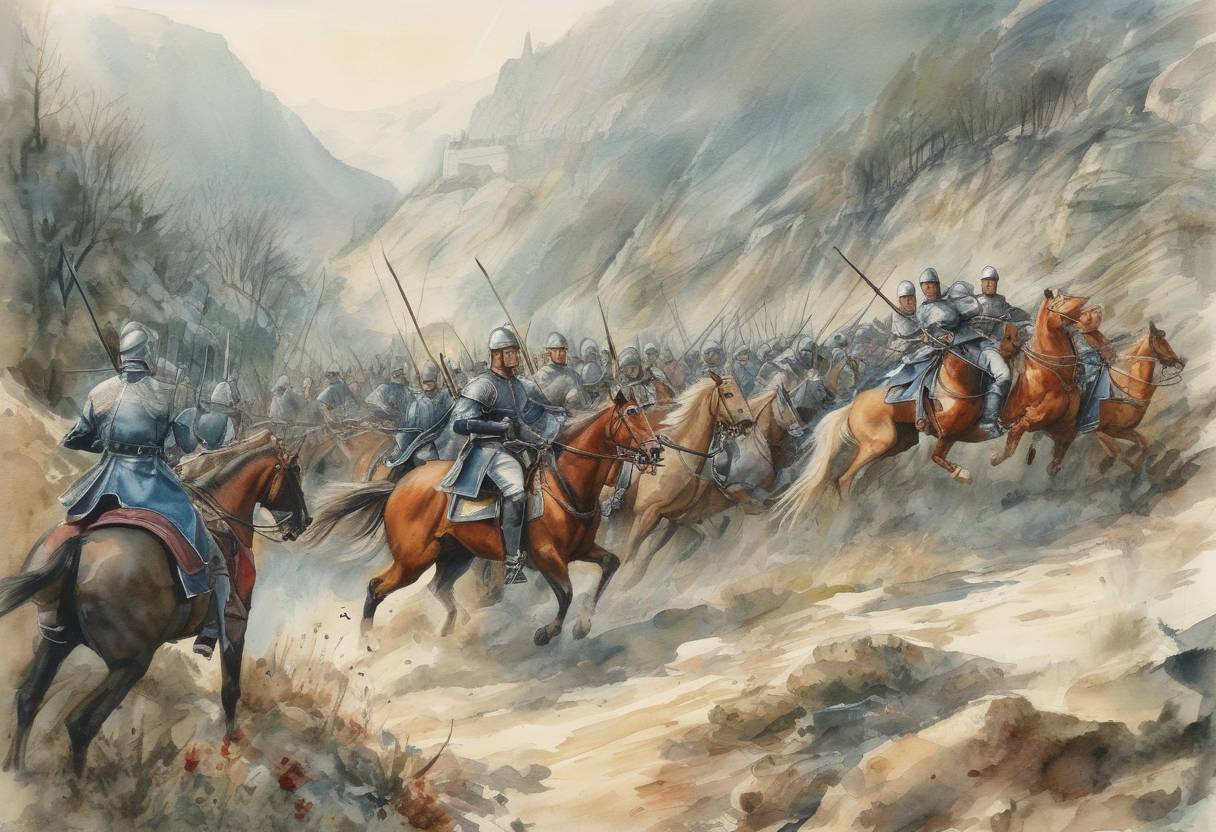
The Battle of Roncevaux Pass - August 15, 778
The Battle of Roncevaux Pass, which took place on August 15, 778, is a significant historical event that has been famously romanticized in the epic poem The Song of Roland. This battle involved an ambush by Basque forces on the rear guard of Charlemagne’s army as they were retreating through the Pyrenees.
Historical Context
- Charlemagne’s Campaign in Spain: Charlemagne, King of the Franks and later Emperor of the Carolingian Empire, had embarked on a military campaign into the Iberian Peninsula. His aim was to expand his influence and support local Muslim rulers against the Umayyad Emirate of Córdoba.
- The Retreat: After a failed siege of Zaragoza and facing logistical challenges, Charlemagne decided to retreat back to his kingdom. His army had to pass through the treacherous terrain of the Pyrenees.
The Battle
- Location: The ambush occurred at Roncevaux Pass, a narrow and mountainous passage in the Pyrenees, which was a strategic point for controlling movement between France and Spain.
- The Ambush: As Charlemagne’s forces moved through the pass, the Basque forces, familiar with the terrain, launched a surprise attack on the rear guard of the Frankish army.
- Outcome: The Basques successfully overwhelmed the rear guard, causing significant casualties. Among the dead was Roland, a prominent Frankish commander and the prefect of the Breton Marches.
Aftermath and Significance
- Impact on Charlemagne: Although the ambush was a tactical defeat, it did not significantly alter Charlemagne’s power or his subsequent campaigns. However, it highlighted the challenges of controlling distant territories and the vulnerabilities of military logistics.
- Cultural Legacy: The event was immortalized in The Song of Roland, an epic poem that transformed the historical ambush into a legendary tale of heroism and chivalry. In the poem, Roland is depicted as a noble hero who valiantly fights against overwhelming odds.
- Historical Interpretation: While the poem emphasizes themes of loyalty and valor, historical accounts suggest the ambush was more a result of local resistance to Frankish expansion rather than a grand battle between civilizations.
Broader Historical Significance
- Medieval Warfare: The battle exemplifies the challenges of medieval warfare, particularly in terms of logistics, terrain, and the difficulties of maintaining control over extended territories.
- Cultural Memory: The romanticized version of the battle in The Song of Roland played a significant role in shaping medieval European ideals of knighthood and chivalry, influencing literature and culture for centuries.
The Battle of Roncevaux Pass remains a poignant example of how historical events can be transformed into cultural legends, reflecting the values and aspirations of the societies that retell them.