The End of the U.S. Military Mission in Iraq: December 31, 2011
2011 · Baghdad, Iraq
The United States formally ended its military mission in Iraq, marking the withdrawal of the last U.S. troops from the country after nearly nine years of conflict.
December 15, 2011
The United States formally declared an end to the Iraq War, with a ceremony in Baghdad marking the withdrawal of the last U.S. troops.
Baghdad, Iraq | United States Department of Defense
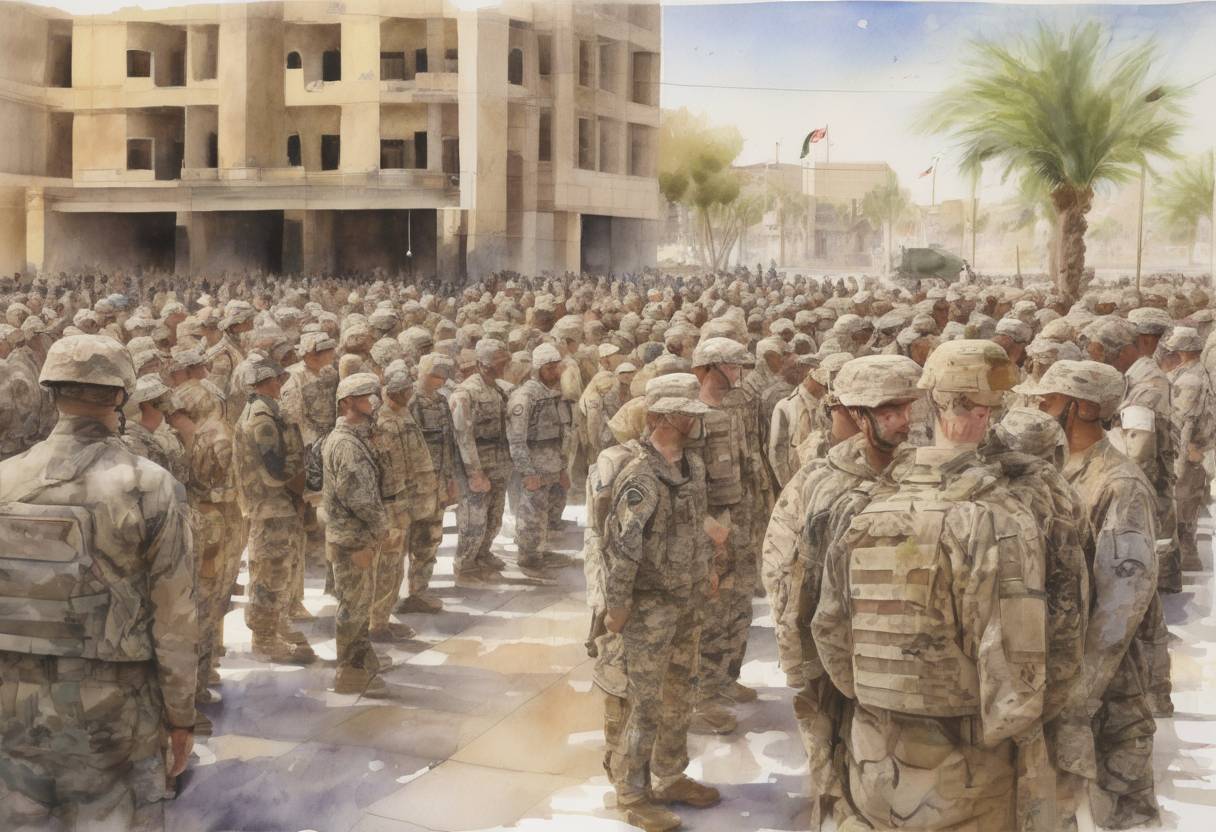
On December 15, 2011, the United States formally declared an end to the Iraq War, marking a significant moment in both American and Iraqi history. This event was commemorated with a ceremony held in Baghdad, symbolizing the withdrawal of the last U.S. troops from Iraq.
The Iraq War began on March 20, 2003, when a coalition led by the United States invaded Iraq. The primary justification for the invasion was the belief that Iraq possessed weapons of mass destruction (WMDs) and posed a threat to international security. Despite the initial swift military success and the toppling of Saddam Hussein’s regime, the war evolved into a prolonged conflict characterized by insurgency, sectarian violence, and political instability.
2008 U.S.-Iraq Status of Forces Agreement (SOFA): This agreement, signed in December 2008, outlined the framework for the withdrawal of U.S. troops from Iraq. It stipulated that all U.S. forces would leave Iraqi territory by December 31, 2011.
Reduction of Troops: Over the years, the U.S. gradually reduced its military presence in Iraq. By August 2010, combat operations were officially declared over, transitioning to “Operation New Dawn,” which focused on advising and assisting Iraqi security forces.
Political Developments: The withdrawal was influenced by both domestic and international political pressures. In the U.S., there was growing public and political demand to end the war, while in Iraq, there was a strong desire for sovereignty and self-governance.
The ceremony on December 15, 2011, was held at the Baghdad International Airport. It was attended by U.S. Defense Secretary Leon Panetta, who acknowledged the sacrifices made by both American and Iraqi forces. The event included the casing of the colors, a traditional military ceremony signifying the end of a mission.
Impact on Iraq: The withdrawal left Iraq to navigate its own path toward stability and governance. The country faced significant challenges, including sectarian tensions, political fragmentation, and the threat of extremist groups, which later culminated in the rise of ISIS.
Impact on the U.S.: The end of the Iraq War marked a shift in U.S. foreign policy and military strategy, with a focus on reducing military engagements abroad. It also sparked debates about the war’s justification, cost, and impact on American society and veterans.
Legacy: The Iraq War remains a contentious topic, with discussions about its long-term effects on regional stability, U.S. foreign policy, and the global perception of American military interventions.
The formal end of the Iraq War on December 15, 2011, was a pivotal moment that closed a significant chapter in early 21st-century history, leaving a complex legacy that continues to influence global politics and security dynamics.
Source: www.nytimes.com