Baghdad Market Bombing - February 3, 2007
2007 · Baghdad, Iraq
A Baghdad market bombing killed at least 135 people and injured more than 300, one of the deadliest attacks since the 2003 invasion of Iraq.
December 13, 2006
The Baiji oil refinery in Iraq was attacked by insurgents, causing significant damage and highlighting the ongoing instability in the region during the Iraq War.
Baiji, Iraq | Iraqi insurgents
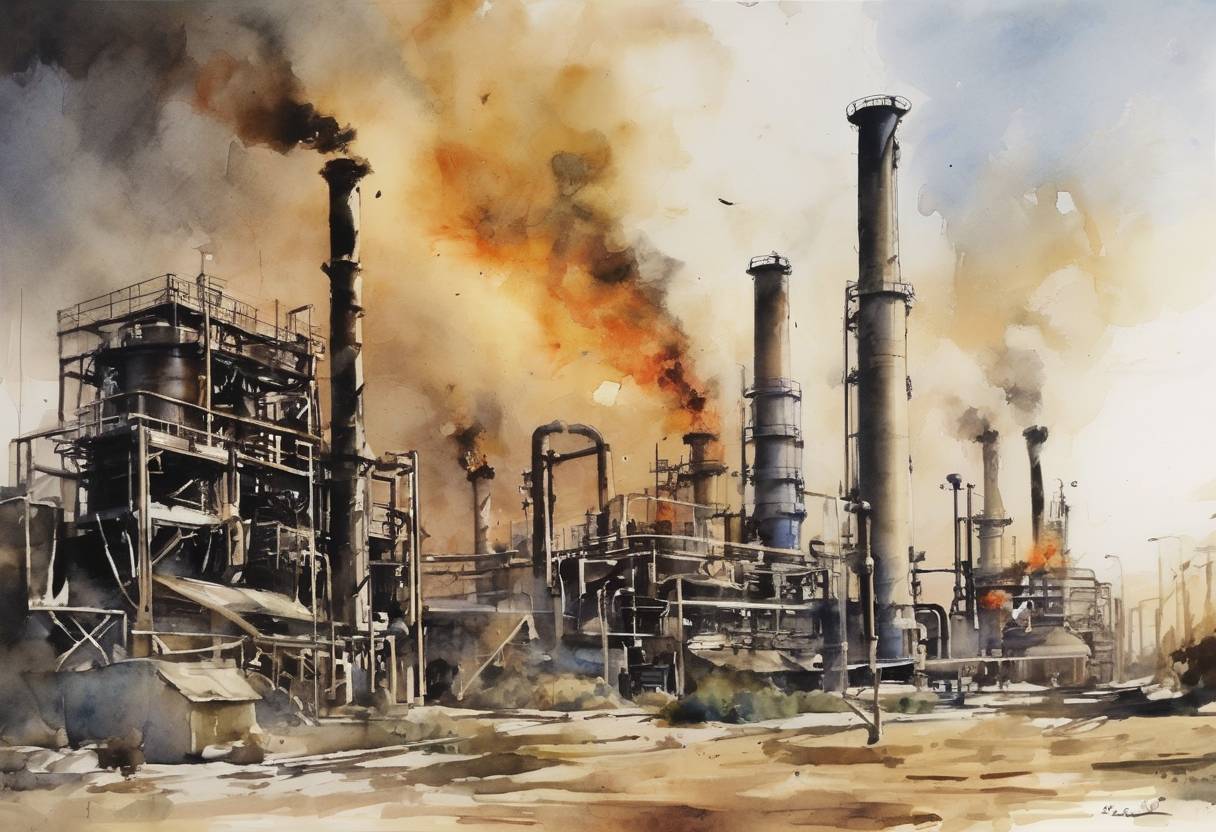
The Baiji oil refinery, located in northern Iraq, is one of the largest oil refineries in the country. During the Iraq War, which began in 2003 following the U.S.-led invasion to topple Saddam Hussein, Iraq’s infrastructure, including its oil facilities, became frequent targets for insurgent attacks. The refinery’s strategic importance stems from its role in processing a significant portion of Iraq’s oil, a critical resource for the country’s economy and reconstruction efforts.
On December 13, 2006, insurgents launched a coordinated attack on the Baiji oil refinery. The assault involved armed militants who managed to infiltrate the facility, causing substantial damage to its infrastructure. The attack disrupted operations and highlighted the vulnerability of Iraq’s oil sector amidst the ongoing conflict.
The attack on the Baiji refinery was part of a broader pattern of violence and instability in Iraq during this period. Insurgent groups, including remnants of the Ba’athist regime, al-Qaeda in Iraq, and other factions, frequently targeted infrastructure to undermine the Iraqi government and coalition forces.
The disruption of oil production had significant economic implications. Iraq’s economy heavily relies on oil revenues, and attacks on refineries and pipelines hindered the country’s ability to generate income necessary for rebuilding efforts. The instability also deterred foreign investment and complicated efforts to restore normalcy in the region.
In response to such attacks, the Iraqi government, with support from coalition forces, intensified security measures around critical infrastructure. This included deploying additional security personnel, enhancing surveillance, and implementing stricter access controls to protect against future threats.
The attack on the Baiji oil refinery underscored the challenges faced by Iraq in stabilizing the country post-invasion. It highlighted the persistent threat posed by insurgent groups and the difficulties in securing vital economic assets. The incident also illustrated the broader geopolitical complexities of the Iraq War, where control over oil resources played a crucial role in the conflict’s dynamics.
Overall, the attack on December 13, 2006, serves as a reminder of the intricate interplay between security, economic stability, and political reconstruction in post-war Iraq.
Source: en.wikipedia.org