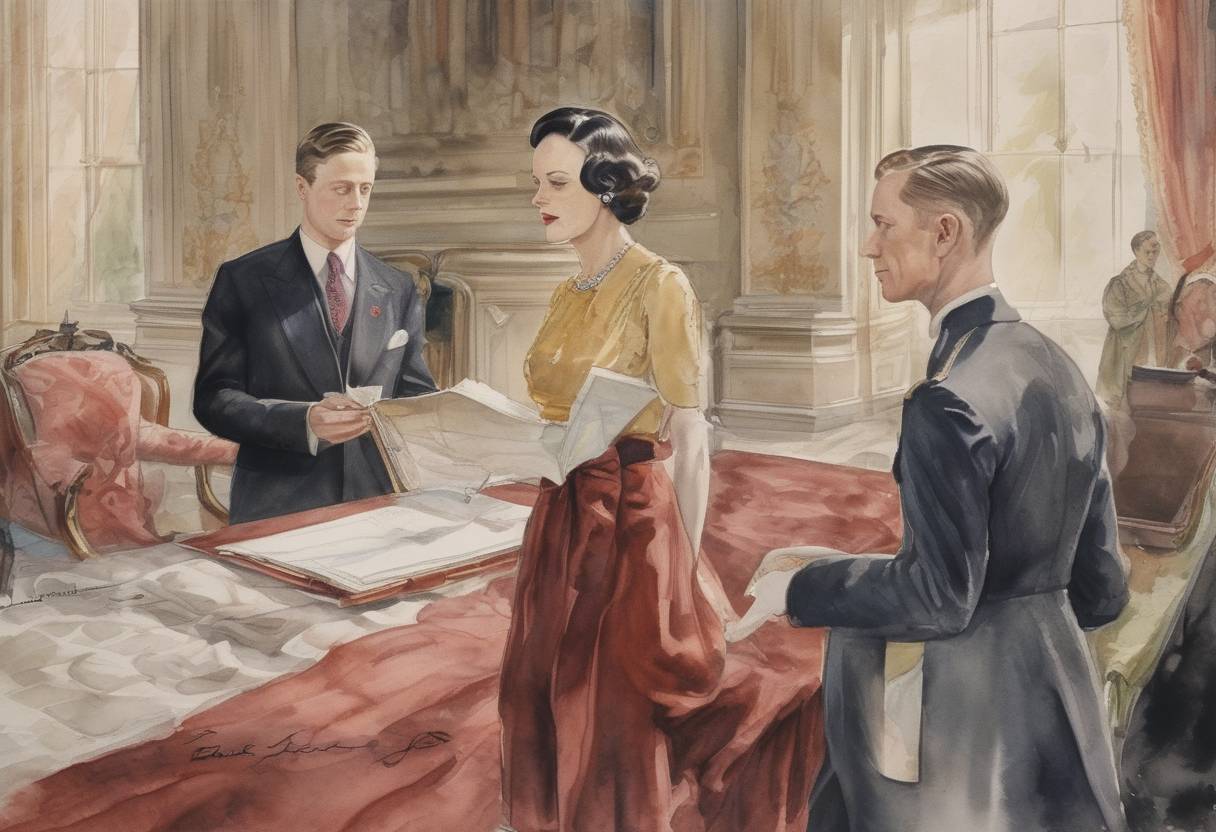
Edward VIII’s Abdication: December 10, 1936
On December 10, 1936, King Edward VIII of the United Kingdom signed the Instrument of Abdication, a pivotal moment in British history. This act marked the first voluntary abdication of a reigning British monarch, driven by Edward’s determination to marry Wallis Simpson, an American divorcee.
Context and Background
Edward VIII ascended to the throne on January 20, 1936, following the death of his father, King George V. His reign was marked by controversy due to his relationship with Wallis Simpson, who was twice-divorced and whose marital status posed a constitutional crisis. The Church of England, of which the monarch is the Supreme Governor, did not permit remarriage after divorce if a former spouse was still living, making Wallis an unsuitable queen consort in the eyes of the establishment.
Key Events Leading to the Abdication
Public and Political Pressure: Edward’s intention to marry Wallis Simpson faced significant opposition from the British government, the Church of England, and the public. Prime Minister Stanley Baldwin made it clear that the government would resign if Edward insisted on marrying Wallis while remaining king.
The Abdication Crisis: The crisis reached its peak in December 1936. Edward was faced with a choice: abandon his plans to marry Wallis or abdicate the throne. He chose the latter, prioritizing his personal happiness over his royal duties.
The Abdication
On December 10, 1936, Edward VIII signed the Instrument of Abdication at Fort Belvedere, a royal residence in Surrey. The document was also signed by his three brothers: Albert, Duke of York (who would become King George VI), Henry, Duke of Gloucester, and George, Duke of Kent. The abdication took effect the following day, December 11, 1936.
Aftermath and Consequences
Duke of Windsor: After his abdication, Edward was given the title of Duke of Windsor. He married Wallis Simpson on June 3, 1937, in a private ceremony in France.
Impact on the Monarchy: Edward’s abdication had profound implications for the British monarchy. His brother, Albert, ascended the throne as King George VI, leading the country through World War II and restoring stability to the monarchy.
Legacy: The abdication crisis highlighted the tensions between personal desires and public duty, setting a precedent for future royal conduct. It also underscored the evolving role of the monarchy in a modern constitutional framework.
Edward VIII’s abdication remains a significant event in British history, illustrating the complex interplay between personal choice and constitutional responsibility.