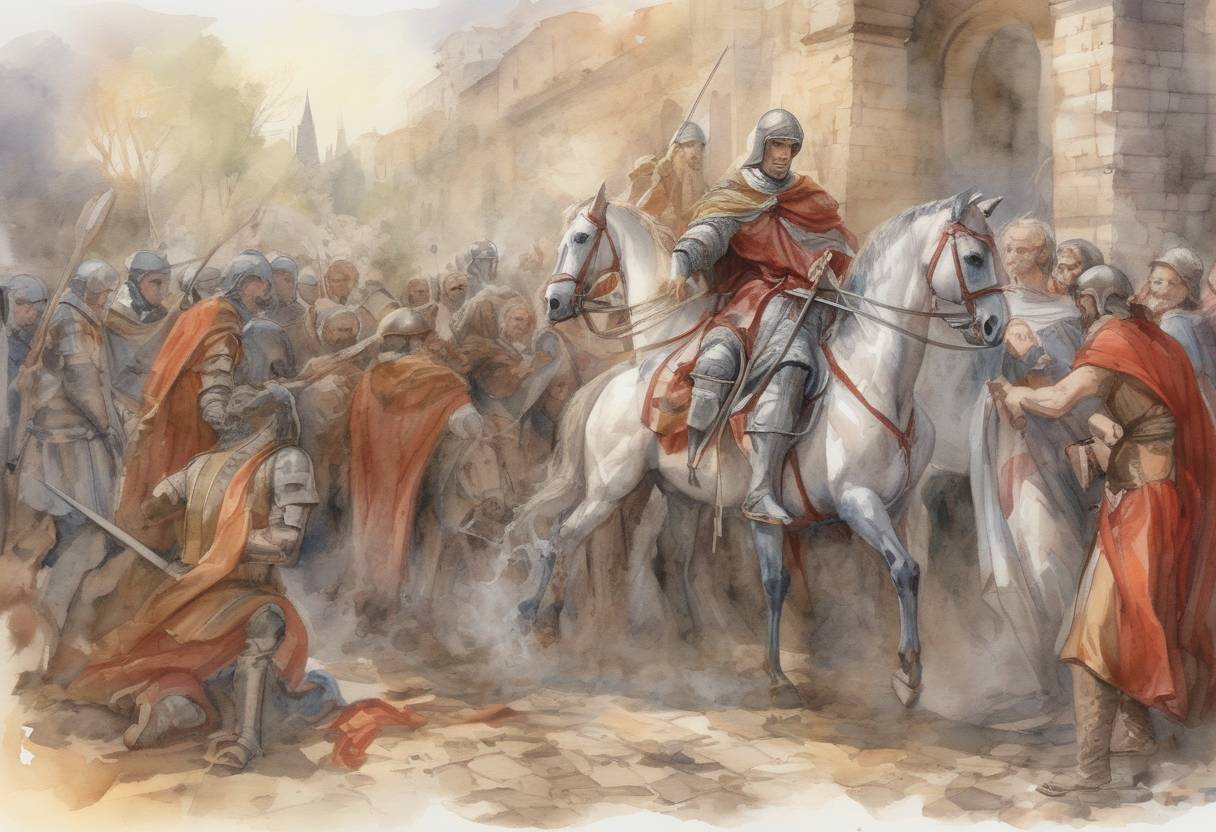
Death of Martin of Tours - November 11, 397
Martin of Tours, a prominent Christian bishop and revered saint, passed away on November 11, 397. His life and work significantly contributed to the spread of Christianity in Gaul, which is present-day France. Martin is remembered not only for his devout faith and missionary zeal but also for his acts of charity and humility.
Early Life and Conversion
Martin was born around 316 AD in what is now Hungary. His father was a Roman officer, and Martin followed in his footsteps by joining the Roman army. Despite his military upbringing, Martin was drawn to Christianity from a young age. His conversion is famously linked to an event where he encountered a beggar in Amiens. Martin, moved by compassion, cut his military cloak in half to share it with the beggar. That night, he dreamt of Jesus wearing the half-cloak, which solidified his faith and commitment to Christianity.
Monastic Life and Bishopric
After leaving the military, Martin became a disciple of Hilary of Poitiers, a leading theologian of the time. He established a monastic community in Ligugé, which is considered the first monastery in Gaul. His monastic life was marked by simplicity and dedication to prayer and service.
In 371, Martin was appointed as the Bishop of Tours. Despite his new role, he continued to live a humble life, often retreating to a small cell outside the city. As bishop, Martin was instrumental in evangelizing the rural areas of Gaul, which were still largely pagan. He founded several churches and monasteries, which became centers of Christian teaching and community life.
Legacy and Sainthood
Martin’s death on November 11, 397, marked the end of a life dedicated to faith and service. His influence extended beyond his lifetime, as he became one of the most venerated saints in Christianity. His feast day, celebrated on the anniversary of his death, is observed by many Christian denominations.
Martin of Tours is often depicted in art as a soldier sharing his cloak with a beggar, symbolizing his charity and humility. His life inspired countless others to pursue monasticism and missionary work, and his legacy is evident in the numerous churches and institutions named in his honor.
Historical Significance
Martin’s efforts in spreading Christianity in Gaul were pivotal during a time when the Roman Empire was transitioning from paganism to Christianity. His approach to evangelism, which emphasized compassion and personal example, set a precedent for future missionary work. Martin’s life and work exemplify the transformative power of faith and the enduring impact of a life devoted to service and humility.