Pope John Paul II's First Papal Visit to Latin America
1979 · Santo Domingo, Dominican Republic
Pope John Paul II begins his first papal visit to Latin America, starting in the Dominican Republic.
September 10, 1990
The Basilica of Our Lady of Peace in Yamoussoukro, Côte d'Ivoire, was consecrated by Pope John Paul II. It is one of the largest churches in the world.
Yamoussoukro, Côte d'Ivoire | Catholic Church
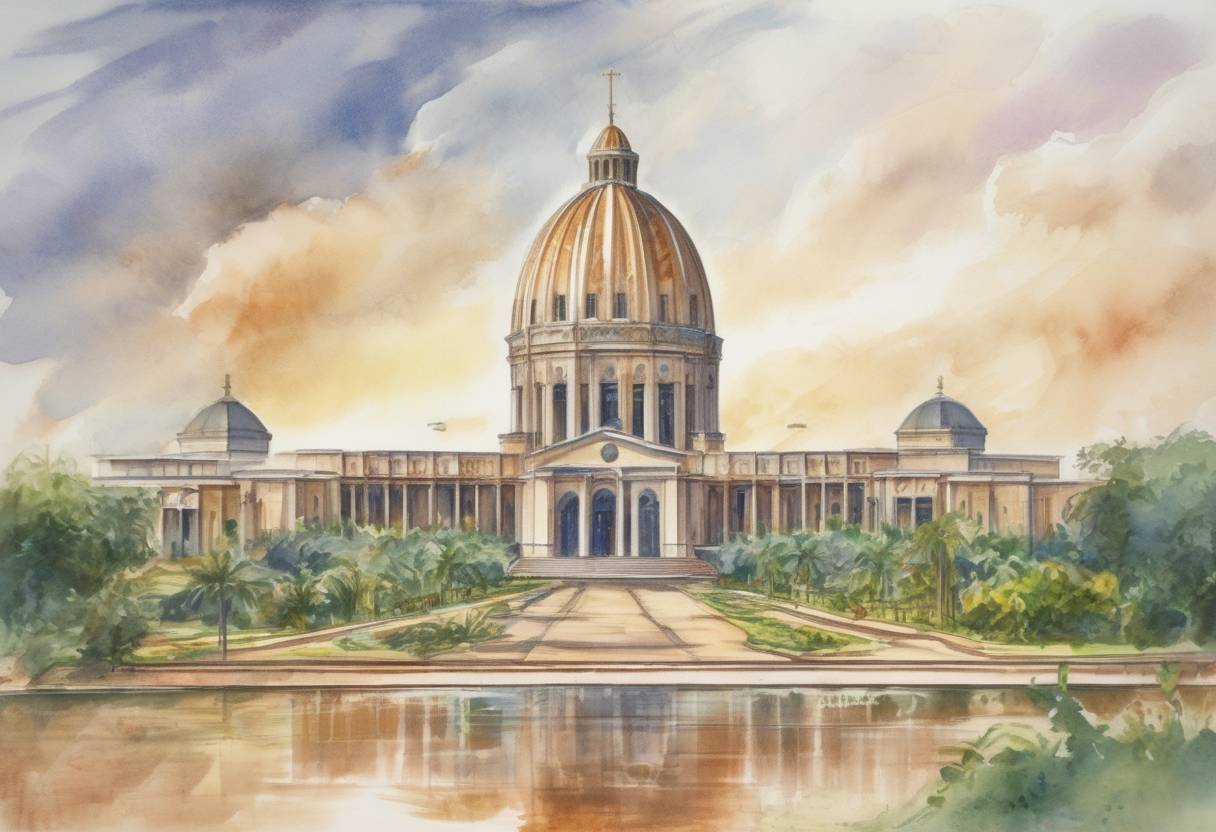
On September 10, 1990, the Basilica of Our Lady of Peace in Yamoussoukro, Côte d’Ivoire, was consecrated by Pope John Paul II. This event marked the inauguration of one of the largest churches in the world, a significant architectural and cultural landmark in the West African nation.
The Basilica of Our Lady of Peace, known as “Basilique Notre-Dame de la Paix,” was commissioned by Félix Houphouët-Boigny, the first President of Côte d’Ivoire. The construction began in 1985 and was completed in 1989. The basilica was designed by Lebanese architect Pierre Fakhoury and was inspired by the Basilica of Saint Peter in Vatican City, though it surpasses it in height.
The consecration by Pope John Paul II was a momentous occasion, symbolizing the Catholic Church’s presence and influence in Africa. The event drew attention to Côte d’Ivoire, highlighting its religious and cultural aspirations. The basilica was dedicated to the Virgin Mary, reflecting the country’s deep Catholic roots.
The construction of the basilica was not without controversy. Critics pointed to the enormous cost, estimated at $300 million, in a country where many citizens faced economic hardships. The project was seen by some as an extravagant use of resources that could have been directed towards social and economic development.
Since its consecration, the Basilica of Our Lady of Peace has become a major pilgrimage site and a symbol of peace and unity. It stands as a testament to the vision of President Houphouët-Boigny and remains a significant architectural achievement. The basilica continues to attract visitors from around the world, contributing to the cultural and religious landscape of Côte d’Ivoire.
In summary, the consecration of the Basilica of Our Lady of Peace on September 10, 1990, was a landmark event that underscored the intersection of faith, architecture, and national identity in Côte d’Ivoire.
Source: en.wikipedia.org