The British North America Act Receives Royal Assent - March 29, 1867
1867 · London, United Kingdom
The British North America Act receives Royal Assent in London, creating the Dominion of Canada effective July 1, 1867.
October 20, 1818
The Convention of 1818 was signed between the United States and the United Kingdom, establishing the 49th parallel as the border between the U.S. and British North America.
London, United Kingdom | United States and United Kingdom governments
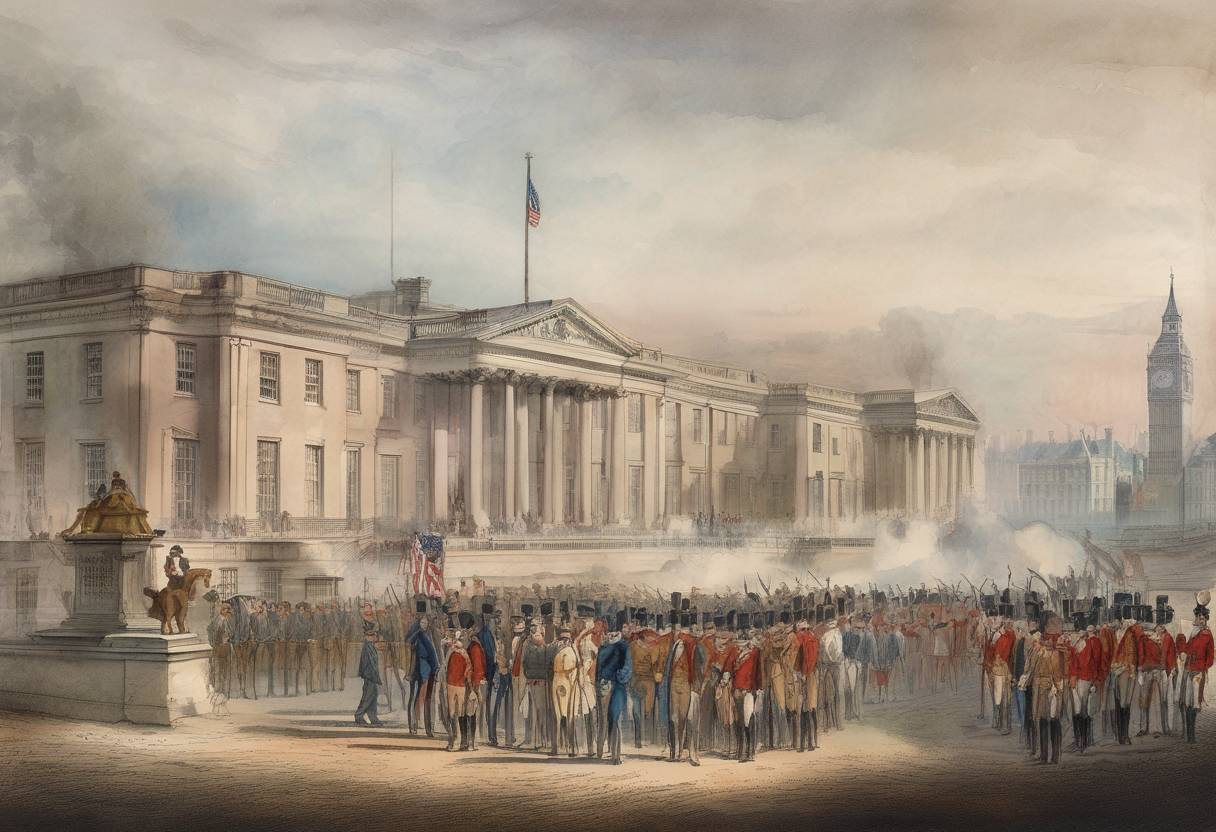
On October 20, 1818, the Convention of 1818 was signed between the United States and the United Kingdom, marking a significant moment in the diplomatic history of both nations. This agreement played a crucial role in defining the boundary between U.S. territories and British North America, which is present-day Canada.
The early 19th century was a period of territorial expansion and boundary disputes for the United States. Following the War of 1812, tensions remained between the U.S. and Britain over various territorial claims. The need for a clear and mutually agreed-upon boundary was pressing to avoid further conflicts and to facilitate peaceful relations.
49th Parallel: The most significant outcome of the Convention was the establishment of the 49th parallel as the boundary between the United States and British North America from the Lake of the Woods to the Rocky Mountains. This line remains the longest undefended border in the world today.
Joint Occupation of Oregon Country: The agreement allowed for the joint occupation of the Oregon Country (the Pacific Northwest) by both American and British settlers for ten years. This provision delayed the resolution of territorial claims in the region, which would later be addressed by the Oregon Treaty of 1846.
Fishing Rights: The Convention also addressed fishing rights, granting U.S. fishermen access to certain British North American coastal waters.
Restoration of Slaves: Another provision included the restoration of slaves who had escaped to British territories during the War of 1812, although this aspect was less emphasized in the broader scope of the agreement.
The Convention of 1818 was a pivotal moment in U.S.-British relations, as it peacefully resolved several contentious issues and set a precedent for future negotiations. By establishing a clear boundary, it helped to stabilize the region and allowed for the westward expansion of the United States. The agreement also demonstrated the ability of the two nations to resolve disputes diplomatically, laying the groundwork for a more cooperative relationship in the future.
While the Convention of 1818 resolved many immediate issues, it left some matters, such as the final status of the Oregon Country, to be settled later. The joint occupation of Oregon would eventually lead to further negotiations and the Oregon Treaty of 1846, which extended the 49th parallel boundary to the Pacific Ocean.
Overall, the Convention of 1818 was a landmark in the peaceful resolution of international disputes and played a crucial role in shaping the geopolitical landscape of North America.
Source: history.state.gov