1167 · Myriokephalon, Byzantine Empire (modern-day Turkey)
The Battle of Myriokephalon was fought between the Byzantine Empire, led by Emperor Manuel I Komnenos, and the Seljuk Turks of the Sultanate of Rum, under Kılıç Arslan II.
September 17, 1176
The Battle of Myriokephalon took place, where the Byzantine Empire, led by Emperor Manuel I Komnenos, was defeated by the Seljuk Turks under Qilij Arslan II.
Myriokephalon, Byzantine Empire (modern-day Turkey) | Byzantine Empire
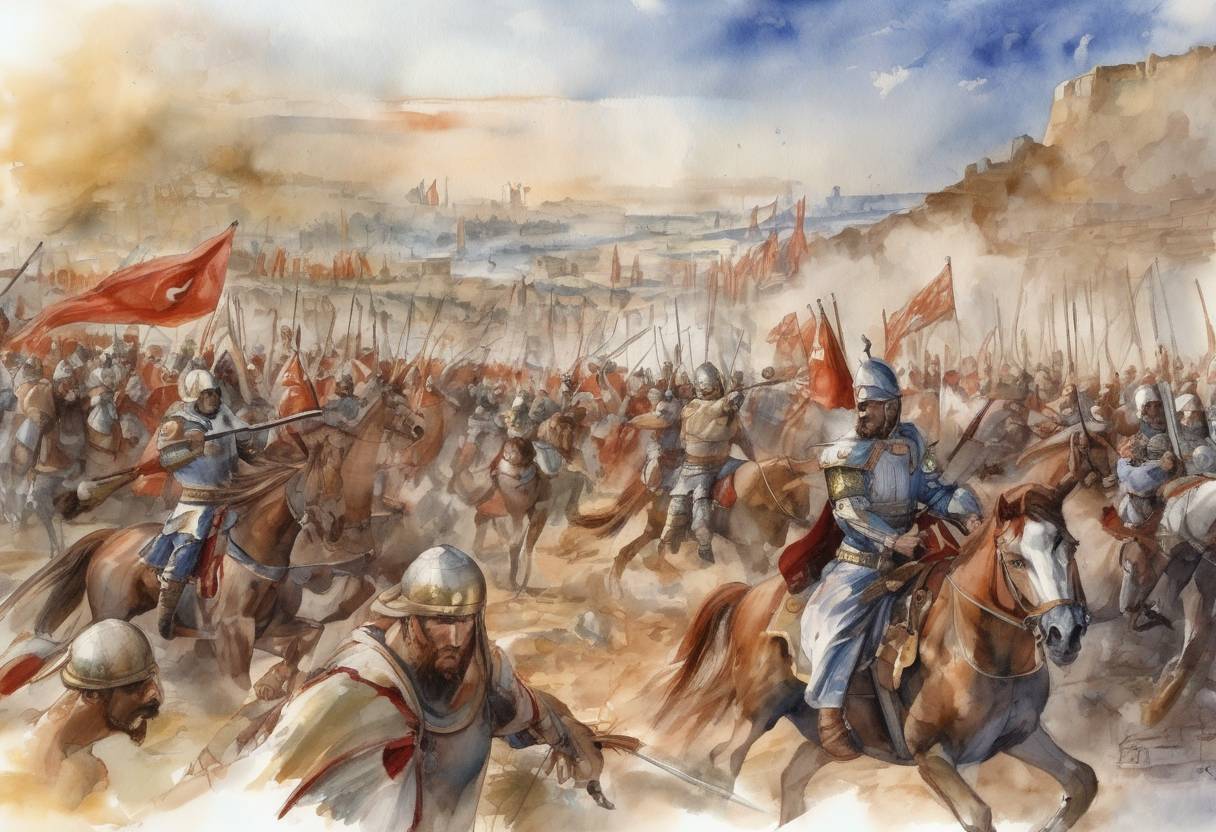
The Battle of Myriokephalon, fought on September 17, 1176, was a significant military engagement between the Byzantine Empire and the Seljuk Turks. This battle marked a pivotal moment in the history of the Byzantine Empire, as it underscored the challenges the empire faced in maintaining its territorial integrity against the rising power of the Seljuk Turks.
Byzantine Empire: Under the leadership of Emperor Manuel I Komnenos, the Byzantine Empire sought to reclaim territories in Anatolia that had been lost to the Seljuk Turks. Manuel I was a vigorous and ambitious ruler who aimed to restore the empire’s former glory and expand its influence.
Seljuk Turks: Led by Sultan Qilij Arslan II, the Seljuk Turks had established a powerful presence in Anatolia. They were adept at utilizing the region’s rugged terrain to their advantage, employing hit-and-run tactics and ambushes against their enemies.
Objective: Emperor Manuel I Komnenos aimed to capture the Seljuk capital of Iconium (modern-day Konya) as part of his broader strategy to reassert Byzantine control over Anatolia.
Preparation: Manuel assembled a large army, comprising both Byzantine forces and allied contingents, and set out on a campaign into the heart of Seljuk territory.
Location: The battle took place near the pass of Myriokephalon, a narrow and mountainous region that was ideal for ambushes.
Tactics: The Seljuk Turks, familiar with the terrain, set up an ambush for the advancing Byzantine forces. As the Byzantine army moved through the narrow pass, the Seljuks launched a surprise attack.
Outcome: The Byzantine forces were caught off guard and suffered a significant defeat. The narrow terrain prevented them from effectively deploying their troops, leading to chaos and heavy casualties.
Byzantine Losses: The defeat at Myriokephalon was a severe blow to Byzantine military prestige and marked the end of Manuel I’s ambitions to reconquer Anatolia.
Strategic Consequences: The battle demonstrated the effectiveness of Seljuk military tactics and solidified their control over central Anatolia. It also highlighted the limitations of the Byzantine military and the challenges of campaigning in difficult terrain.
Long-term Impact: The defeat at Myriokephalon is often compared to the earlier Battle of Manzikert in 1071, which had similarly disastrous consequences for the Byzantine Empire. Both battles signaled a shift in power dynamics in the region and foreshadowed the gradual decline of Byzantine influence in Anatolia.
The Battle of Myriokephalon is a critical event in Byzantine history, illustrating the empire’s struggles against external threats and the limitations of its military capabilities. It serves as a reminder of the complex interplay between geography, military strategy, and political ambition in medieval warfare.
Source: en.wikipedia.org