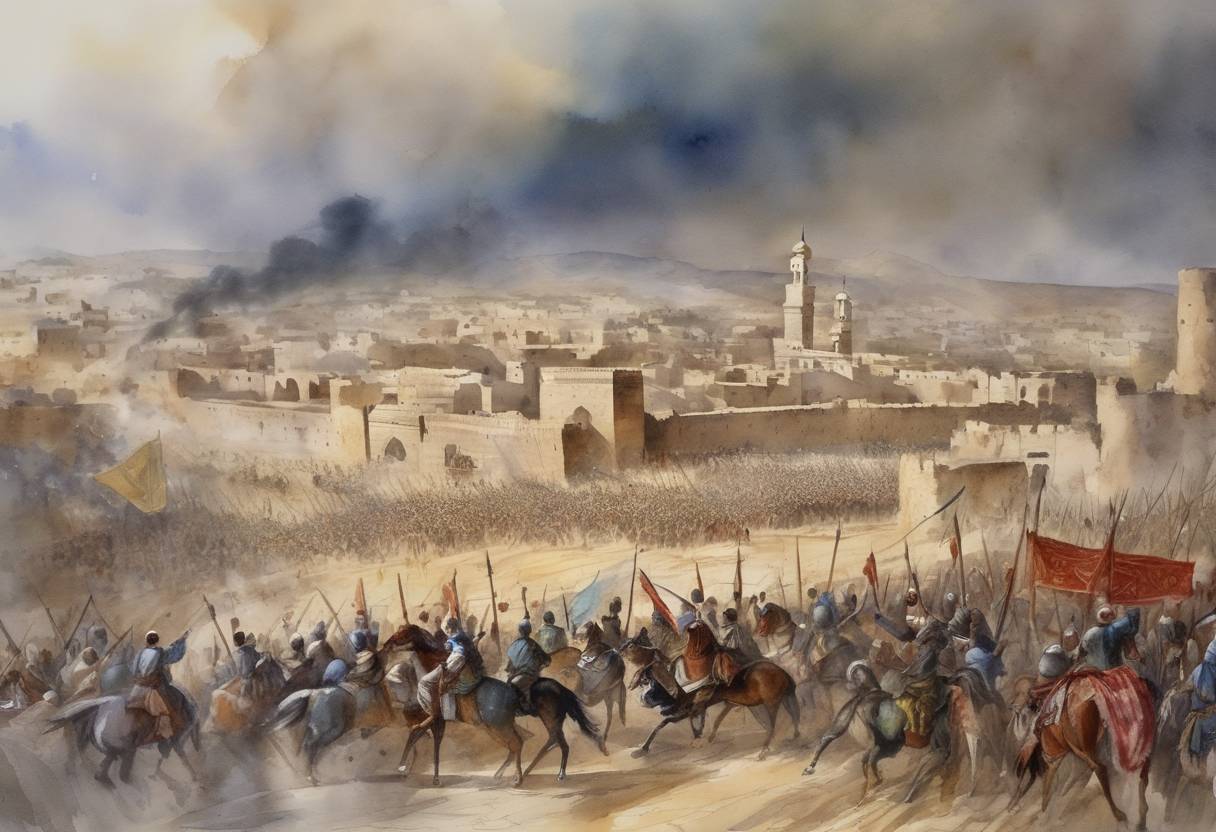
The Battle of Yarmouk: A Decisive Victory
Date and Context
On August 19, 636, the Battle of Yarmouk concluded, marking a significant military triumph for the Rashidun Caliphate under the command of Khalid ibn al-Walid over the Byzantine Empire. This battle unfolded near the Yarmouk River, in what is now the southern border region of modern-day Syria and Jordan.
- Khalid ibn al-Walid: The military leader of the Rashidun forces, known for his tactical brilliance and previously a companion of the Prophet Muhammad.
- Emperor Heraclius: Ruler of the Byzantine Empire, overseeing defense efforts against the advancing Rashidun troops.
- Vahan: The Armenian general leading the Byzantine forces during the conflict.
Pre-Battle Developments
Leading into the battle, the region was marked by significant tension between the rapidly expanding Islamic Caliphate and the established Byzantine Empire. The Rashidun Caliphate, following the death of the Prophet Muhammad in 632, embarked on campaigns to spread their influence across the Byzantine-controlled Middle East. The Byzantines aimed to reassert control over their territories and resist this expansion.
Course of the Battle
The battle stretched over six days, from August 15 to August 19, 636. The fighting was characterized by intense and strategic military maneuvers:
- Initial Skirmishes: The first few days involved positioning and probing attacks from both sides, with minor skirmishes setting the stage for larger engagements.
- Tactical Maneuvers: Khalid implemented several tactical strategies, including the use of swift cavalry to outmaneuver the Byzantine forces, drawing them into unfavorable positions.
- Decisive Movements: On the final day, Khalid ordered a full-scale assault. He exploited weaknesses in the Byzantine lines, causing their defenses to collapse.
Outcome and Aftermath
The victory at Yarmouk was pivotal for several reasons:
- Conquest of Syria: This victory effectively ended Byzantine control over Syria, leading to its incorporation into the Islamic Caliphate.
- Shift in Regional Power: It marked the beginning of significant territorial losses for the Byzantine Empire in the Middle East and underscored the rise of Islamic power in the region.
- Legacy of Khalid ibn al-Walid: The battle cemented Khalid’s reputation as a master tactician and formidable military commander.
This defeat for the Byzantines was not only a substantial loss in terms of territory but also impacted the morale and strategic standing of the Byzantine Empire in the years to follow, reshaping the geopolitical landscape of the region permanently.