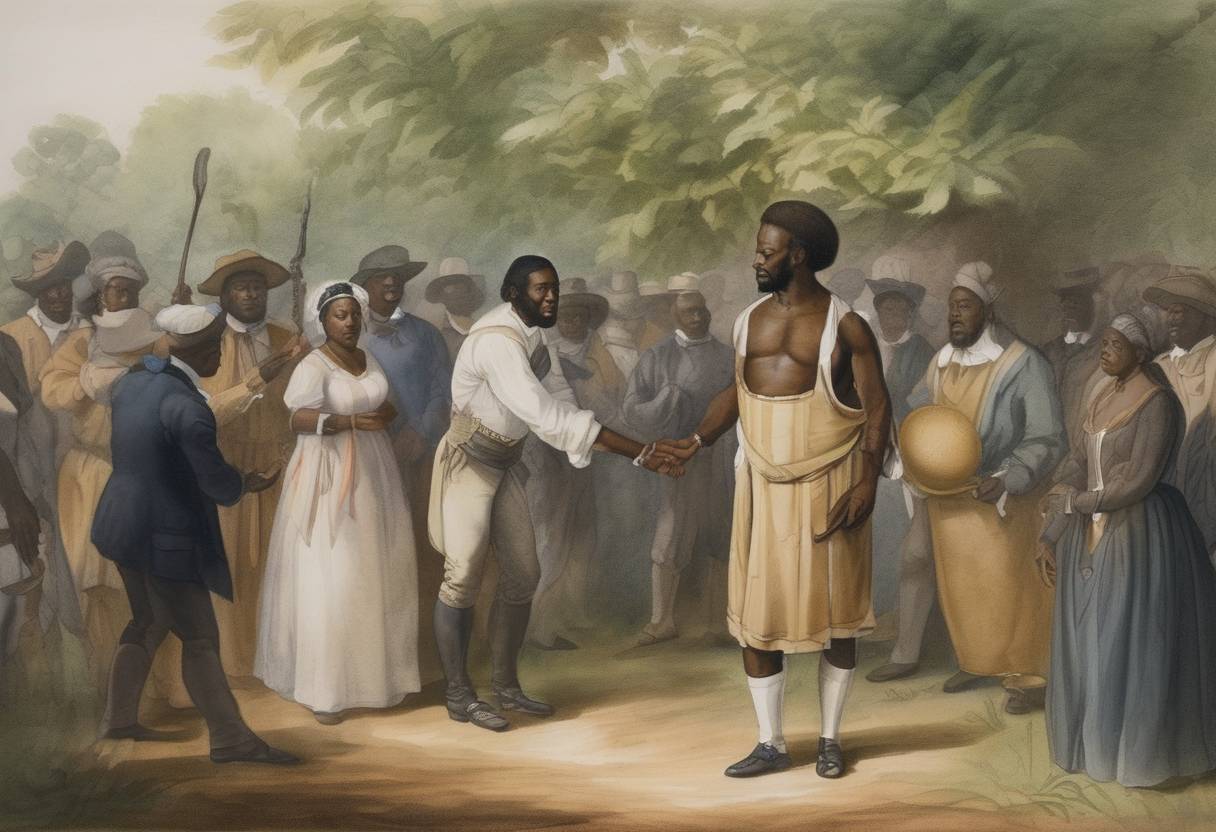
March 8, 1655: John Casor Becomes the First Legally Recognized Slave in Colonial Virginia
On March 8, 1655, a significant legal and social precedent was established in colonial Virginia that embedded the practice of slavery deeper into the societal framework of what would eventually become the United States. On this date, a court ruled that John Casor, an African man, would remain a servant for life to his owner, Anthony Johnson. This case is notably recognized as the first recorded instance of legal ownership of a slave in North American English colonies.
Context and Background
Anthony Johnson: Anthony Johnson, originally brought to Virginia as an indentured servant, was an Angolan man who gained his freedom, became a successful landowner, and employed servants of his own. He was one of the first prominent African landholders in the colony.
John Casor: Casor, an African servant, claimed he had completed his term of indentured servitude to Johnson and was entitled to freedom. Johnson, however, argued Casor was his servant for life.
The Court Case
Dispute: The case arose when Casor left Johnson’s employment and began working for Robert Parker, a neighboring white landowner who supported Casor’s claim of being a free man. Johnson sued Parker to reclaim Casor as his servant.
Court Ruling: The Northampton County Court ruled in Johnson’s favor, determining that Casor was legally bound to lifelong servitude. This verdict marked a shift from indentured servitude — typically with defined terms and eventual freedom — to the enslavement of Africans under lifetime terms, thereby legally recognizing perpetual slavery based on race.
Broader Historical Implications
This case underscored a transition in colonial society, where racial distinctions began to solidify the status of African individuals as lifelong property rather than temporary labor. Over time, such legal precedents laid the groundwork for the systemic racial slavery that would proliferate throughout North America.
Consequences
Legal Framework: The case established a judicial basis for differentiating servitude terms based on race, distinguishing African slaves from European indentured servants.
Social Impact: This decision contributed to the evolution of race-based slavery, influencing colonial statutes and altering the socio-economic landscape of Virginia and other colonies.
This ruling perpetuated and institutionalized racial inequality, shaping the trajectory of countless lives and setting a pattern that would have lasting repercussions well into the future of the United States.