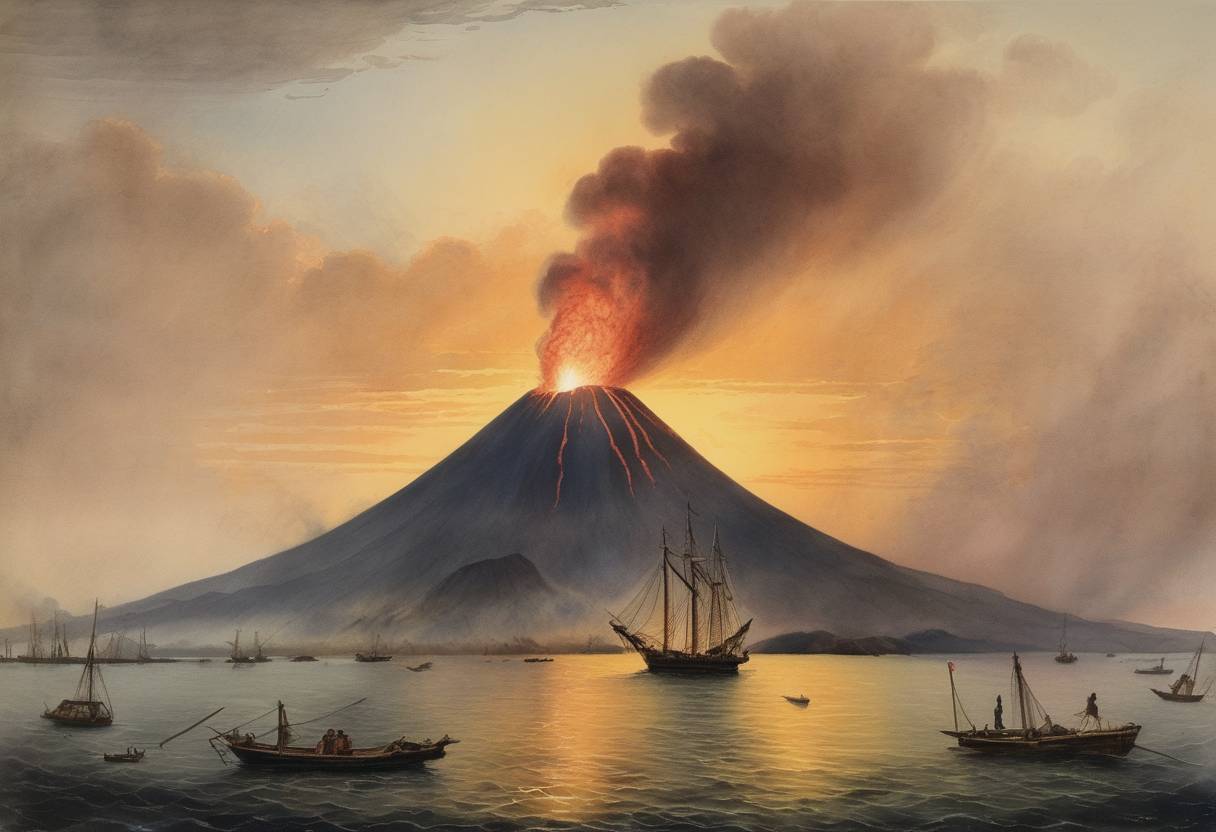
Eruption of Krakatoa - August 25, 1883
The volcanic island of Krakatoa, located in the Sunda Strait between the islands of Java and Sumatra in Indonesia, began a cataclysmic eruption on August 25, 1883, reaching its peak of intensity. This event is renowned for its devastating natural impact and long-lasting atmospheric phenomena.
Preceding Events
Krakatoa had been experiencing volcanic activity since May 1883, with intermittent eruptions. These initial eruptions were significant but did not immediately foreshadow the monumental event that was to occur.
The Eruption on August 25, 1883
On August 25, a series of powerful eruptions began, characterized by continuous and loud explosions. The climactic eruption sequence that ensued over subsequent days forced massive amounts of volcanic ash, pumice, and gas into the atmosphere. This was the beginning of the catastrophic phase, which would have far-reaching consequences.
Krakatoa’s eruption reached such intensity that it obliterated most of the island, with the estimated force of an explosion comparable to the detonation of several hundred megatons of TNT.
Tsunamis: The violent eruptions displaced a massive volume of ocean water, creating enormous tsunamis. These waves, some reaching as high as 30 meters, devastated coastal communities around the Sunda Strait. It is estimated that around 36,000 people perished due to the tsunamis and the eruption itself.
Volcanic Fallout: Ash from the eruption was ejected up to 80 kilometers high, spreading across the globe. This immense volume of volcanic debris darkened skies and created phenomenal sunsets caused by the fine particles scattering sunlight.
Global Climatic Effects
The eruption of Krakatoa injected vast amounts of sulfur dioxide into the atmosphere, which combined with water to form sulfuric acid droplets. This led to a reduction in global temperatures by approximately 1.2 degrees Celsius in the subsequent years, causing anomalous weather patterns worldwide.
Aftermath
The island of Krakatoa itself was largely destroyed, leaving a caldera that later led to the formation of a new volcanic island, Anak Krakatau (“Child of Krakatoa”), which started to emerge in 1927 from the caldera.
Krakatoa’s eruption had profound impacts on scientific studies, particularly in the fields of volcanology and atmospheric science, as it provided key insights into the global climatic effects of volcanic eruptions.
The event remains one of the deadliest and most powerful volcanic eruptions in recorded history and serves as a poignant reminder of the natural forces at play on Earth.