Recep Tayyip Erdoğan's Victory in the 2018 Turkish Presidential Election
2018 · Ankara, Turkey
Recep Tayyip Erdoğan won the Turkish presidential election, securing his position with expanded executive powers following a constitutional referendum.
June 7, 2015
Turkey's pro-Kurdish Peoples' Democratic Party (HDP) crossed the 10% electoral threshold for the first time in the general elections, entering parliament and causing the incumbent Justice and Development Party (AKP) to lose its majority status. The election marked a significant shift in Turkish politics, impacting the political landscape and future coalitions.
Ankara, Turkey | Peoples' Democratic Party
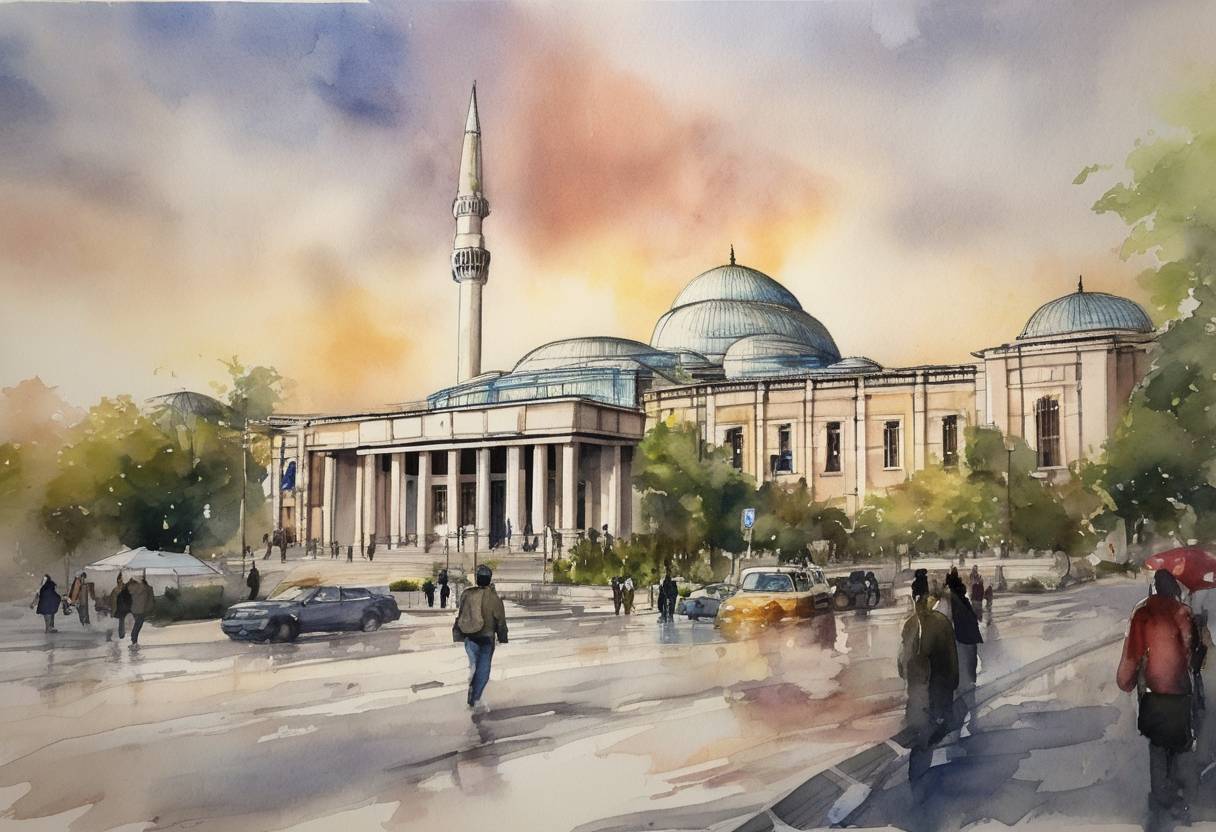
On June 7, 2015, Turkey experienced a significant shift in its political landscape during the general elections. The pro-Kurdish Peoples’ Democratic Party (HDP) crossed the crucial 10% electoral threshold required for representation in the Turkish Grand National Assembly. This achievement allowed the HDP to enter parliament for the first time as a party, marking a transformative moment in Turkish politics.
The HDP, primarily known for its pro-Kurdish stance, had been working to broaden its appeal across various ethnic and political groups within Turkey. Traditionally, pro-Kurdish parties struggled to pass the high threshold, often participating as independent candidates to bypass this barrier. The June 7 election demonstrated the HDP’s successful strategy of appealing to leftists, liberals, and other minority groups beyond its Kurdish base.
In the 2015 general elections, the HDP won approximately 13% of the vote, securing 80 seats in the 550-member parliament. This success effectively ended the dominant ruling majority of the Justice and Development Party (AKP), which had held power since 2002. The AKP led by Prime Minister Ahmet Davutoğlu, received about 41% of the votes, translating to 258 seats—short of the 276 needed for a single-party majority.
This unexpected development carried several implications:
Coalition Government: The AKP’s loss of its majority status meant that a coalition government was necessary unless early elections were called. Negotiations for coalitions were predicted to be challenging, given the political polarization.
Kurdish Representation: The HDP’s entry into parliament suggested a more significant representation for Kurdish interests and a broader political discourse in Turkey. This inclusion was seen as a potential step towards addressing long-standing ethnic tensions.
Constitutional Reforms: The election also hindered then-President Recep Tayyip Erdoğan’s ambitions to transform Turkey’s parliamentary system into a stronger presidential one, as the electoral outcome did not provide the constitutional majority needed for such reforms.
The results of the June 7, 2015, elections reflected a diverse and dynamic political environment in Turkey. The successes and failures of the parties involved indicated shifting public opinions and priorities, challenging the prevailing political dominance and opening dialogues for a more inclusive governance system. The HDP’s breakthrough was particularly symbolic of the evolving nature of Turkish democracy, emphasizing the role of minority voices in mainstream politics.
Source: www.bbc.com