Oscar Wilde's Conviction: May 25, 1895
1895 · London, United Kingdom
Oscar Wilde is convicted of gross indecency and sentenced to two years' hard labor.
October 22, 1910
Dr. Crippen was found guilty at the Old Bailey in London for the murder of his wife, Cora Crippen.
London, United Kingdom | The Central Criminal Court
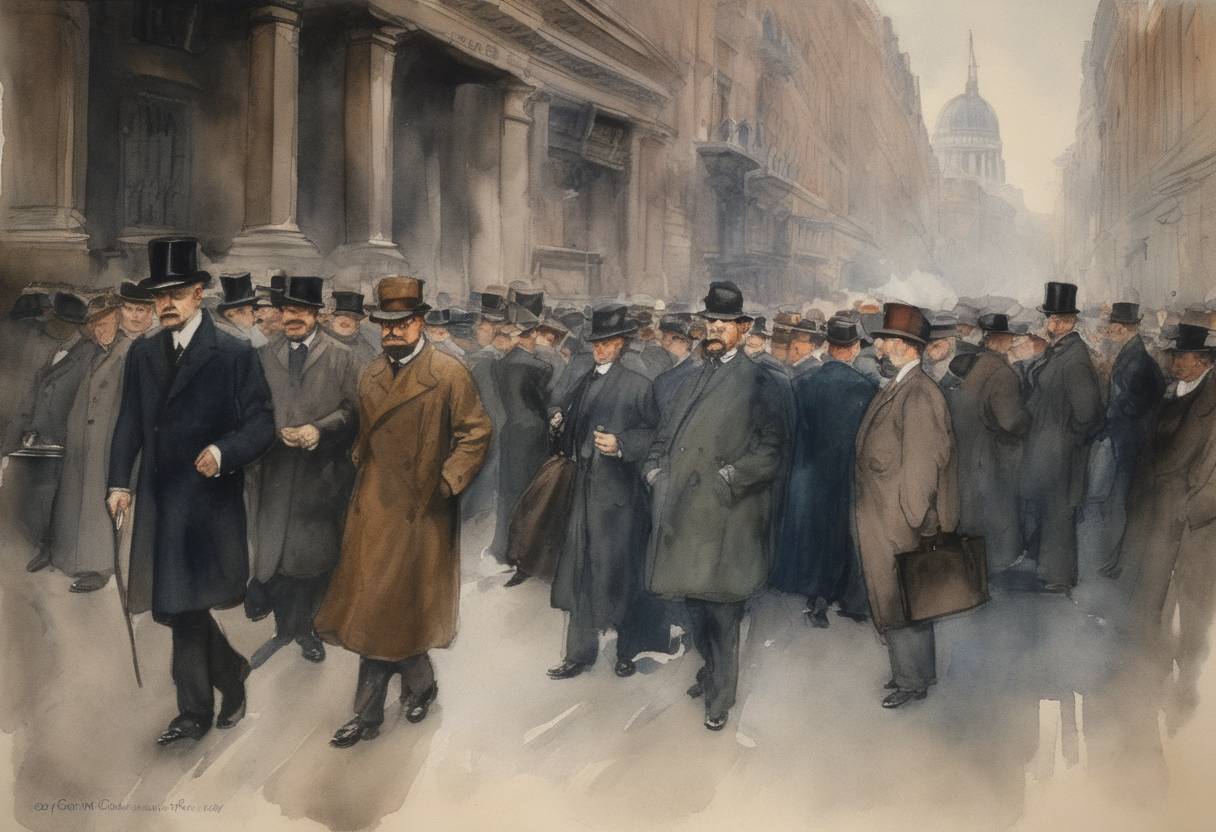
On October 22, 1910, Dr. Hawley Harvey Crippen was found guilty of the murder of his wife, Cora Crippen, at the Old Bailey in London. This case is renowned as one of the most infamous criminal cases in early 20th-century Britain, capturing public attention due to its sensational details and transatlantic intrigue.
Dr. Crippen was an American homeopathic doctor who had moved to England with his wife, Cora, in the early 1900s. Cora, an aspiring singer, was known by her stage name “Belle Elmore.” Their marriage was reportedly fraught with tension and dissatisfaction.
Cora disappeared in January 1910. Dr. Crippen initially informed friends that she had returned to America and later claimed she had died there. His suspicious behavior, such as moving his lover, Ethel Le Neve, into their London home shortly after Cora’s disappearance, aroused suspicion.
Friends of Cora alerted Scotland Yard, leading to an investigation spearheaded by Chief Inspector Walter Dew. Upon searching the Crippen residence, authorities discovered human remains buried beneath the basement. The remains were identified as Cora’s through a piece of tissue with a distinct surgical scar that matched her medical history.
Dr. Crippen and Ethel Le Neve fled to Canada, disguising themselves in an attempt to evade capture. However, their journey aboard the SS Montrose was closely monitored. Inspector Dew famously utilized wireless telegraphy, a cutting-edge technology at the time, to send messages to the ship’s captain. This method allowed Dew to apprehend Crippen upon the ship’s arrival in Canada.
The trial began on October 18, 1910. The prosecution presented a case based heavily on forensic evidence, arguing that Dr. Crippen had poisoned and dismembered his wife. After only 27 minutes of deliberation, the jury found Crippen guilty of murder. The evidence, combined with Crippen’s actions, including his hasty departure from the UK, contributed significantly to the guilty verdict.
Ethel Le Neve was tried separately but was acquitted of any involvement in the crime.
Dr. Crippen was sentenced to death and subsequently executed by hanging at Pentonville Prison on November 23, 1910. The case has since captivated the public and been the subject of numerous books and adaptations in both film and theater. It remains a poignant chapter in the annals of criminal history, exemplifying early forensic investigation techniques and the burgeoning use of modern communication technology in law enforcement.
Source: www.britannica.com