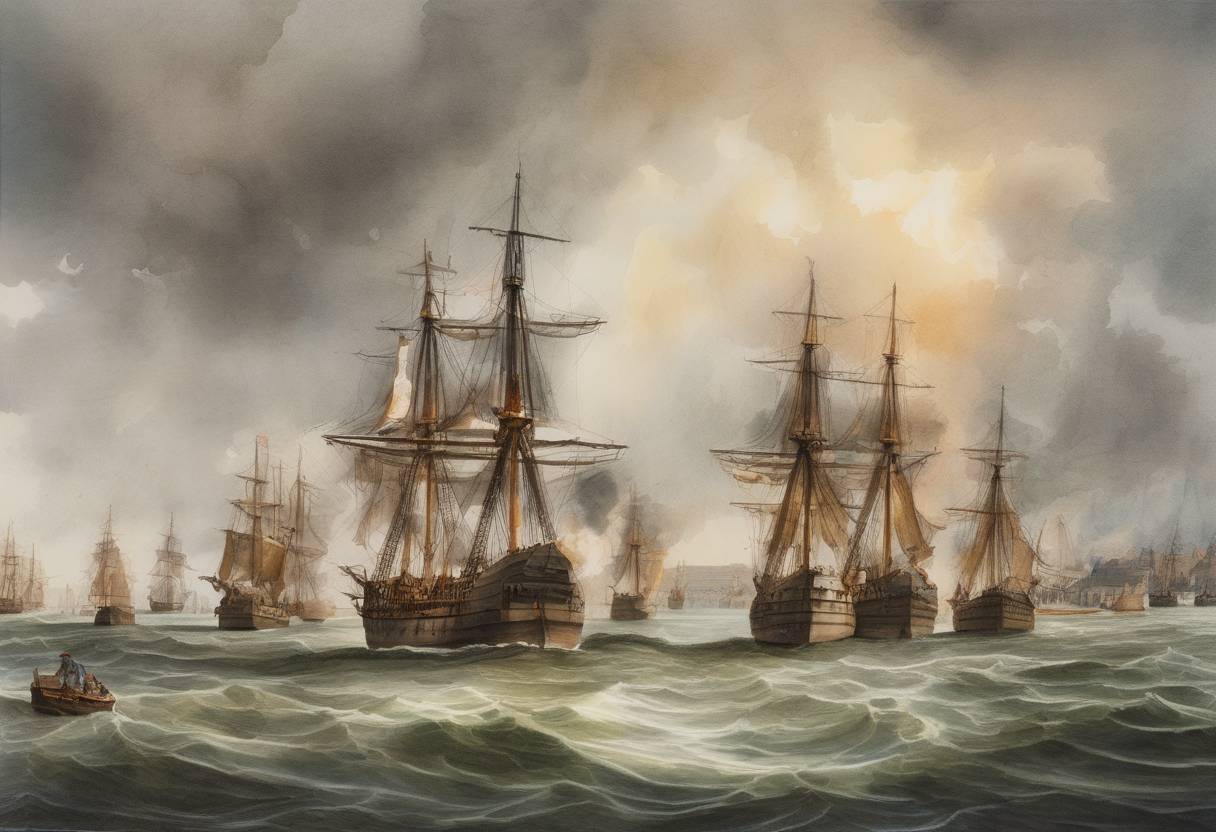
The Raid on the Medway: June 5, 1667
The Raid on the Medway, which began on June 5, 1667, stands as one of the most audacious and successful naval operations in history. This event took place during the Second Anglo-Dutch War (1665-1667), a conflict primarily driven by commercial rivalry and maritime supremacy between England and the Dutch Republic.
Context and Prelude
The Second Anglo-Dutch War was characterized by a series of naval battles and economic blockades. By 1667, both nations were exhausted by the prolonged conflict. England, under King Charles II, was financially strained, leading to reduced naval readiness. The Dutch, led by Grand Pensionary Johan de Witt, saw an opportunity to strike a decisive blow against the English fleet.
The Raid
The Dutch fleet, commanded by Admiral Michiel de Ruyter, executed a meticulously planned assault on the English fleet anchored in the River Medway, near Chatham Dockyard. The English had assumed the Medway was a secure location, but the Dutch exploited this complacency.
Key Events
Initial Assault (June 5-6, 1667): The Dutch fleet entered the Thames estuary, overcoming the English defenses at Sheerness. They then advanced up the River Medway, facing minimal resistance due to the unpreparedness of the English forces.
Breaking the Chain (June 12, 1667): The Dutch broke through a defensive chain barrier across the river, a critical line of defense for the English. This allowed them to penetrate deeper into the dockyard.
Destruction and Capture: The Dutch set fire to several English ships, including the flagship HMS Royal Charles, which they towed back to the Netherlands as a trophy. The destruction of the English fleet was extensive, with several ships burned or captured.
Aftermath and Consequences
The Raid on the Medway was a humiliating defeat for England, exposing vulnerabilities in its naval defenses and leading to a loss of prestige. The financial and material losses were significant, prompting urgent reforms in the English navy.
Broader Historical Significance
Peace of Breda (July 1667): The raid accelerated peace negotiations, culminating in the Treaty of Breda. The treaty was relatively favorable to the Dutch, allowing them to retain control of valuable trade routes and territories.
Naval Reforms: The defeat underscored the need for naval reform in England, leading to improvements in shipbuilding, dockyard defenses, and naval administration.
Dutch Naval Supremacy: The success of the raid solidified the Dutch Republic’s reputation as a formidable naval power, influencing European maritime politics for years to come.
The Raid on the Medway remains a testament to strategic ingenuity and the impact of naval power on international relations during the 17th century.