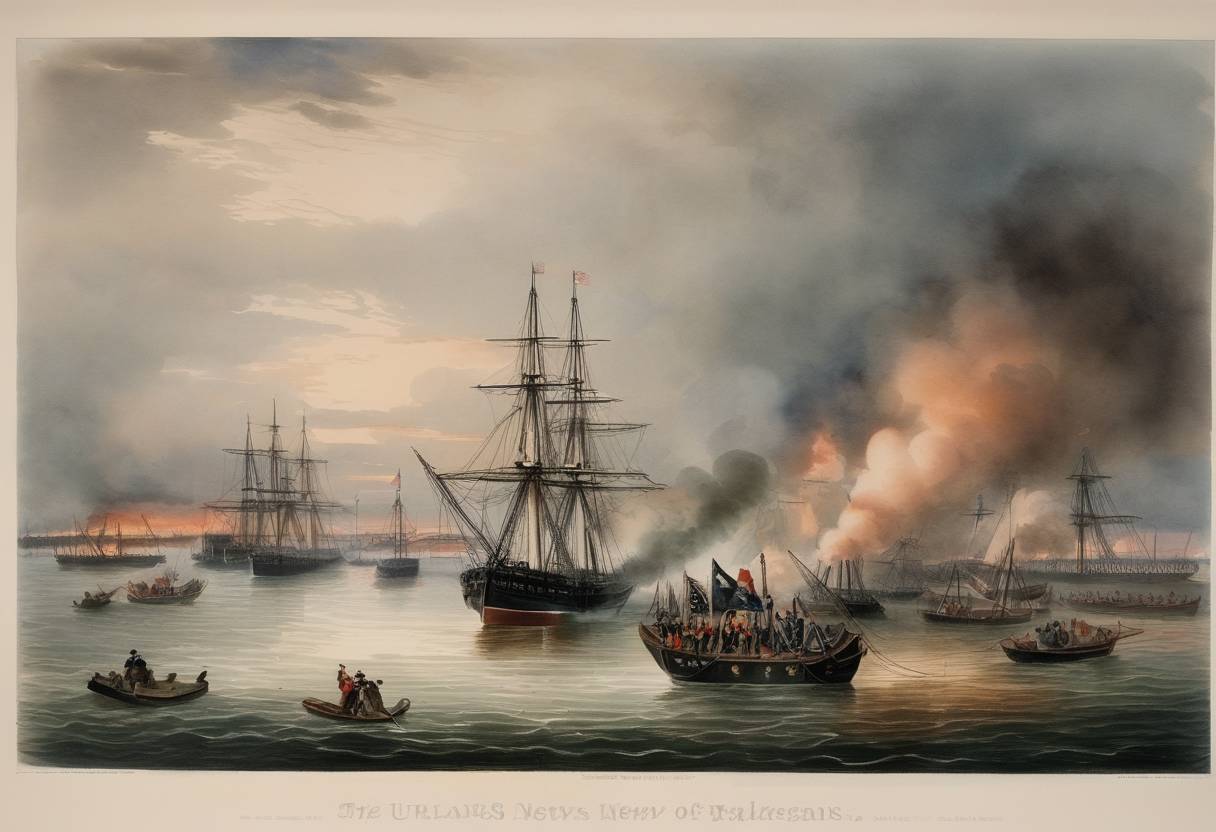
The Capture of New Orleans: April 29, 1862
The Capture of New Orleans on April 29, 1862, was a pivotal event in the American Civil War, marking a crucial victory for Union forces under the command of Flag Officer David Farragut. This victory provided the Union with a strategic advantage in controlling the Mississippi River and split the Confederacy.
Background
Strategic Importance: New Orleans was the largest city in the Confederacy and a vital port for trade and supply. Control over the city meant significant leverage over the Mississippi River, a major thoroughfare for transportation and logistics.
Union Strategy: The Union aimed to implement the Anaconda Plan, which sought to blockade and suffocate the South by controlling key waterways and cutting off supply lines. Capturing New Orleans was integral to this plan.
The Naval Campaign
Preparations: Farragut’s fleet, comprising 17 warships and multiple mortar boats under the command of David Dixon Porter, navigated up the Mississippi River in April 1862, encountering Confederate defenses at Forts Jackson and St. Philip.
Naval Assault: On the night of April 24, 1862, Farragut led a daring nighttime assault. Despite heavy Confederate fire, his ships managed to pass the forts, reaching New Orleans largely unopposed by April 25.
The Fall of New Orleans
Confederate Resistance: Confederate forces were caught unprepared to defend the city adequately. The Confederate naval force had already been defeated, and land defenses were insufficient without reinforcements.
Surrender: On April 29, 1862, after a brief but tense period of negotiation and local resistance, Union forces officially took control. Major General Benjamin Butler’s army began to occupy the city, enforcing martial law and reestablishing order.
Aftermath and Significance
Union Control: Securing New Orleans disrupted Confederate trade and military logistics along the Mississippi River and effectively split Confederate states.
Psychological Impact: The loss of New Orleans was a strategic and psychological blow to the Confederacy, demonstrating Union naval supremacy and further bolstering Northern morale.
Long-term Strategy: The capture enabled further Union advances along the Mississippi, crucial for dividing the Confederacy and paving the way for Ulysses S. Grant’s successful Vicksburg Campaign.
The successful capture of New Orleans by Union forces under Farragut was a defining moment in the Civil War, underscoring the importance of naval power and strategic waterways in determining the conflict’s outcome. This operation was pivotal in shaping the broader course of the war, showcasing the Union’s ability to execute complex coordinated offensives.