Queen Victoria Ascends to the British Throne
1837 · London, United Kingdom
Queen Victoria ascends to the British throne following the death of her uncle, King William IV, beginning a reign that would last over 63 years.
March 29, 1871
The Royal Albert Hall is officially opened by Queen Victoria and Prince Albert’s eldest son, the future King Edward VII.
London, United Kingdom | British Monarchy
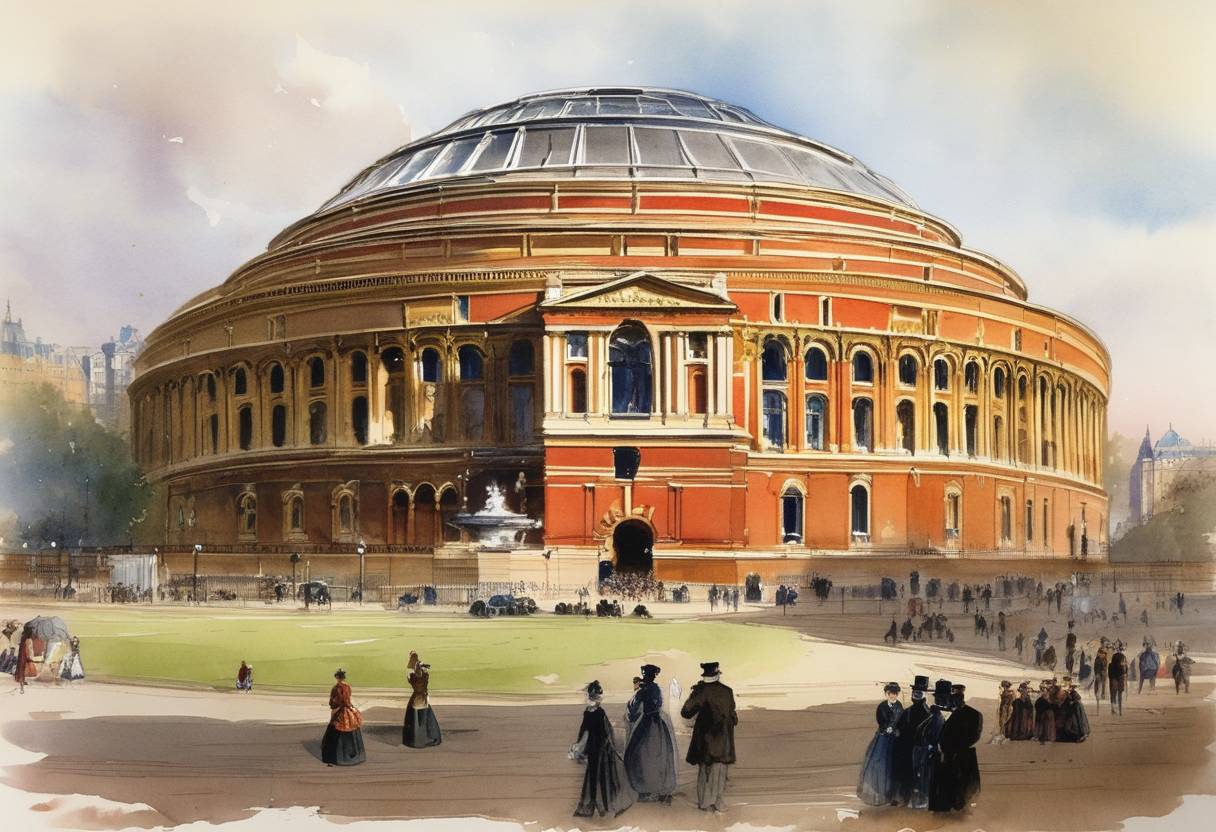
On March 29, 1871, the Royal Albert Hall in London was officially opened by Queen Victoria. The ceremony marked an important cultural event in the history of the United Kingdom, as the venue was intended to be a central hub for the arts and sciences.
The concept for the Royal Albert Hall was conceived after the success of the Great Exhibition of 1851, held in Hyde Park, London. Queen Victoria’s husband, Prince Albert, had been a driving force behind the exhibition and dreamed of creating a permanent venue dedicated to the promotion and appreciation of the arts and sciences.
Construction of the Hall began in 1867, and it was designed by civil engineers Captain Francis Fowke and Major-General Henry Y.D. Scott of the Corps of Royal Engineers. The Hall was constructed with an enormous dome, inspired by Roman architecture, and could accommodate more than 6,000 spectators. The design also featured innovative engineering solutions to enhance acoustics, a consideration that continues to be refined to this day.
Though initially intended for Queen Victoria to open the venue herself, she was unable to do so due to her continuing mourning for Prince Albert, who passed away in 1861. As a result, their eldest son, Albert Edward, the Prince of Wales, who later became King Edward VII, conducted the ceremony in her stead. The event was attended by members of the royal family, notable figures of the time, and dignitaries, highlighting its significance.
The Royal Albert Hall quickly became a preeminent venue for various performances and events. Over the years, it has hosted countless concerts, exhibitions, and public gatherings. The Hall has not only been pivotal in promoting music and the arts but also in serving as a location for significant social and political events.
Today, the Royal Albert Hall stands as an iconic symbol of British cultural life. Its opening in 1871 marked the beginning of a rich legacy in the performing arts, continuing Prince Albert’s vision. It remains one of the most prestigious and recognizable concert halls worldwide.
The opening of the Royal Albert Hall on March 29, 1871, represents a pivotal moment in the cultural history of London, encapsulating a vision of creativity and enlightenment that persists in its operations and reputation today.
Source: www.royalalberthall.com