Battle of Shaizar - December 14, 1116
Context and Background
The Battle of Shaizar on December 14, 1116, was part of the broader series of conflicts known as the Crusades, which were military campaigns initiated by Western European Christians aimed at reclaiming the Holy Land from Muslim control. By the early 12th century, the Crusaders had established several Christian states in the Middle East, among them the Kingdom of Jerusalem. King Baldwin I of Jerusalem, who reigned from 1100 to 1118, played a crucial role in consolidating and expanding the territories controlled by the Christian crusaders.
The Campaign
In 1116, King Baldwin I embarked on a military campaign in northern Syria, which was marked by several skirmishes against Muslim forces striving to weaken the Crusader presence. The town of Shaizar, located on the Orontes River in present-day Syria, was strategically significant, serving as a gateway to the Aleppo region and a key stronghold for the local Muslim ruler, who was part of the Seljuk Empire. Baldwin aimed to assert his influence over this area and curtail the power of the neighboring Muslim emirates.
The Battle
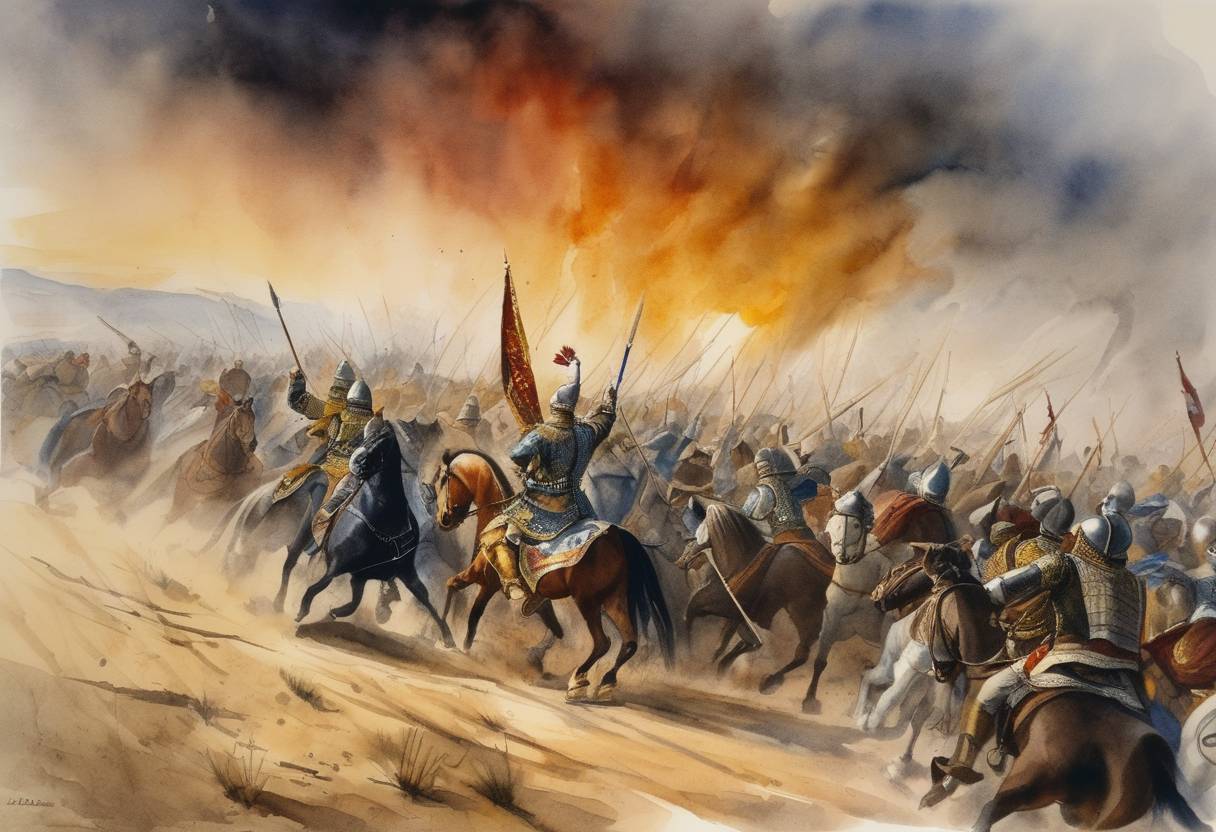
On December 14, 1116, King Baldwin I’s forces confronted a coalition of Turkish troops near the town of Shaizar. Despite being numerically inferior, the Crusader army employed superior military tactics, including feigned retreats and effective cavalry charges, which were characteristic of European knightly warfare at the time. The disciplined coordination among Baldwin’s forces led to a decisive victory over the Turkish coalition.
Significance and Aftermath
The victory at the Battle of Shaizar bolstered the Crusaders’ morale and secured Baldwin’s position as an effective military leader. Although the Crusaders did not capture the town, the battle put pressure on the Muslim rulers of the region, demonstrating the continued threat posed by the Crusader states. This victory also strengthened Baldwin I’s reputation, both among his Christian subjects and rival Muslim leaders.
The broader impact of his campaigns contributed to the stability and relative expansion of the Kingdom of Jerusalem during Baldwin’s reign. Moreover, the success of such military engagements further solidified the Crusader states’ political and economic control over key territories in the Levant.
Conclusion
Though the Battle of Shaizar was one of many engagements during the era of the Crusades, it exemplified the tactics and tenacity of the Crusader states under the leadership of King Baldwin I. The skillful military maneuvers and strategic importance of such victories played a crucial role in maintaining the Christian presence in the volatile region of the Middle East during the early 12th century.