The Mexican-American War: April 24, 1846
1846 · Brownsville, United States
The Mexican-American War began when Mexican forces attacked U.S. troops in the disputed zone between the Rio Grande and Nueces River.
May 23, 1846
The Mexican-American War saw its first major engagement at the Battle of the Rio Grande, near present-day Brownsville, Texas, where U.S. troops repelled Mexican forces, solidifying U.S. control over the area.
Brownsville, United States | United States Army
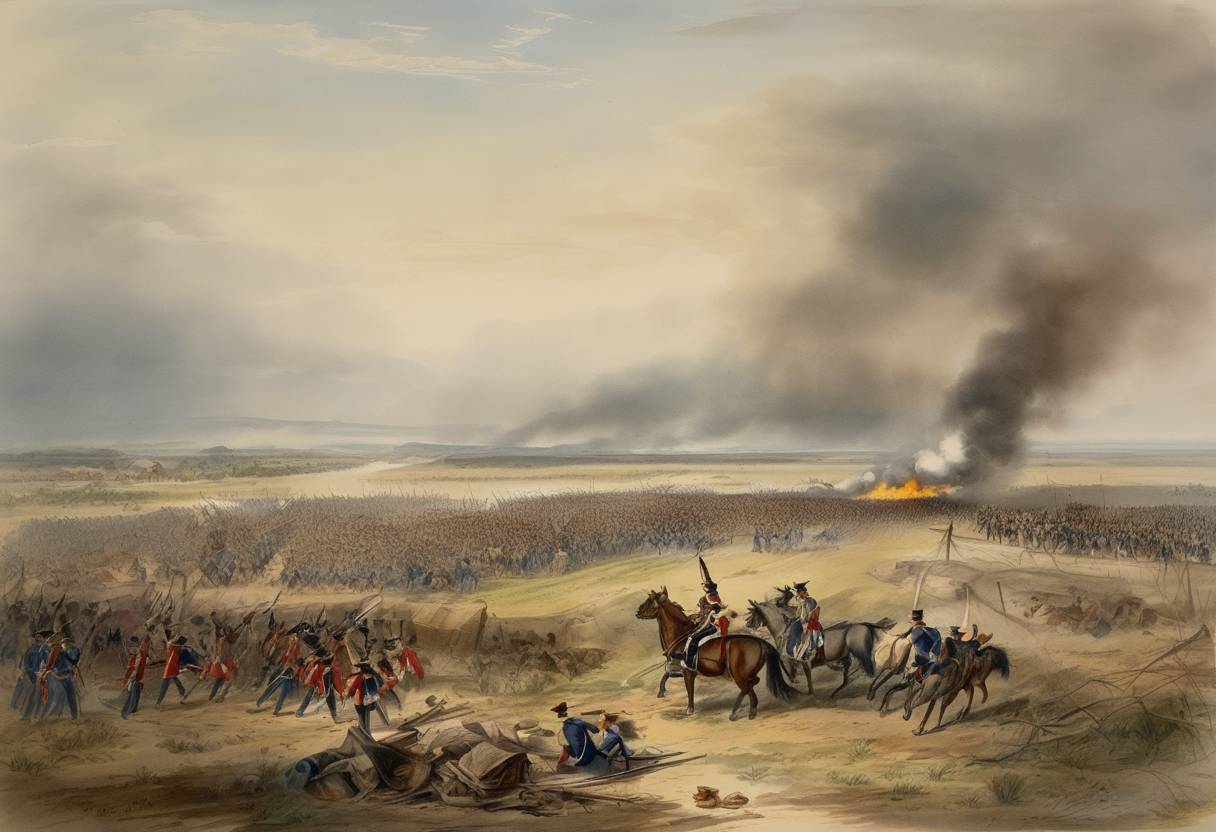
The information regarding a significant engagement known as the “Battle of the Rio Grande” on May 23, 1846, does not align with historical records from the Mexican-American War. The first major engagements of the war were the Battle of Palo Alto and the Battle of Resaca de la Palma, both of which occurred earlier in May 1846.
The Mexican-American War arose due to tensions over the annexation of Texas and border disputes between the U.S. and Mexico. President James K. Polk’s expansionist policies and the belief in Manifest Destiny fueled U.S. interest in acquiring Mexican territories.
Battle of Palo Alto: On May 8, 1846, near present-day Brownsville, Texas, U.S. forces led by General Zachary Taylor engaged Mexican troops commanded by General Mariano Arista. Utilizing superior artillery technology, the U.S. forces secured a decisive victory over the Mexican army.
Battle of Resaca de la Palma: Following the initial clash, on May 9, 1846, the American troops repelled a counterattack by Arista at Resaca de la Palma, forcing the Mexican forces to retreat across the Rio Grande.
These engagements marked crucial early victories for U.S. forces, affirming control over the contested border region and setting the stage for the subsequent American invasion into Mexican territory.
The early U.S. victories in these battles helped solidify American military presence in the area and demonstrated the effectiveness of U.S. artillery, increasing American morale. They also reinforced U.S. claims over the disputed Nueces Strip, providing justification for further military and territorial expansion.
Though not directly tied to May 23, 1846, these battles form a vital part of the conflict’s early timeline, setting a precedent for the bloody war that would follow and drastically altering the geopolitical landscape of North America with the Treaty of Guadalupe Hidalgo in 1848.
Source: www.history.com