The 1953 Tachikawa Air Disaster
1953 · Tokyo, Japan
A United States Air Force C-124 Globemaster II aircraft crashed near Tokyo, Japan, killing all 129 people aboard in what was at the time the worst aviation disaster in history.
February 4, 1966
The All-Nippon Airways Flight 60, a Boeing 727, crashes into Tokyo Bay, killing all 133 on board.
Tokyo, Japan | All-Nippon Airways
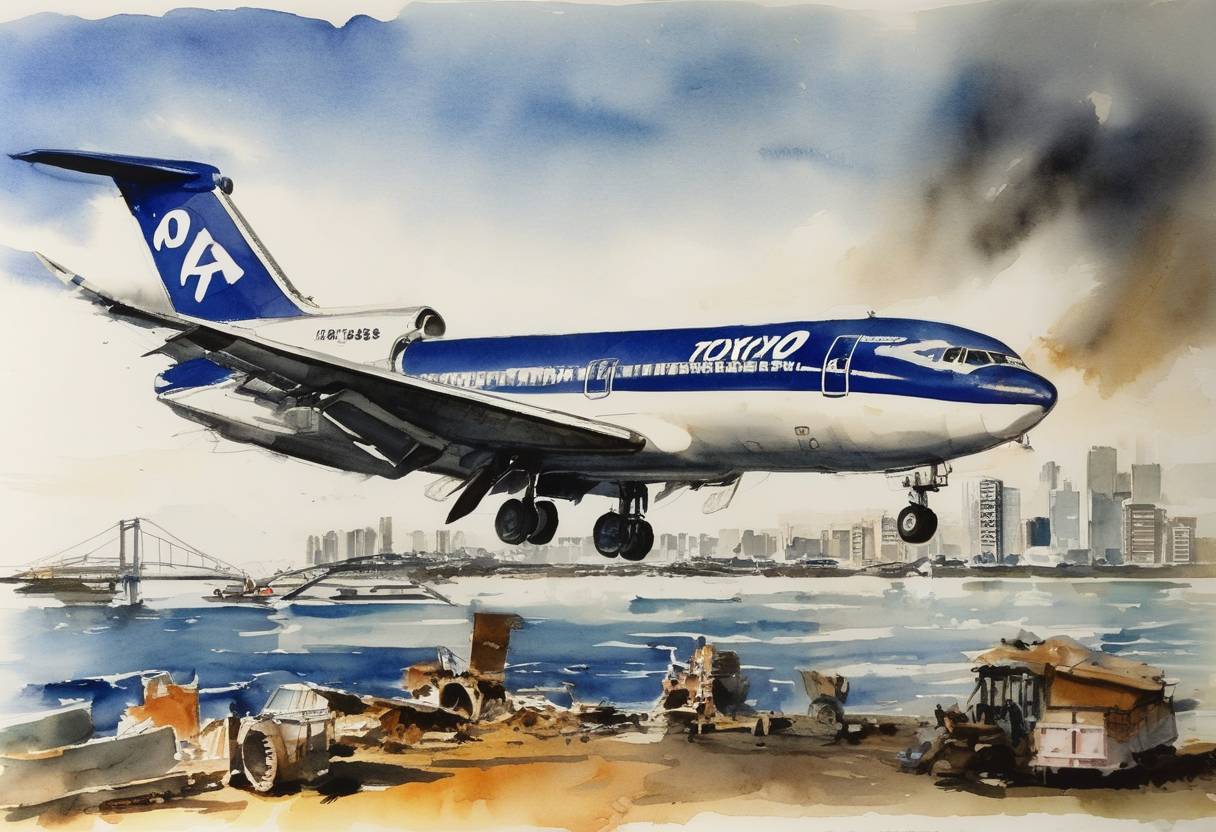
On February 4, 1966, All-Nippon Airways (ANA) Flight 60 tragically crashed into Tokyo Bay. The accident resulted in the loss of all 133 passengers and crew on board, marking a dark day in aviation history as one of the deadliest air disasters of its time.
The aircraft approached Haneda Airport in Tokyo during nighttime conditions. As it made its descent over Tokyo Bay, radio contact with the flight was lost. Shortly thereafter, the aircraft crashed into the waters of the bay, approximately 10 kilometers from the airport.
Immediately after the crash, rescue and recovery operations were launched, but unfortunately, there were no survivors. Recovery operations faced challenges due to the location in open water and the formidable conditions.
An investigation was conducted to determine the cause of the crash. However, due to the technology and forensic limitations of the time, the precise cause remained inconclusive. It highlighted the limitations in aviation safety protocols and sparked improvements in flight safety procedures and aircraft technology.
The loss was a significant tragedy for Japan and the global aviation industry. This incident, along with other similar crashes around the same period, led to a concerted effort to enhance aviation safety measures worldwide. It also emphasized the importance of reliable communication systems and the need for improvements in navigational technology.
The lessons from this tragic incident contributed to advancements in global aviation safety standards and emphasized the ongoing challenges in ensuring flight safety.
Source: en.wikipedia.org