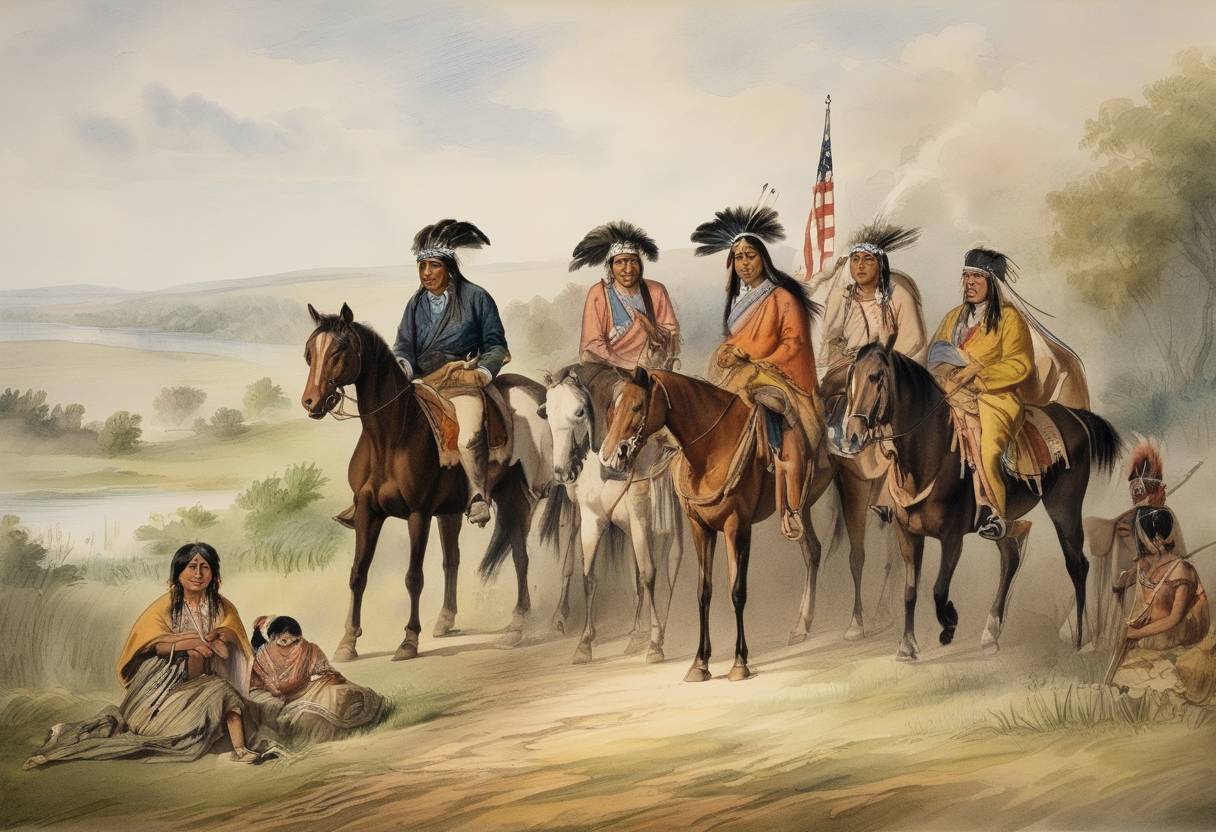
Indian Removal Act Vote on March 16, 1830
On March 16, 1830, the United States Congress was engaged in debates and discussions regarding what would become known as the Indian Removal Act. This piece of legislation, which sought to relocate Native American nations from their ancestral homelands in the Southeastern United States to territories west of the Mississippi River, marked a pivotal moment in U.S. history.
Context and Lead-Up
In the early 19th century, the expansion of cotton farming and the discovery of gold on tribal lands increased pressure from European-American settlers and land speculators for Native American lands. This pressure was compounded by prevailing ideologies of manifest destiny and racial superiority, which viewed Native American societies as obstacles to progress.
President Andrew Jackson, who had a long history of conflict with Native American tribes dating back to his military career, was a key proponent of the removal policy. He argued that relocation would benefit Native Americans by moving them away from European-American society pressures and conflicts, though this view masked the forceful and violent nature of the proposed relocations.
The Legislative Process
The Indian Removal Act was introduced to Congress in 1830. On March 16 of that year, the House of Representatives held significant debates on the bill. These debates were contentious, with fierce opposition from some quarters, including figures like Congressman Edward Everett of Massachusetts, who argued for the protection of Native American rights.
Despite opposition, a coalition of Southern lawmakers and others who supported Jackson’s policies advanced the bill. The vote on the Indian Removal Act did not conclusively occur on March 16, 1830, but it was part of a series of legislative efforts and discussions that would culminate in its eventual passage.
Aftermath and Historical Significance
The Indian Removal Act was officially signed into law by President Andrew Jackson on May 28, 1830. It granted the federal government the authority to negotiate removal treaties, which led to the forced displacement of numerous Native American nations, notably the Cherokee, Muscogee (Creek), Seminole, Chickasaw, and Choctaw.
This series of removals became infamously known as the “Trail of Tears,” characterized by suffering, disease, and death. Thousands of Native Americans were forced to march to designated Indian Territory (present-day Oklahoma), often under severe conditions.
The Trail of Tears and the broader policy of Indian removal had lasting negative impacts on Native American communities, resulting in loss of life, land, and cultural disruption. It remains a significant and tragic part of American history, illustrating the consequences of expansionist policies and racial injustice.