Margaret Thatcher's Passing: End of an Era in British Politics
2013 · London, United Kingdom
Former British Prime Minister Margaret Thatcher passed away at the age of 87, marking the end of an era for British politics.
April 9, 2013
The body of former British Prime Minister Margaret Thatcher lay in state in the Chapel of St Mary Undercroft in the Palace of Westminster, London, following her death on April 8.
London, United Kingdom | British Government
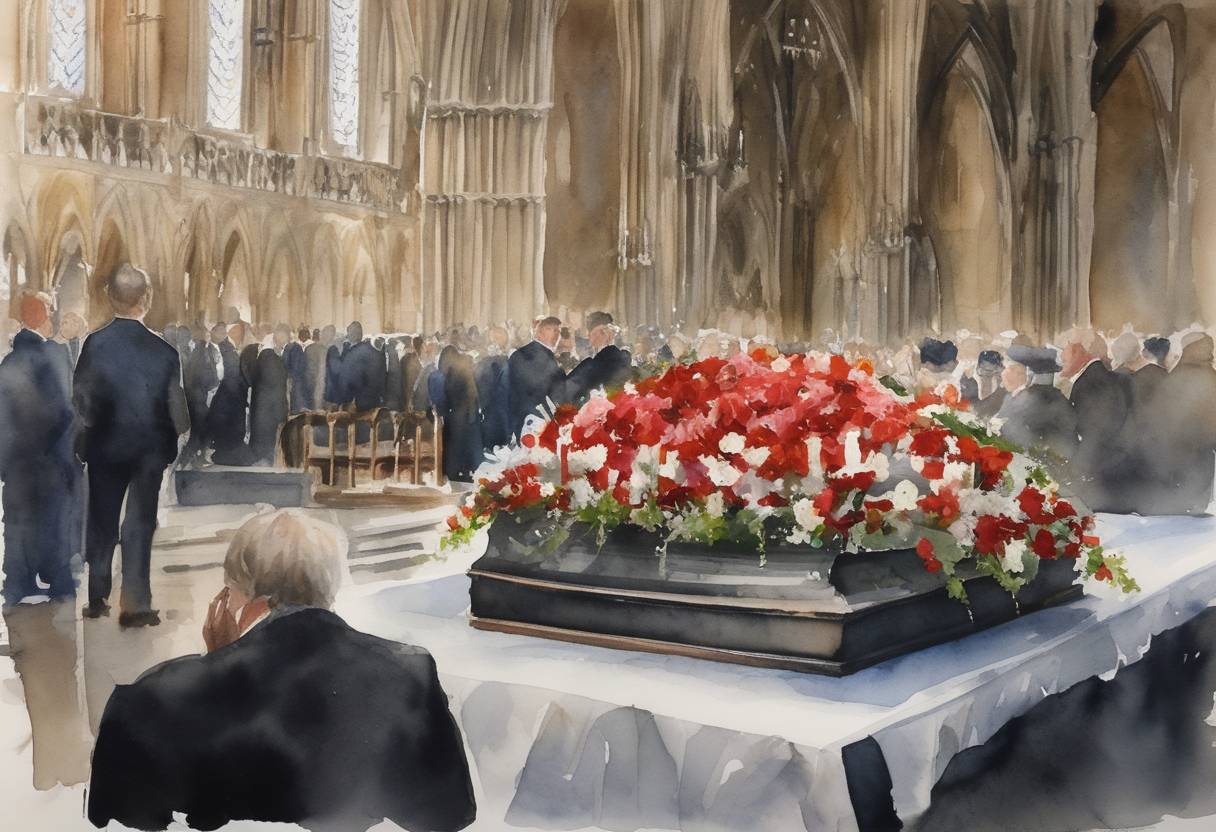
On April 9, 2013, the body of Margaret Thatcher, the former British Prime Minister, lay in state in the Chapel of St Mary Undercroft, located within the Palace of Westminster in London. This event followed her passing on April 8, 2013, after suffering a stroke. The occasion was marked by a period of reflection on her complex and impactful legacy as the United Kingdom’s first female Prime Minister.
Margaret Thatcher, often referred to as the “Iron Lady,” served as Prime Minister from 1979 to 1990. Her leadership was characterized by significant economic reforms, a firm stance against the Soviet Union during the Cold War, and controversial policies that included the privatization of state-owned companies and the reduction of the power of trade unions. Thatcher’s influence extended beyond the UK, leaving a lasting mark on global conservative politics.
The tradition of lying in state, while not granted to all former Prime Ministers, was allowed for Thatcher. However, instead of the public lying-in-state at Westminster Hall, a practice usually reserved for monarchs, Thatcher’s body was placed in the more intimate setting of the Chapel of St Mary Undercroft. This chapel is part of the historic parliamentary estate, serving as a place of reflection within the heart of British political life.
During this occasion, which was private rather than a public viewing, family members, friends, and colleagues paid their respects. The lying in state set the stage for Thatcher’s ceremonial funeral, which would take place on April 17, 2013, featuring full military honors but stopped short of a state funeral.
The passing of Margaret Thatcher reignited debates across the UK about her political legacy, with divided opinions on her economic and social policies. While some lauded her tenure as transformative and necessary, others critiqued the social impact of her policies. The events surrounding her death and memorial highlighted the enduring polarizing nature of her leadership and the profound changes she enacted in British society. Her funeral service would later see attendees from across the political spectrum, international dignitaries, and thousands of well-wishers and protesters alike.
Source: www.bbc.com