The Treaty of Edinburgh-Northampton: Ratification on May 26, 1328
1328 · Edinburgh, Scotland
The Treaty of Edinburgh-Northampton was ratified, recognizing the independence of Scotland from England.
February 21, 1290
The Treaty of Birgham, aimed at a peaceful outcome to the ongoing succession crisis in Scotland, effectively lapsed. Although the treaty was initially signed in 1290, its provisions failed to resolve the issue, setting the stage for future conflicts.
Birgham, Scotland
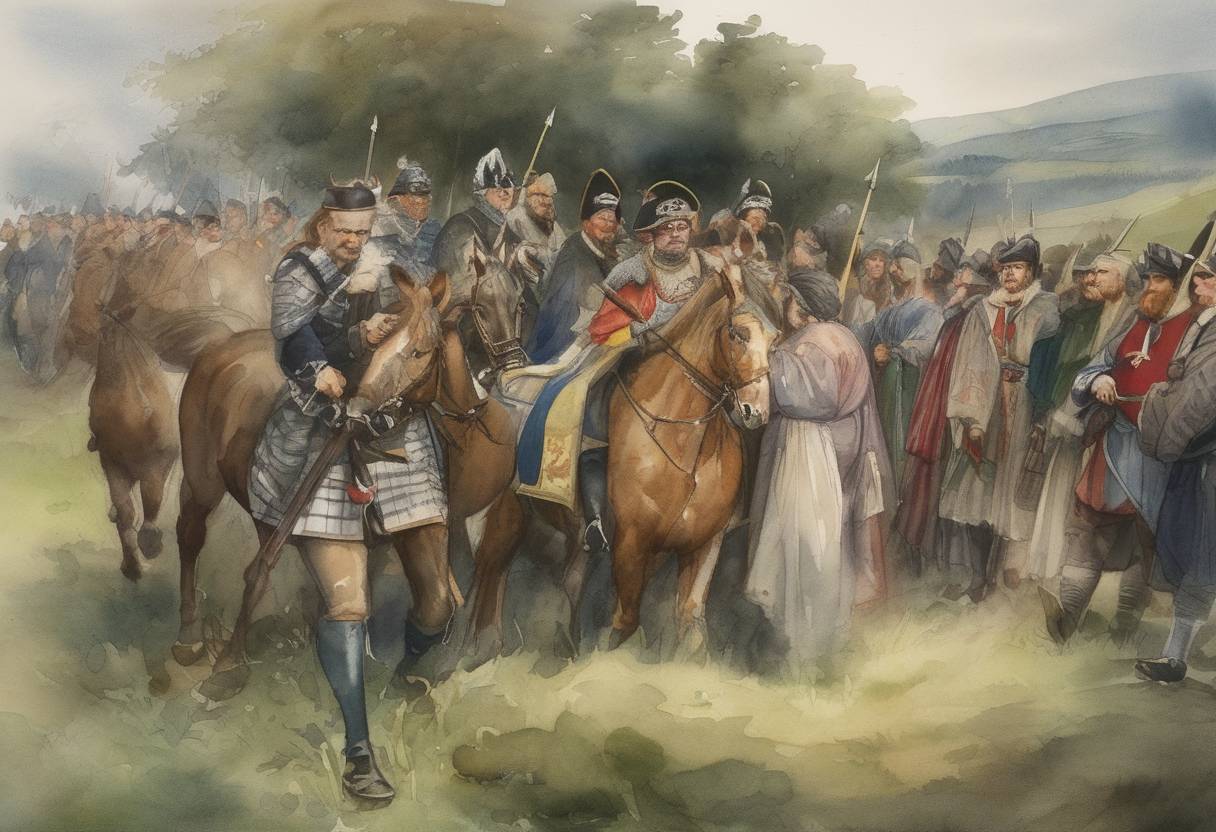
On July 18, 1290, the Treaty of Birgham was signed as a carefully negotiated agreement intended to provide a peaceful resolution to the Scottish succession crisis. Although critical in attempting to maintain peace and stability, the treaty’s provisions ultimately failed to prevent future conflicts, leading to its effective lapse on February 21, 1290.
The death of Alexander III of Scotland in 1286 left the Scottish throne without a direct male heir, leading to a fragile political situation. The treaty was conceived in the wake of the young Queen Margaret, Maid of Norway’s assumption of the Scottish throne. As Alexander’s granddaughter, she was the closest legitimate heir. However, due to her young age and the complex logistics of her rule from afar, a treaty was viewed as paramount to ensure a stable succession and political integrity of Scotland.
The Treaty of Birgham was established during negotiations at Birgham, Berwickshire, with the explicit purpose of safeguarding Scotland’s independence amid the negotiations for Margaret’s marriage to Edward, the heir of King Edward I of England. The principal provisions included:
The treaty effectively lapsed on February 21, 1290, due to several factors:
With the absence of a clear heir, a power struggle ensued amongst Scottish nobles, a period known as the ‘Great Cause,’ resulting in widespread disputes over the rightful claimant to the Scottish throne. This lack of consensus provided Edward I with an opportunity to assert dominance over Scotland, leading to his invasions and instigating the Scottish Wars of Independence.
The Treaty of Birgham, despite its aim to ensure peace, serves as a pivotal example of fragile diplomacy where the inability to secure and implement agreements resulted in prolonged conflict. It underscores the complexities of medieval politics and succession, and its failure prefigured a tumultuous period in Scottish history.
Source: en.wikipedia.org