The British North America Act Takes Effect: Creation of the Dominion of Canada
1867 · Ottawa, Canada
The British North America Act takes effect, creating the Dominion of Canada.
August 1, 1867
The British North America Act (also known as the Constitution Act of 1867) officially came into force, uniting the provinces of Ontario, Quebec, New Brunswick, and Nova Scotia into the Dominion of Canada.
Ottawa, Canada | British Parliament
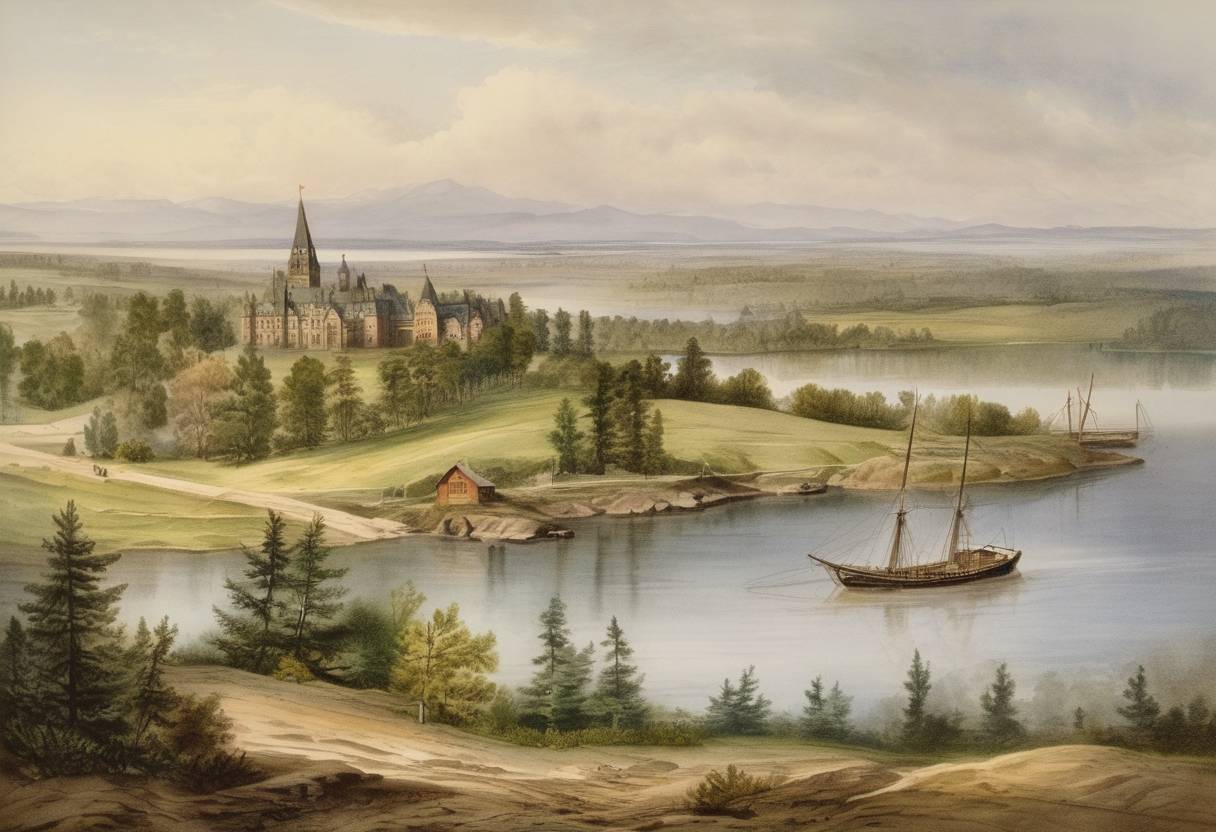
On July 1, 1867, the British North America Act, also known as the Constitution Act of 1867, came into effect, marking a pivotal moment in the history of Canada. This legislation united the provinces of Ontario, Quebec, New Brunswick, and Nova Scotia into a single nation known as the Dominion of Canada. The Act was passed by the British Parliament and granted royal assent by Queen Victoria on March 29, 1867, laying the foundation for the Canadian Confederation.
In the mid-19th century, several factors contributed to the push for unification among the British North American colonies:
The British North America Act was a comprehensive constitution that outlined the framework for federal governance in Canada. Key provisions included:
The enactment of the British North America Act marked the beginning of Canada’s path to becoming a fully sovereign nation. It laid the groundwork for future expansions of Canada, as additional provinces and territories joined the confederation over the ensuing decades. Celebrated today as Canada Day, July 1st is a national holiday commemorating the birth of the Canadian Confederation.
The British North America Act remained the central constitutional statute of Canada until 1982, when it was patriated and became the Constitution Act, 1867. This move ended British legislative control over Canada and added the Canadian Charter of Rights and Freedoms, enhancing civil liberties and the legal autonomy of Canada.
Through its foundational structure and initial unification of the provinces, the British North America Act of 1867 played a crucial role in shaping the country’s political and social evolution, setting Canada on its course as a nation.
Source: www.thecanadianencyclopedia.ca