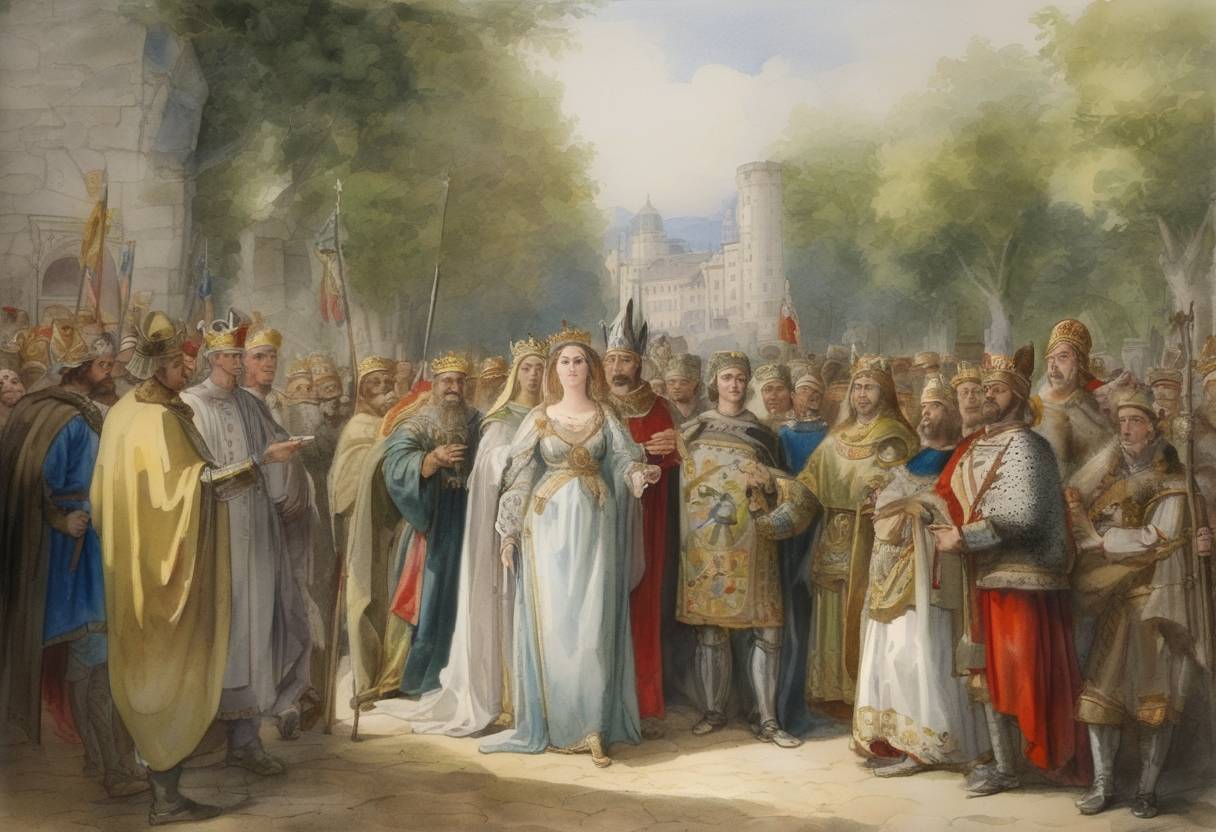
The Peace of Constance: August 14, 1183
On August 14, 1183, the Peace of Constance was ratified, marking a significant turning point in the struggle between the northern Italian city-states—a coalition known as the Lombard League—and the Holy Roman Emperor Frederick I Barbarossa. The ratification officially recognized the autonomy of the league and established a framework that granted these cities a degree of self-governance and freedoms previously denied by imperial authority.
Historical Context
During the 12th century, Frederick I Barbarossa sought to consolidate his control over the fragmented territories of the Holy Roman Empire, including the prosperous and increasingly independent cities of northern Italy. His attempts to impose imperial authority and taxes were met with strong resistance, leading to the formation of the Lombard League in 1167. This alliance of northern Italian communes was determined to protect their liberties and local autonomies.
The Road to Constance
Following decades of intermittent warfare, including the notable defeat of Barbarossa’s forces at the Battle of Legnano in 1176, both sides recognized the necessity of a diplomatic resolution. The Treaty of Anagni in 1176 set the stage for negotiations, eventually resulting in the preliminarily peace agreement of Venice in 1177. However, it took several more years of negotiation to finalize the terms that led to the Peace of Constance.
Terms and Significance
The Peace of Constance granted the Lombard League official recognition and autonomy in internal governance. While the cities agreed to recognize the emperor’s suzerainty, they gained the right to elect their own magistrates, maintain local defenses, and enact their own laws, independent of imperial interference. This agreement significantly weakened the emperor’s control in the region, setting a precedent for the autonomy of city-states within the empire.
For the Lombard League, this arrangement secured liberties that fostered the growth of commerce and culture in northern Italy. For Frederick Barbarossa, the peace allowed him to redirect his focus towards other concerns within his empire, having acknowledged the realities of the political landscape in Italy.
Aftermath and Legacy
The Peace of Constance marked a shift in the power dynamics within the Holy Roman Empire, highlighting the growing importance and influence of urban centers. This treaty is often seen as a precursor to the more federated systems of governance that would evolve in later centuries throughout Europe. It underscored the limitations of imperial authority and the rising self-determination movements among communal polities, setting foundations for the eventual decline of feudal structures in favor of more autonomous urban governance.
The Peace also served as a testament to the effectiveness of collective defense and negotiation, offering an early example of a coalition successfully challenging a major sovereign power, a theme that would recur throughout European history.