1276 · Rome, Papal States
The Pope Innocent V was elected, becoming the 185th pope of the Roman Catholic Church. His pontificate was quite short, lasting only five months.
February 12, 1049
Pope Leo IX was consecrated as Pope, marking the beginning of a reformist papacy known for its efforts to combat clerical simony and enforce clerical celibacy.
Rome, Papal States | Roman Catholic Church
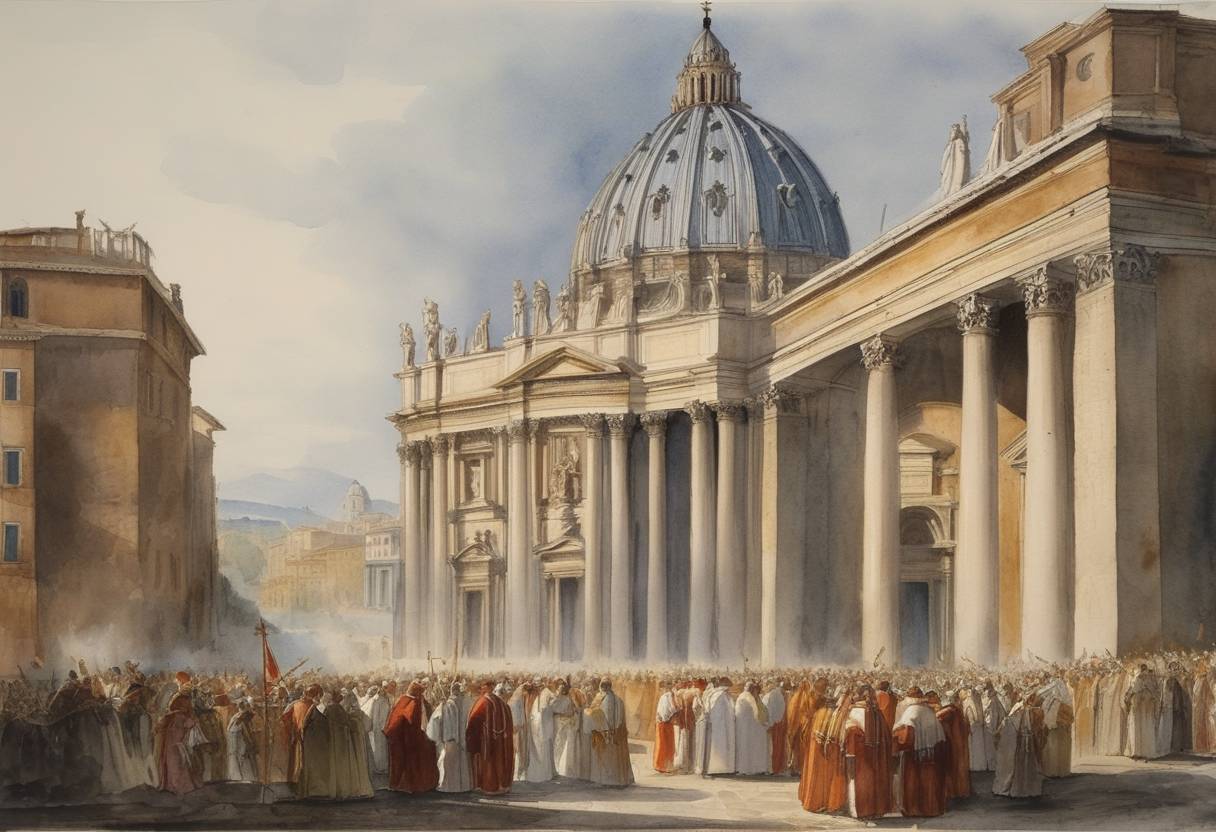
On February 12, 1049, Bruno of Egisheim-Dagsburg was consecrated as Pope Leo IX, a pivotal moment in the history of the Catholic Church. His papacy, which began on this date, is noted for initiating significant reforms aimed at addressing prevalent issues within the Church, including clerical simony and enforcing clerical celibacy.
Before becoming Pope, Bruno was the Bishop of Toul in France, where he earned a reputation as a reformer committed to moral and spiritual renewal. His election to the papacy, upon the request of the German Emperor Henry III, marked a concerted effort to revitalize the church and combat widespread corruption.
Combatting Simony: One of Pope Leo IX’s primary objectives was to eliminate the practice of simony, the buying and selling of ecclesiastical offices, which had become endemic. He utilized synods, which are gatherings of church leaders, to address this issue, deposing bishops and priests who had acquired their positions through simoniacal means.
Enforcing Clerical Celibacy: Pope Leo IX also emphasized the enforcement of clerical celibacy, which was seen as a way to ensure the Church’s moral integrity and independence. Celibacy was urged not only as a spiritual discipline but also as a means to reduce instances of nepotism and ensure that church offices remained within the institution’s control.
Pope Leo IX’s efforts laid the groundwork for what would later develop into the Gregorian Reform movement. This movement, named after Pope Gregory VII, sought to further continue and expand on the reforms initiated by Leo IX. His papacy marks a significant era in Church history, characterized by a strive toward greater spiritual discipline and organizational reform that would reverberate throughout the Christian world for decades.
Leo IX’s reformist agenda and his drive for a more elevated and purged clergy had long-lasting effects. It set the stage for the later tensions and eventual schism in 1054 between the Western and Eastern Christian churches, partly arising from differing theological and ecclesiastical practices accentuated by reformist policies.
Pope Leo IX is therefore remembered not only for his immediate impact on the Catholic Church’s clerical standards but also for his role in shaping its future direction. His papacy is noted as a foundational period in the church’s struggle for spiritual purity and administrative integrity.
Source: en.wikipedia.org