The Proclamation of the Kingdom of Italy on May 17, 1861
1861 · Turin, Italy
The Kingdom of Italy was officially declared, following the annexation of various states in the Italian peninsula.
May 27, 1860
Giuseppe Garibaldi began his successful invasion of Sicily as part of the Expedition of the Thousand, in support of the unification of Italy.
Marsala, Italy | Expedition of the Thousand
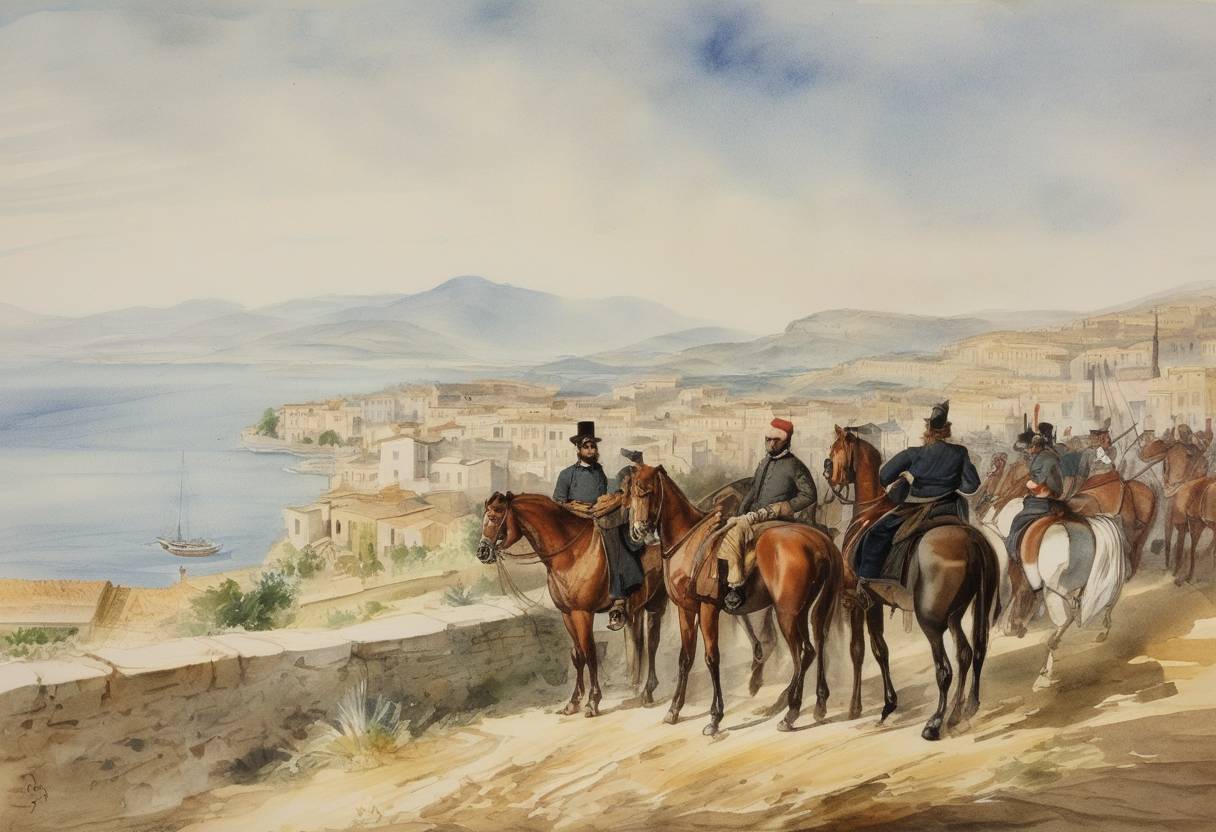
On May 27, 1860, Giuseppe Garibaldi, a key figure in the Italian unification movement, commenced his assault on Sicily as part of the celebrated Expedition of the Thousand. This military campaign was integral to the broader Risorgimento, the 19th-century movement aimed at consolidating the various states of the Italian Peninsula into a single nation-state.
In the mid-19th century, Italy was divided into several states, many under foreign control or influence. The Kingdom of the Two Sicilies, ruled by the Bourbon monarchy, included Sicily and was viewed as a significant obstacle to unification due to its reliance on foreign powers, specifically the Austrian Empire. The desire for national unity and independence from foreign domination was widespread, yet achieving it required both diplomatic maneuvering and military action.
Garibaldi, a seasoned and charismatic general, garnered support from various factions, including the influential Italian nationalist Giuseppe Mazzini. He organized a volunteer force known as the “Redshirts,” named for their distinctive uniforms. This force consisted of around 1,000 volunteers, predominantly composed of young men from northern Italy.
The expedition set sail from Quarto, near Genoa, on May 5, 1860. They landed at Marsala, Sicily, on May 11 and quickly advanced inland. Garibaldi’s leadership, coupled with his ability to inspire local insurgents, enabled him to amass support against the Bourbon rule as they advanced.
By May 27, Garibaldi and his forces had reached the outskirts of Palermo, the capital of Sicily. The city was a stronghold of Bourbon power; capturing it was crucial for Garibaldi’s campaign. Despite being significantly outnumbered, Garibaldi utilized guerrilla tactics and engaged in street-by-street combat.
The capture of Palermo, concluded by early June, marked a significant turning point. It demonstrated the vulnerability of the Bourbon rule and emboldened the push for Italian unification. The success in Sicily paved the way for Garibaldi’s subsequent victories across the Italian Peninsula, gaining international attention and support for the unification cause.
Garibaldi’s actions during the Expedition of the Thousand played a pivotal role in the eventual annexation of the Kingdom of the Two Sicilies to the Kingdom of Sardinia. This was a crucial step towards the proclamation of the Kingdom of Italy in 1861. His legacy remains deeply etched in Italian history as a symbol of unification and national identity.
Source: en.wikipedia.org