The Great Vancouver Fire of June 13, 1886
1886 · Vancouver, Canada
A fire devastated much of Vancouver, British Columbia, shortly after its incorporation as a city, leading to significant rebuilding efforts.
June 19, 1902
The Keystone State Building collapses in Philadelphia due to a fire.
Philadelphia, USA | None
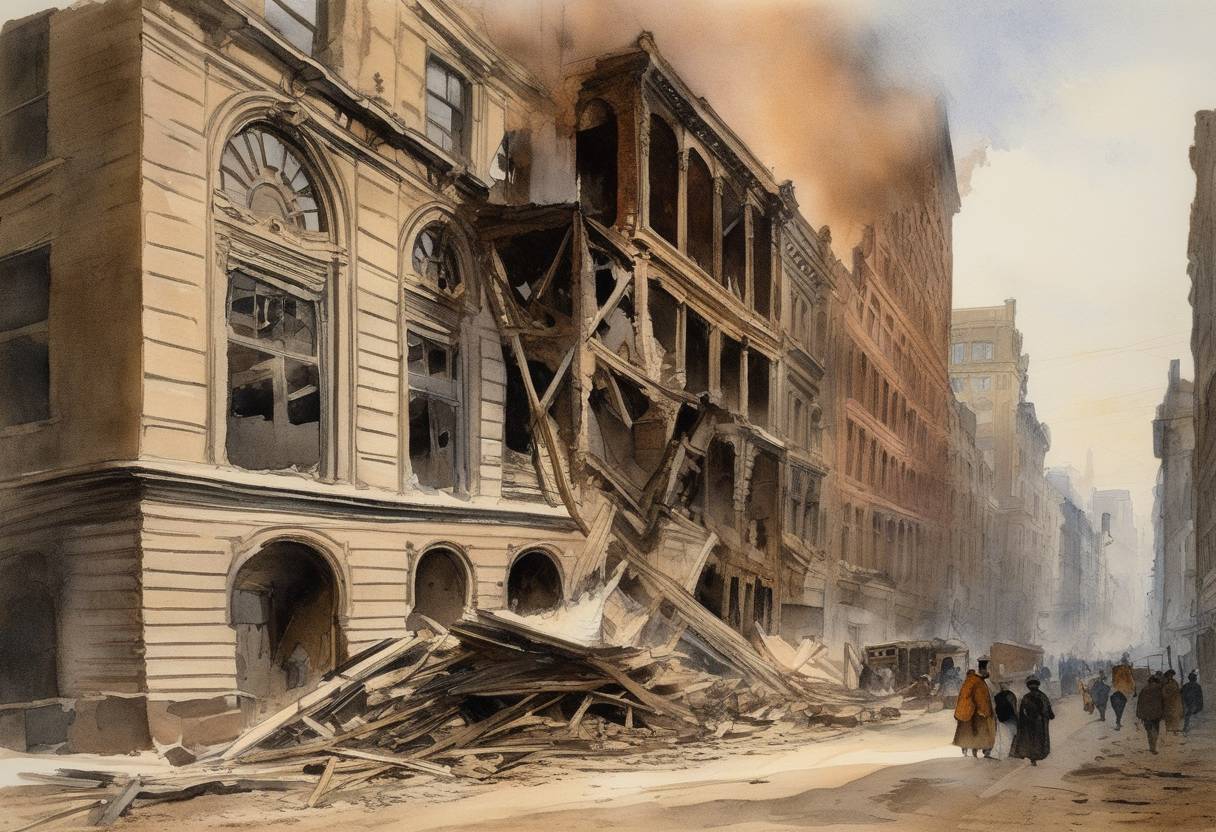
On June 19, 1902, a devastating fire led to the collapse of the Keystone State Building in Philadelphia, Pennsylvania. This tragic event occurred during a time when urban growth and the need for taller structures were burgeoning due to the pressures of industrialization and expanding urban centers.
The early 1900s marked a period of significant industrial and architectural evolution in the United States. Philadelphia, as one of the leading industrial cities, was no exception. The city was home to numerous warehouses, factories, and commercial buildings. The Keystone State Building was a notable structure in the city, reflecting the architectural and economic aspirations of the period.
The fire broke out in the Keystone State Building under unclear circumstances. Despite efforts by the fire department to control the blaze, the structure could not withstand the intense heat, leading to its collapse. The rapid spread of the fire and the building’s subsequent fall highlighted the vulnerabilities of early 20th-century construction methods, particularly concerning fire safety standards.
The collapse resulted in significant damage, led to financial losses, and most importantly, brought about a loss of life and injury, emphasizing the deadly consequences of insufficient fire safety measures. This disaster underscored the need for more stringent building codes and fire regulations. It served as a somber reminder of the risks associated with urban development and the importance of implementing safety measures in architectural practices.
In the years following the Keystone State Building collapse, there was a marked shift toward developing improved fire-resistant materials and enforcing stricter fire codes in urban constructions. Cities across the United States, including Philadelphia, began revising their safety standards to prevent such tragedies from recurring.
The event also contributed to a growing public awareness and demand for increased safety measures in workplaces and urban structures, which played a part in shaping modern building regulations and fire department protocols.
The collapse of the Keystone State Building on June 19, 1902, stands as a significant event in the history of urban development and fire safety regulation. It reflects the challenges and dangers that accompanied the rapid industrialization of American cities and marks a pivotal moment in the push towards safer and more resilient urban infrastructure.