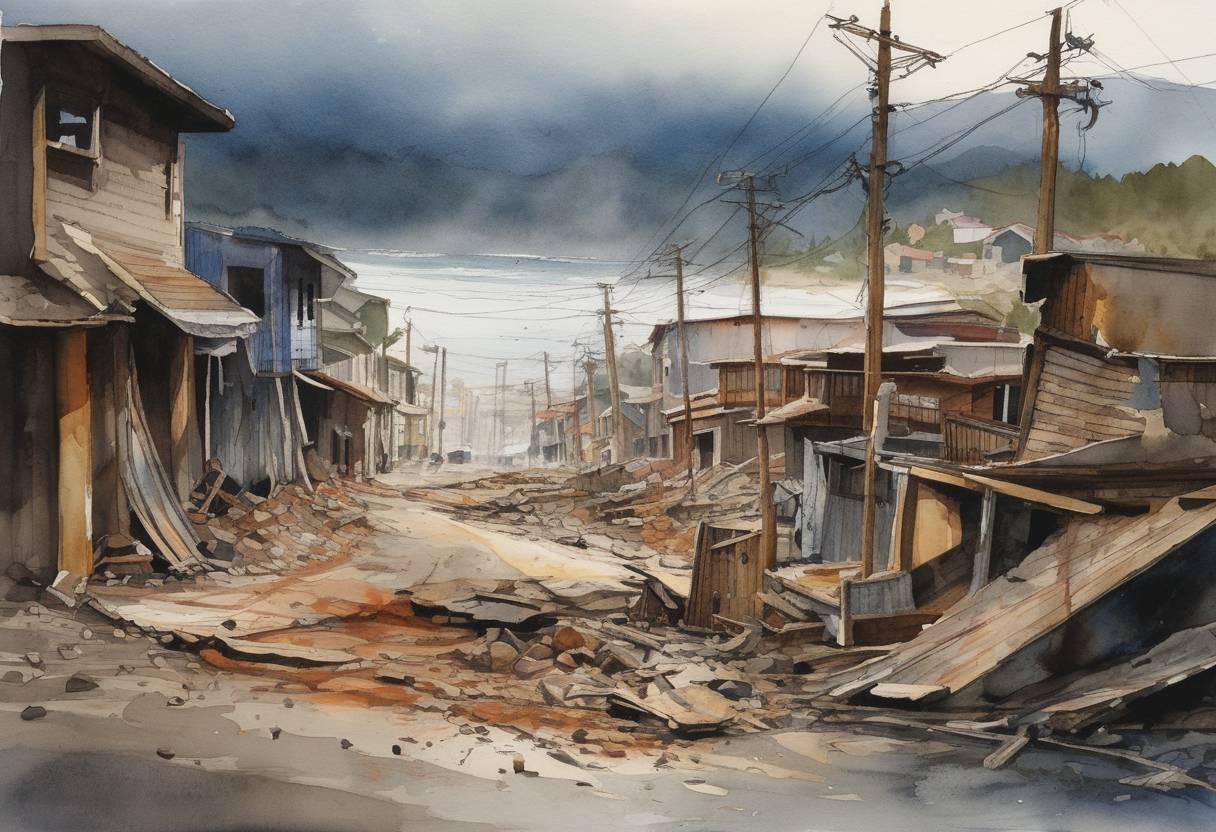
The 8.8 Magnitude Earthquake in Chile: February 28, 2010
On February 28, 2010, a massive earthquake measuring 8.8 on the moment magnitude scale struck off the coast of central Chile at 03:34 local time. The epicenter was located near the city of Maule, approximately 115 kilometers (about 71 miles) north-northeast of Chile’s second-largest city, Concepción.
Geological Context
The earthquake occurred along the boundary between the Nazca and South American tectonic plates, an area characterized by significant seismic activity. The Nazca plate is subducting beneath the South American plate at a rate of about 65 millimeters per year. This convergent boundary is known for producing some of the world’s largest recorded earthquakes.
The earthquake resulted in extensive destruction across the central-southern regions of Chile. Cities such as Concepción, Talcahuano, Constitución, and Chillán experienced severe damage. Critical infrastructure, including roads, bridges, and buildings, was heavily impacted. Approximately 1.5 million homes were damaged, and hundreds of thousands were left without power or water services.
The capital city, Santiago, located around 325 kilometers (about 202 miles) from the epicenter, also experienced significant tremors, resulting in damage to buildings and infrastructure. Communications were disrupted, complicating response efforts.
Human Casualties and Displacement
The earthquake claimed the lives of over 500 people, and many more were injured. The true extent of human displacement was substantial, with hundreds of thousands of individuals left homeless or living in makeshift shelters. Aid efforts were hampered by the destruction of roads and airports, which initially hindered the delivery of much-needed supplies and assistance.
Tsunami
The powerful undersea quake generated a tsunami that spread across the Pacific Ocean. Tsunami warnings were issued in 53 countries, and waves were observed as far away as the shores of Japan, New Zealand, and Hawaii. The Chilean coastal town of Constitución was particularly hard hit, with large waves causing additional loss of life and destruction.
Aftermath and International Response
The Chilean government, led by President Michelle Bachelet, declared a state of catastrophe in affected areas and mobilized the military to assist with rescue and recovery operations. International aid poured in from numerous countries and organizations, contributing to relief efforts and the rebuilding process.
In the months and years following the disaster, Chile implemented stricter building codes and improved its emergency response systems to better prepare for future seismic events. The 2010 earthquake and tsunami were reminders of the region’s vulnerability to natural disasters and catalyzed advances in seismological research and preparedness strategies.
Broader Significance
The earthquake of February 28, 2010, is notable not only for its magnitude and immediate impact but also for highlighting the resilience and recovery capabilities of Chile. Despite the scale of the disaster, the country’s robust infrastructure and well-organized national response likely mitigated the long-term socio-economic effects. This event remains one of the largest earthquakes recorded in terms of magnitude and has been extensively studied to improve understanding of seismic risks associated with subduction zones.