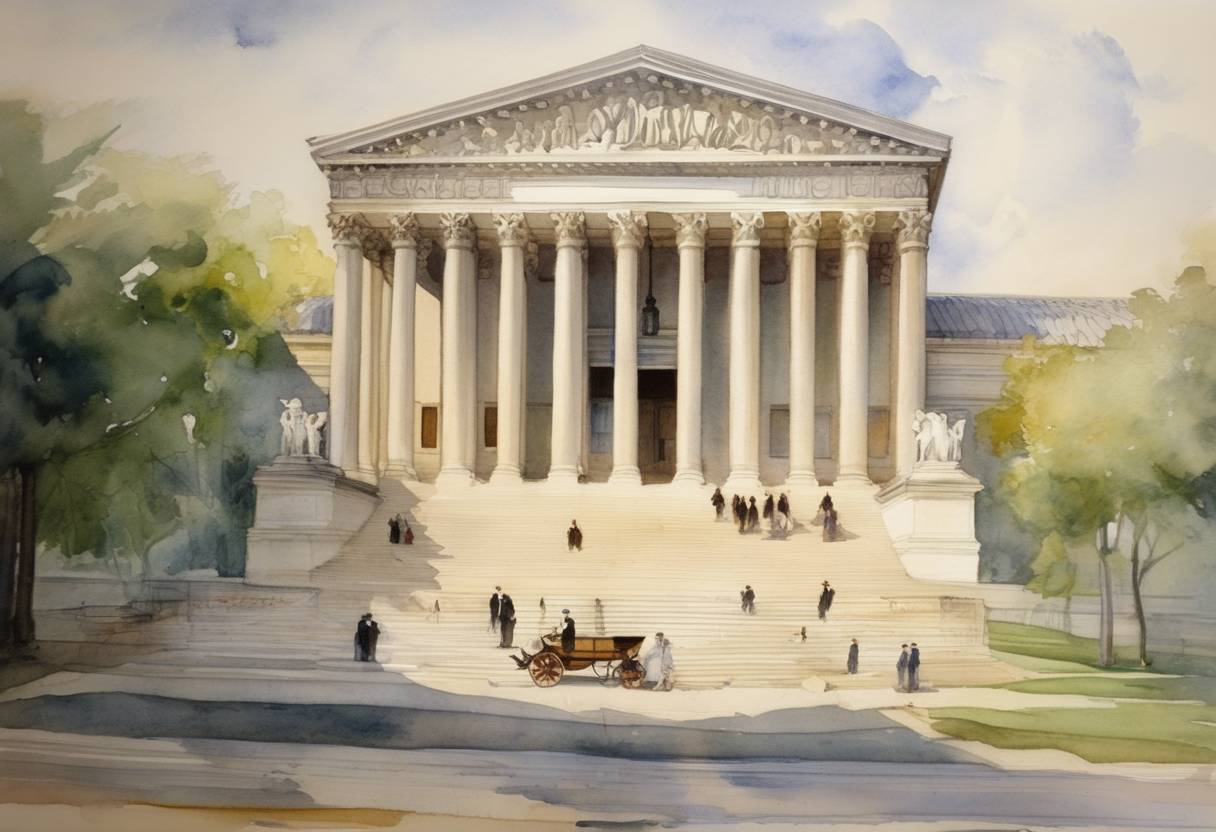
Frank v. Mangum: The Supreme Court Decision on April 17, 1915
On April 17, 1915, the Supreme Court of the United States delivered its decision in the case of Frank v. Mangum, pertaining to the infamous trial and conviction of Leo Frank. Frank, a Jewish factory superintendent in Atlanta, Georgia, was convicted in 1913 for the murder of Mary Phagan, a 13-year-old employee at the National Pencil Company. The case drew significant national attention due to the legal questions it raised, including issues surrounding the fairness of the trial and the prevalence of anti-Semitic sentiments.
Background
The Crime and Trial: The murder of Mary Phagan occurred on April 26, 1913. Leo Frank was arrested shortly after and subjected to a highly publicized trial. The atmosphere in Atlanta was charged, with significant media coverage and public interest.
Conviction and Appeals: Frank was found guilty in August 1913 and sentenced to death. The trial was widely criticized due to alleged jury bias and public threats, which affected its outcome. Frank’s legal team pursued appeals, arguing that his trial had been influenced by a hostile environment and that key evidence had been mishandled.
Supreme Court Case
Issue: Leo Frank’s attorneys presented the case to the Supreme Court, aiming to overturn the conviction on grounds that Frank’s right to a fair trial had been violated. They particularly highlighted the influence of mob justice and the irregularities during the proceedings.
Decision: On April 17, 1915, the Supreme Court upheld the lower court’s decision with a 7-2 vote. The majority opinion, delivered by Justice Edward Douglass White, concluded that the due process claim was not sufficient to warrant overturning the conviction based on the presented evidence.
Aftermath
Clemency and Lynching: Despite the Supreme Court’s decision, mounting pressure from prominent figures and evidence of trial misconduct led Georgia Governor John M. Slaton to commute Frank’s sentence from death to life imprisonment in June 1915. This action provoked public outrage and led to the lynching of Leo Frank by an armed mob on August 17, 1915.
Legacy: The case highlighted severe flaws in the American justice system, particularly regarding racial and religious prejudice. The trial and its aftermath played a crucial role in the revival of the Ku Klux Klan and the formation of the Anti-Defamation League, reflecting its lasting impact on American society.
Frank v. Mangum remains a landmark case in discussions about legal fairness, due process, and the influence of societal biases on the American judiciary.