Florida's Admission as the 27th U.S. State
1845 · Tallahassee, United States
Florida is admitted as the 27th U.S. state.
July 10, 1821
The United States takes possession of its newly acquired Florida Territory from Spain.
Pensacola, United States | United States government
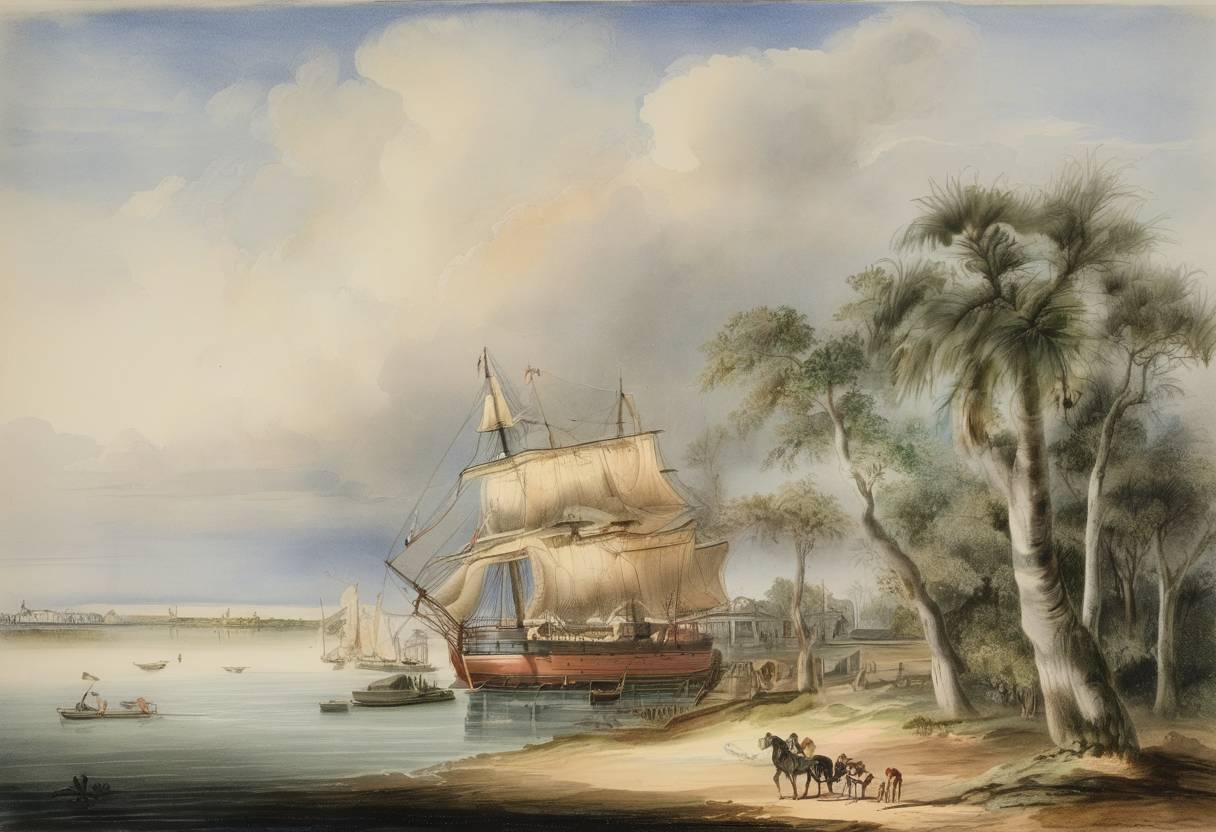
On July 10, 1821, the United States formally took possession of Florida from Spain, marking a pivotal moment in American territorial expansion. This event was the culmination of years of negotiation and diplomacy, formalized by the Adams-Onís Treaty, also known as the Transcontinental Treaty, signed on February 22, 1819. The treaty was ratified by Spain in October 1820, and by the United States Senate in February 1821.
In the early 19th century, Florida was a strategically vital and troubled region. It was increasingly seen as a haven for runaway slaves and hostile Native American groups, notably the Seminole. The Spanish governance was weak, and the region posed a security concern for the Southern states of the US.
The Adams-Onís Treaty was negotiated between John Quincy Adams, then U.S. Secretary of State, and the Spanish minister Luis de Onís. The agreement not only granted Florida to the United States but also defined the boundary between the U.S. and New Spain (present-day Mexico).
On this historic day, the transfer of authority was officially conducted at the Government House in Pensacola, the capital of West Florida. General Andrew Jackson, who was appointed as the military commissioner and governor of the newly acquired territory, raised the American flag, and control was formally transferred from Spanish authorities.
During the ceremony, the Spanish governor, José María Callava, surrendered his authority in a symbolic act witnessed by local residents and officials. This peaceful handover was a significant expansion of U.S. territory, extending its southern border and enhancing its strategic and economic prospects.
The acquisition of Florida had several lasting impacts:
Military and Security: The U.S. military presence in the region increased, quelling conflicts with Native American tribes and securing the Southern border.
Economic Development: Florida’s fertile land attracted settlers and speculators, contributing to agricultural growth, particularly in the cotton industry.
Diplomatic Milestone: The acquisition showcased the efficacy of diplomatic negotiation in territorial expansion, setting a precedent for future treaties and purchases.
Political Challenges: Managing newly acquired territories required the establishment of governance structures, leading to notable political and legal developments, including the eventual path to Florida’s statehood in 1845.
The peaceful transfer of Florida from Spain to the United States underscored a period of significant growth and change, reflecting the young nation’s ambitions and the evolving geopolitical landscape of North America.
Source: www.britannica.com