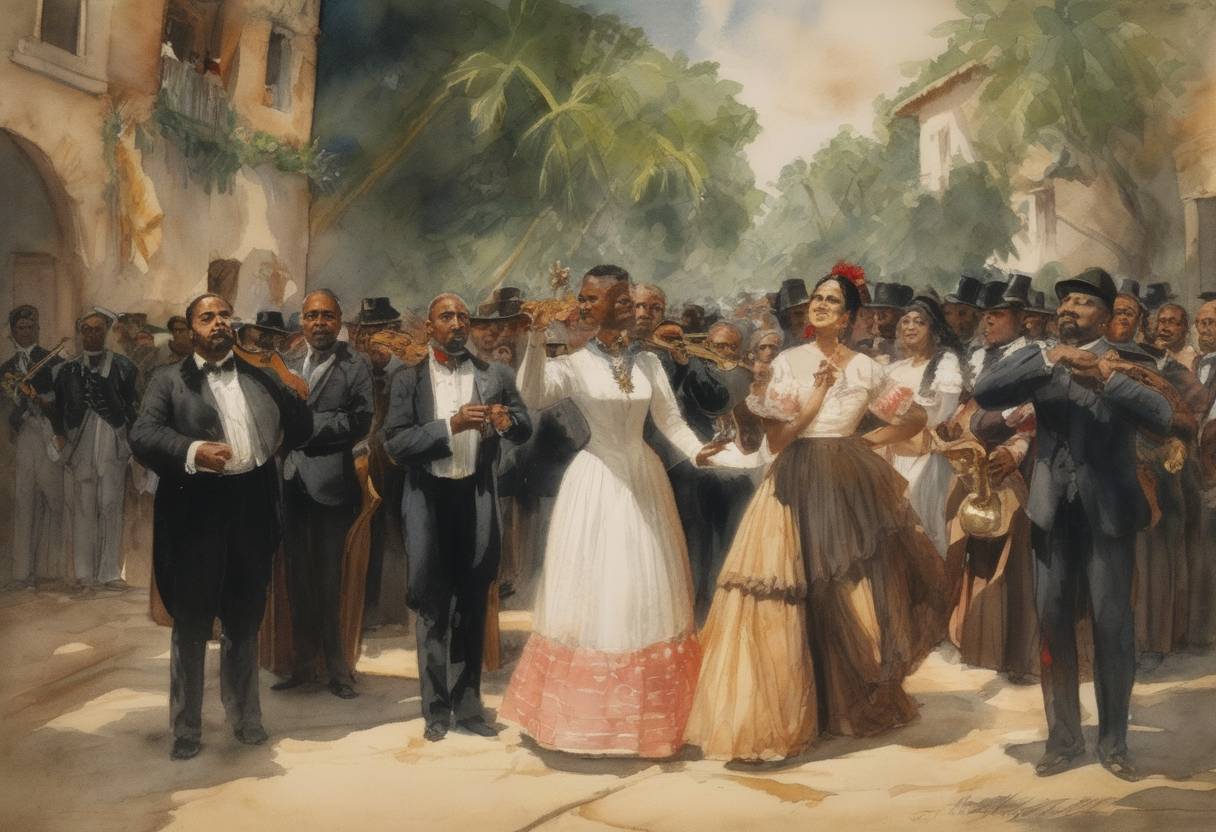
On August 17, 1883, the first public performance of the Dominican Republic’s national anthem, “Himno Nacional,” took place. The anthem features music composed by José Reyes with lyrics written by Emilio Prud’Homme. This significant cultural event was held in the former Theatre La Republicana in Santo Domingo, marking a pivotal moment in the national identity of the Dominican Republic.
Historical Context
The Dominican Republic was in a period of cultural and political consolidation during the late 19th century, following its independence from Haiti in 1844 and fluctuating periods of foreign occupation and political instability. Establishing national symbols like a national anthem was part of broader efforts to foster a distinct Dominican identity and unity.
Composition and Significance
José Reyes, a notable composer, crafted the music, while Emilio Prud’Homme, an esteemed poet and thinker, provided the inspiring lyrics that emphasize themes of freedom, national pride, and patriotic duty. The anthem, reflecting Dominican resilience and aspirations, became an integral part of the country’s heritage and a symbol of its autonomous spirit.
Adoption as National Anthem
Although first performed publicly in 1883, “Himno Nacional” was officially adopted as the Dominican Republic’s national anthem three years later. The official recognition occurred on May 30, 1884, after the anthem gained popularity and resonance among the populace, becoming a poignant element of national ceremonies and celebrations.
Legacy
Today, “Himno Nacional” remains a vital emblem of the Dominican Republic’s cultural legacy and national pride. Its enduring presence at public events and its role in fostering national unity reflect the anthem’s lasting importance in the Dominican Republic’s historical and cultural narrative.