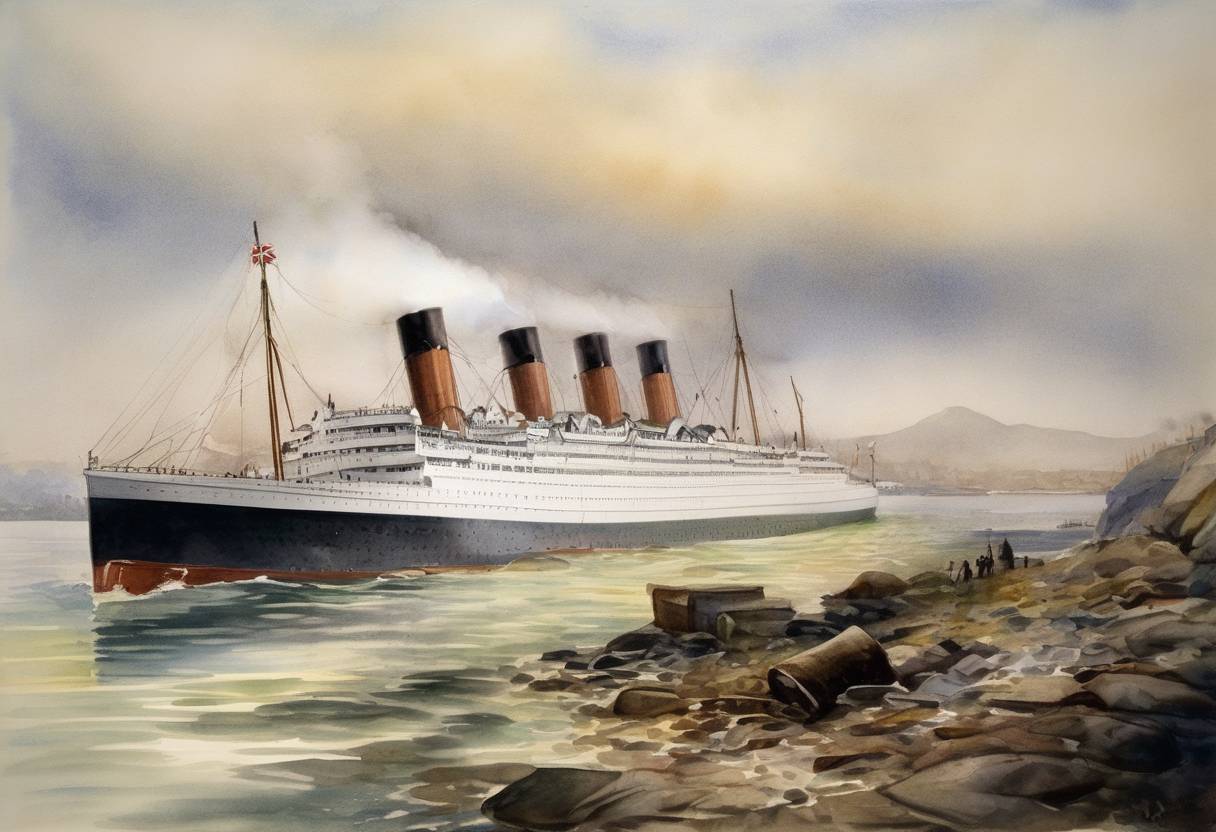
Sinking of the RMS Empress of Ireland - May 29, 1914
On May 29, 1914, one of the most tragic peacetime maritime disasters in history occurred when the ocean liner RMS Empress of Ireland sank in the Saint Lawrence River near Pointe-au-Père, Quebec, after colliding with the Norwegian collier SS Storstad. This devastating event resulted in the loss of 1,012 lives.
Background
- RMS Empress of Ireland was a Canadian Pacific Steamships ocean liner that operated between Canada and the United Kingdom. Built by Fairfield Shipbuilding and Engineering Company in Scotland and launched in 1906, she was a well-regarded vessel known for her speed and comfort.
- SS Storstad, a Norwegian coal carrier under the command of Captain Thomas Andersen, was involved in trade routes along the Atlantic from Britain.
The Collision
- In the early hours of May 29, 1914, the RMS Empress of Ireland departed from Quebec City, bound for Liverpool with 1,477 passengers and crew on board.
- Weather conditions initially consisted of clear skies but soon deteriorated as a thick, dense fog enveloped the river.
- At approximately 1:55 AM local time, the Empress of Ireland collided with the Storstad. Miscommunication and navigation errors in the fog led to the disaster, as the Storstad’s bow struck the Empress of Ireland midship, causing a catastrophic breach.
Aftermath
- The collision caused the Empress of Ireland to list severely and sink within 14 minutes, drowning many passengers who were asleep at the time of impact.
- The location of the collision, in the cold and swift waters of the Saint Lawrence River, along with the speed at which the ship sank, contributed significantly to the high death toll.
- After an inquiry, it was determined that both ships failed to take adequate measures to avoid collision. Fault was attributed mainly to misunderstandings in signal communications under foggy conditions.
Historical Significance
- The sinking of the RMS Empress of Ireland is often compared to the infamous Titanic disaster but remains lesser-known, despite resulting in a significant loss of life.
- This tragedy highlighted the need for improved maritime safety standards and better communication protocols during poor visibility conditions, influencing future maritime navigation regulations.
- A subsequent inquiry and extensive media coverage focused international attention on shipping safety, leading to changes in laws to further protect passengers at sea.
The memory of the Empress of Ireland endures through artifacts and exhibits, particularly at the Canadian Museum of History, providing a somber reminder of the vulnerabilities of early 20th-century sea travel.