J.K. Rowling's Birth and Early Life
1965 · Yate, United Kingdom
J. K. Rowling, a British author best known for writing the Harry Potter series, was born.
January 27, 1832
Charles Lutwidge Dodgson, better known as Lewis Carroll, the author of 'Alice's Adventures in Wonderland,' was born.
Daresbury, United Kingdom | birth event
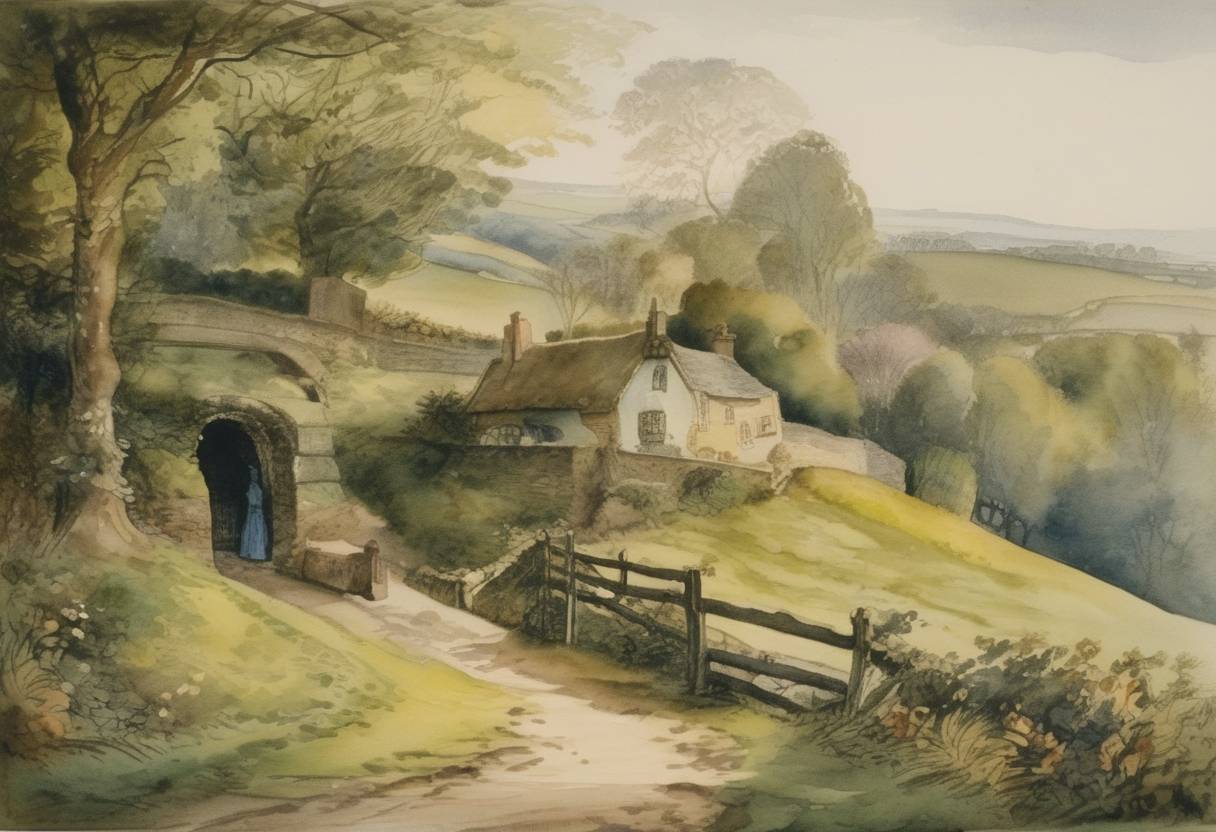
Charles Lutwidge Dodgson, who is famously known by his pen name Lewis Carroll, was born on January 27, 1832, in the small village of Daresbury, Cheshire, England. He was the eldest son in a family of eleven children. Dodgson’s father, Charles Dodgson, was a clergyman in the Church of England.
Dodgson’s early life was marked by a strong academic environment. His father was not only a clergyman but also a scholar who had a considerable influence on his son’s intellectual development. In 1846, Dodgson was sent to Rugby School, one of England’s preeminent public schools of the time. He later attended Christ Church, Oxford, where he developed a talent for mathematics, eventually becoming a lecturer in the field.
Though Dodgson had a successful career in mathematics, he is best known for his contributions to literature under the pseudonym Lewis Carroll. In 1865, he published “Alice’s Adventures in Wonderland,” a whimsical tale that reflects his interests in logic and puzzles, featuring characters based on his interactions with the children of Henry Liddell, the Dean of Christ Church, particularly Alice Liddell.
The novel was an instant success and remains a seminal work in the fantasy genre. Its sequel, “Through the Looking Glass and What Alice Found There,” published in 1871, cemented Carroll’s legacy as a master of literary nonsense and fantasy narrative.
Lewis Carroll’s works are celebrated for their imaginative use of language and innovative narrative style. His books have been translated into numerous languages and continue to be adapted into various media. Carroll’s identity as a dual figure—a mathematician and a literary genius—embodies the Victorian era’s intersections between science, art, and literature, highlighting the broader cultural shifts of the 19th century.
Carroll’s lasting influence is evident in the countless adaptations and references to his work in popular culture, as well as in academic studies that explore the depths of logical puzzles and literary techniques found in his writing.
Source: www.biography.com