Estonia's EU Accession Referendum - September 14, 2003
2003 · Tallinn, Estonia
Estonia held a referendum on joining the European Union, with the majority voting in favor of accession.
August 31, 1994
The last Russian troops left Estonia, following the country's independence from the Soviet Union in 1991. This withdrawal symbolized the end of Russian military presence in the Baltic state and was part of broader efforts to secure sovereignty over its territory.
Tallinn, Estonia | Russian military
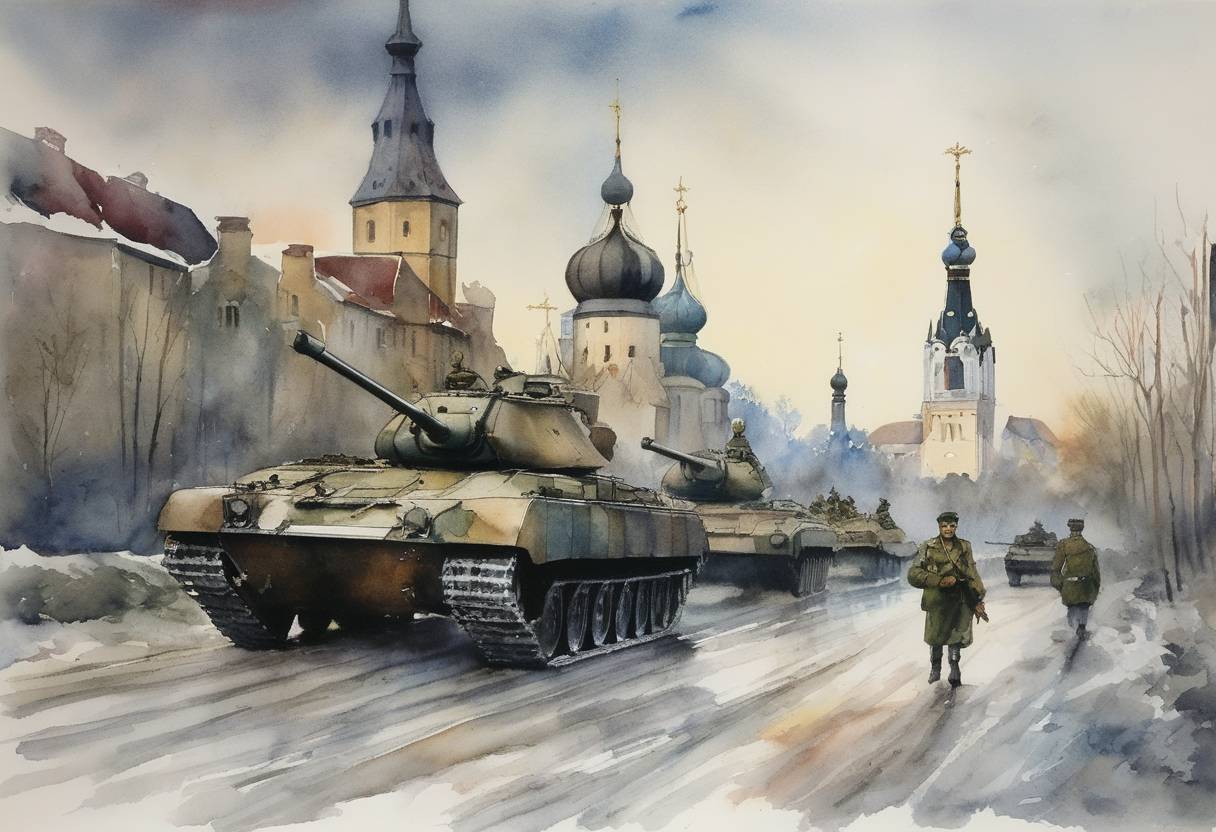
The withdrawal of the last Russian troops from Estonia on August 31, 1994, marked a significant moment in the post-Soviet trajectory of the Baltic states toward full sovereignty and independence. This event was not only symbolic of Estonia’s regained political autonomy but also represented a major step in the reconfiguration of power dynamics in Eastern Europe after the collapse of the Soviet Union.
Estonia, along with its Baltic neighbors Latvia and Lithuania, gained independence from the Soviet Union in 1991. However, Russian military forces remained on Estonia’s soil even after the dissolution of the USSR, largely due to the Soviet military infrastructure that had been established during its rule.
The presence of these troops was seen as a continued infringement on the newly reestablished sovereignty of Estonia. It became a point of tension between Estonia and Russia and a significant issue in the broader context of Europe’s geopolitical realignment in the early 1990s.
The path to the withdrawal of Russian troops was part of larger negotiations between Estonia and Russia, driven by Estonia’s determination to solidify its independence and integrate with Western political and security frameworks, including the European Union and NATO.
The breakthrough came with a series of negotiations that culminated in an agreement reached in July 1994, setting the definitive date for the withdrawal. The Estonian government, led by Prime Minister Mart Laar, played a crucial role in navigating these discussions, balancing diplomatic pressures while asserting its national interests.
On August 31, 1994, the final contingent of Russian troops left the Miinisadam naval base in Tallinn, Estonia’s capital. This marked the cessation of any formal Russian military presence and was celebrated as a day of national achievement in Estonia. It was a pivotal step toward ensuring the country’s sovereign control over its territory and was met with both domestic and international approval.
The withdrawal was seen as part of a broader post-Cold War shift in Europe, signaling the end of Russian military influence in the Baltic region and facilitating these countries’ aspirations to join Western institutions.
This event had far-reaching implications for Estonia, bolstering its national security and facilitating its path toward membership in the European Union (EU) and the North Atlantic Treaty Organization (NATO), both of which it joined in 2004.
In the wider perspective, the withdrawal underscored the importance of international diplomacy in resolving post-imperial disputes and reaffirms the determination of post-Soviet states to pursue independent and democratic futures.
Source: www.britannica.com