1835 · Lipantitlán, Mexico
The Texas Revolution sees the Battle of Lipantitlán, resulting in a Texian victory. This battle helps the Texians maintain control of the Nueces Strip, disrupting Mexican troop movements in the region.
October 20, 1835
The Texas Revolution: The Battle of Concepción, the first major armed conflict of the war, was fought between Mexican troops and Texan insurgents.
Concepción, Mexico | Mexican Army, Texan insurgents
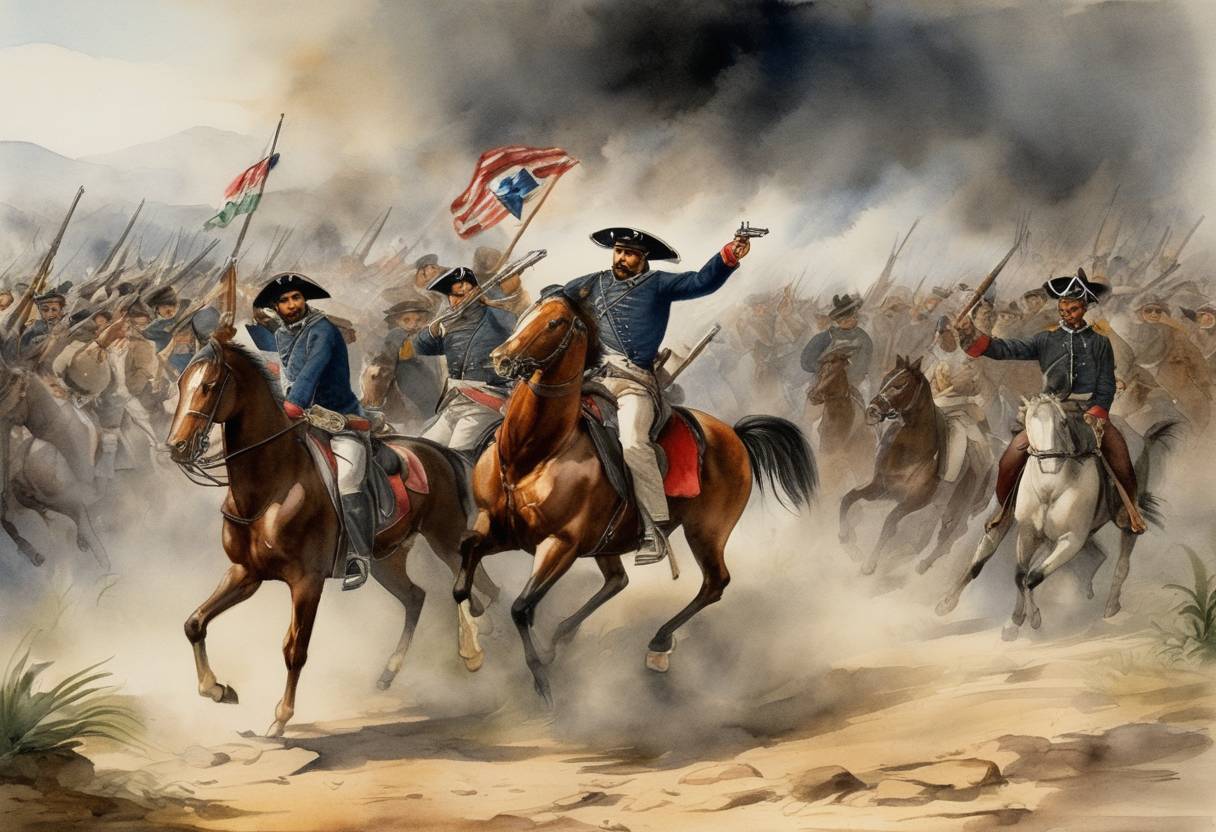
The Texas Revolution, a rebellion of colonists from the United States and Tejanos against Mexican rule, began in earnest with a series of armed conflicts. The Battle of Concepción, although often cited as one of the early significant skirmishes of the war, took place on October 28, 1835, rather than October 20. Fought near Mission Concepción, this battle was a pivotal moment for Texan forces as it demonstrated their capability against a larger Mexican force.
Leading up to the battle, tensions were escalating in Texas due to the Mexican government’s centralist policies under President Antonio López de Santa Anna. Texans, seeking more autonomy, had begun organizing armed resistance by late 1835. Colonel James Fannin and his men, part of an advance group of the Texas Revolutionary forces, had entrenched themselves at Mission Concepción near San Antonio de Béxar.
On the morning of October 28, 1835, Mexican forces led by Colonel Domingo de Ugartechea engaged the Texan rebels commanded by James Fannin and James Bowie. The Mexican army, numbering around 275 troops, attempted a surprise attack but were met by a well-prepared Texan position. The terrain provided natural fortifications, and the Texans’ superior marksmanship resulted in a significant disparity in casualties, with the Mexican forces sustaining heavier losses.
The Battle of Concepción resulted in a decisive victory for the Texan insurgents. This engagement not only boosted Texan morale but also solidified the leadership of figures like James Bowie, who emerged as key leaders in the revolution. The victory demonstrated the effectiveness of smaller, agile forces against a larger, conventional army, setting a precedent for future engagements in the Texas Revolution.
In the broader context of the Texas Revolution, the battle underscored the resolve of the Texan rebels and marked the beginning of a series of conflicts that eventually led to the independence of Texas from Mexico. Despite the numerical superiority of the Mexican forces throughout the revolution, battles like Concepción showed the growing organizational and tactical prowess of the Texan insurgents.
Source: www.tshaonline.org