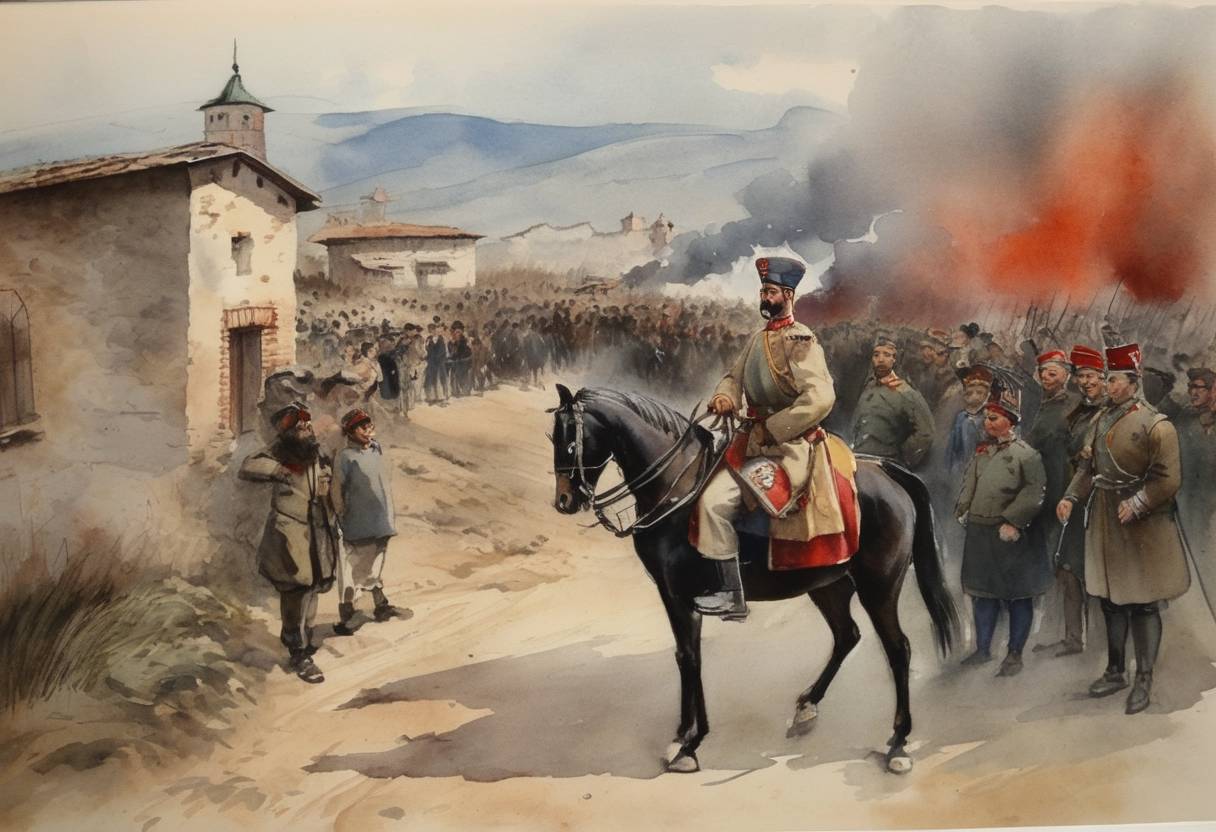
Bulgaria Signs Armistice with the Ottoman Empire - December 3, 1912
On December 3, 1912, the Kingdom of Bulgaria signed an armistice with the Ottoman Empire, temporarily halting hostilities during the First Balkan War. This ceasefire marked a significant pause in the conflict, orchestrated to facilitate negotiations for a peaceful resolution.
Context and Background
The First Balkan War, which began in October 1912, involved the Balkan League — comprising Bulgaria, Serbia, Greece, and Montenegro — against the weakening Ottoman Empire. The primary objective of the Balkan states was to gain territories and independence from Ottoman control, capitalizing on the empire’s declining power and internal strife.
Events Leading to the Armistice
By late November 1912, the Balkan League had achieved substantial military successes. Bulgarian forces, in particular, had advanced close to the prestigious Ottoman city of Constantinople (modern-day Istanbul), causing significant concern within the Ottoman leadership. The League’s military effectiveness and rapid progression put immense pressure on the Ottomans to seek a cessation of hostilities.
Negotiation Process
The armistice discussions took place in the context of the precarious Ottoman defensive position, as they faced multiple fronts of conflict. International diplomacy also played a role, as the Great Powers of Europe were vested in avoiding a broader regional conflict and were instrumental in pushing for the halt to hostilities.
Terms of the Armistice
The armistice between Bulgaria and the Ottoman Empire stipulated a temporary halt to military operations to allow peace negotiations to progress. This ceasefire was to last for two months, though it ultimately did not result in a comprehensive peace settlement.
Aftermath and Consequences
Despite the armistice, negotiations at the London Peace Conference, which began later in December, were fraught with challenges, including disagreements over territorial divisions and governance of key areas. The ceasefire ended when hostilities resumed in February 1913 due to the breakdown of negotiations, leading to the eventual continuation of the conflict until the Treaty of London in May 1913.
Broader Historical Significance
The armistice was significant as a temporary measure that highlighted the complexities of Balkan politics and the limitations of diplomatic interventions at the time. It underscored the persistent nationalistic tensions in the region that would eventually contribute to larger international conflicts, notably World War I.
The events surrounding the armistice emphasized the difficulties faced by multinational empires in maintaining control and the rising tide of nationalism that characterized the early 20th century geopolitical landscape in Eastern Europe.