First Automobile Race in South Providence, Rhode Island - November 25, 1896
1896 · Providence, United States
The first Formula One automobile race held at the Race Course at Thanksgiving Day in South Providence, Rhode Island.
November 28, 1895
The first American automobile race took place. Organized by the Chicago Times-Herald, the race was a 54-mile course from Chicago to Evanston, Illinois and back.
Chicago, United States | Chicago Times-Herald
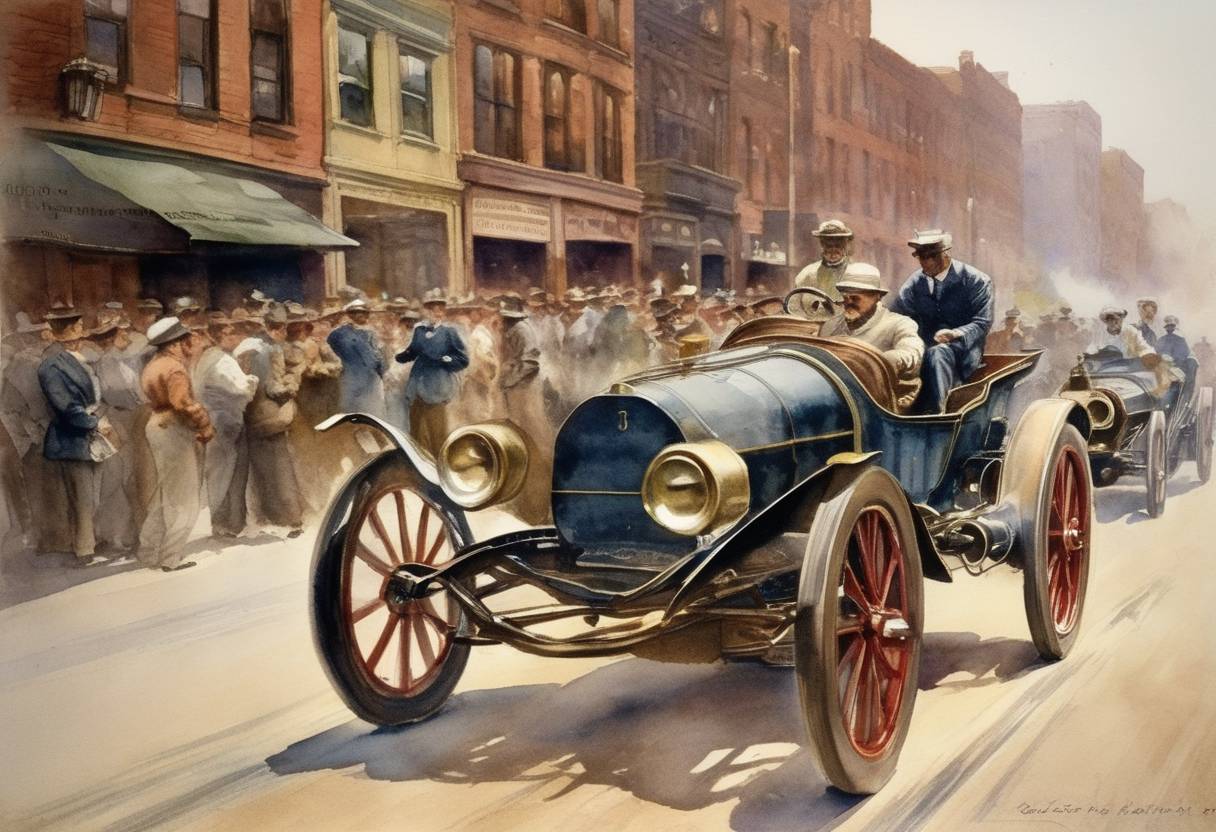
On November 28, 1895, the first American automobile race was held, marking a pivotal moment in automotive and transportation history. Organized by the Chicago Times-Herald, this landmark event featured a 54-mile course that stretched from Chicago to Evanston, Illinois, and back.
The Chicago Times-Herald, aiming to demonstrate the potential of the burgeoning automobile technology, announced the race in early 1895. Despite receiving numerous entries, only a small number of vehicles made it to the starting line due to the rigorous demands of the race and the nascent state of automobile technology.
The course began in Chicago and proceeded north to Evanston, traversing the city’s streets and country roads, before turning back to complete the loop. Given the time of year, the racers encountered challenging conditions, including snow and suboptimal road surfaces, which added to the difficulty of controlling their vehicles.
Out of the many initial entrants, only six vehicles started the race. These included gasoline-powered cars built by Frank Duryea and Charles Brady King, and electric and gasoline cars entered by various enthusiasts. The field was a mixture of technological approaches reflecting the experimental nature of automobiles at the time.
Frank Duryea’s motorcar, a gasoline-powered vehicle built by the Duryea Motor Wagon Company, completed the race in approximately 7 hours and 53 minutes, averaging about 7.5 miles per hour. This performance earned him the first prize of $2,000—a substantial sum at the time.
The race showcased the potential of gasoline engines and highlighted the practical challenges automobiles faced, such as reliability and road safety. The event generated significant public and media interest, catalyzing further developments in automotive technology and infrastructure.
The Chicago Times-Herald race is often credited with kick-starting the American automobile industry. It demonstrated the viability and appeal of personal motor vehicles and prompted advancements in automotive engineering. Moreover, it foreshadowed the burgeoning automobile culture that would develop in the United States, setting the stage for the profound impact that automobiles would have on American society and its economic landscape.
This iconic event not only illustrated the technical progress and spirit of innovation of the late 19th century but also laid the groundwork for the modern automotive era, influencing subsequent automobile races and motor shows worldwide.
Source: en.wikipedia.org