Samoset's Historic Contact with the Pilgrims on March 16, 1621
1621 · Plymouth, United States
Samoset, an Abenaki Native American, makes contact with the Pilgrims of Plymouth Colony, becoming the first Native American to do so.
December 21, 1620
The Pilgrims on board the Mayflower land at Plymouth Rock, Massachusetts.
Plymouth, British America (now United States) | Mayflower Compact signatories
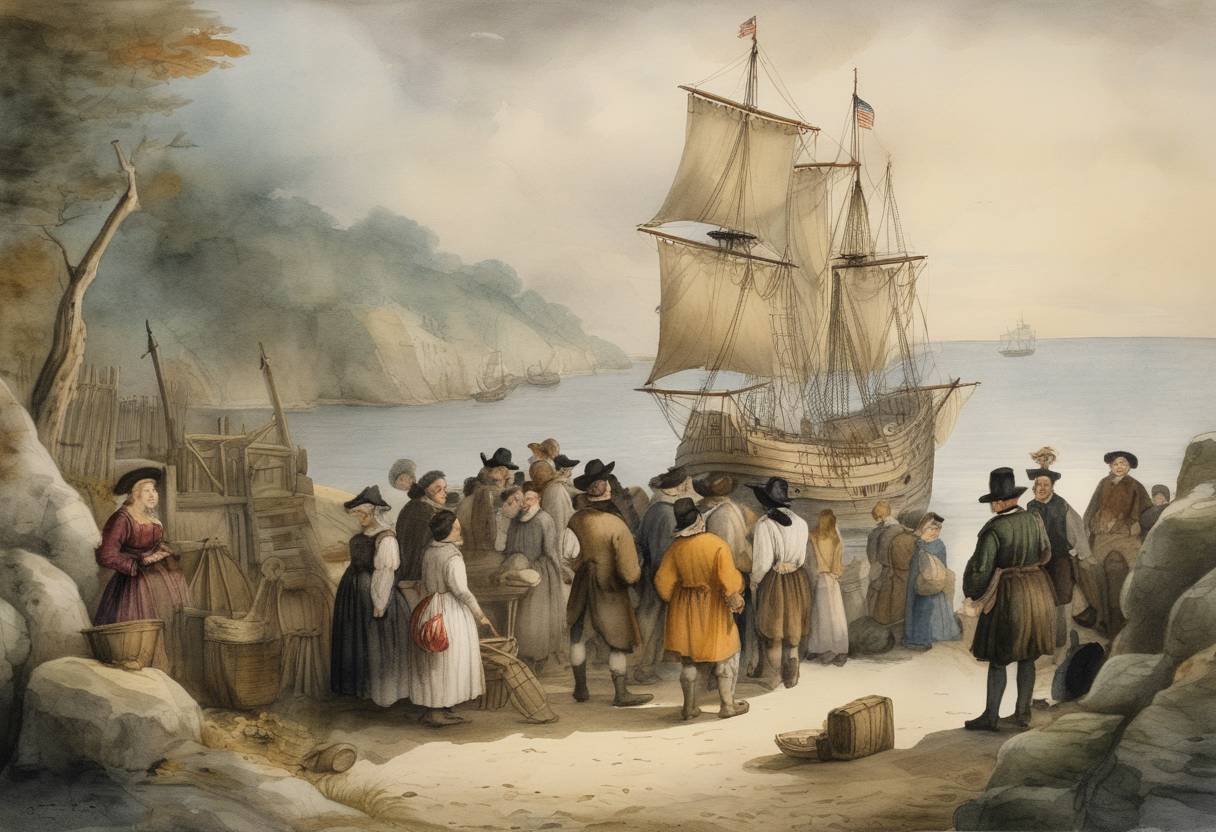
On December 21, 1620, a significant event in American history took place when the Pilgrims, onboard the Mayflower, landed at Plymouth Rock in present-day Massachusetts. This moment marked a foundational period in the settlement of the New England region by English colonists.
The journey began in September 1620 when the Mayflower departed from Plymouth, England. The vessel carried 102 passengers, including a group of religious Separatists seeking freedom from the Church of England, as well as other individuals motivated by various economic opportunities in the New World. After enduring a perilous transatlantic crossing marked by storms and navigational challenges, the ship initially anchored at Cape Cod in November 1620. However, it took another month of exploration and scouting before the Pilgrims finally arrived at a site they deemed suitable for settlement.
The location chosen by the Pilgrims for their new settlement was named Plymouth, after the English port from which they had sailed. Upon arrival, they began developing a community despite harsh winter conditions and a lack of adequate shelters. The initial period was characterized by sickness and scarcity, with nearly half of the settlers perishing during the first winter.
The Pilgrims’ survival was aided by interactions with the Native American tribes in the region, particularly the Wampanoag. Notable figures such as Samoset and Squanto played crucial roles in teaching the English settlers local agricultural practices and facilitating communication with local tribes. This relationship culminated in the signing of a peace treaty, which helped to ensure the colony’s persistent existence.
The landing at Plymouth Rock and the subsequent establishment of the Plymouth Colony had a lasting impact on the early development of colonial America. Though not the first European settlement in North America, Plymouth became emblematic of perseverance and the pursuit of religious and civil liberties. The enduring narrative of the Pilgrims’ journey and settlement is commemorated in American cultural memory, symbolizing the pioneering spirit and foundational roots of what would become the United States.
Despite the trials faced by the Pilgrims, their landing on December 21, 1620, laid the groundwork for future colonial endeavors in New England and remains a pivotal moment in American history. The event is remembered as a testament to the colonists’ resilience and the complex relationships they established with indigenous peoples.
Source: www.history.com