1259 · Paris, France
The Treaty of Paris is signed between King Louis IX of France and King Henry III of England, ending a series of conflicts between the two nations.
December 2, 1547
The Siege of Boulogne ends as the city is handed back to France under the terms of the Treaty of Boulogne. This marked the end of hostilities between England and France in this conflict.
Boulogne, France | Kingdom of France, Kingdom of England
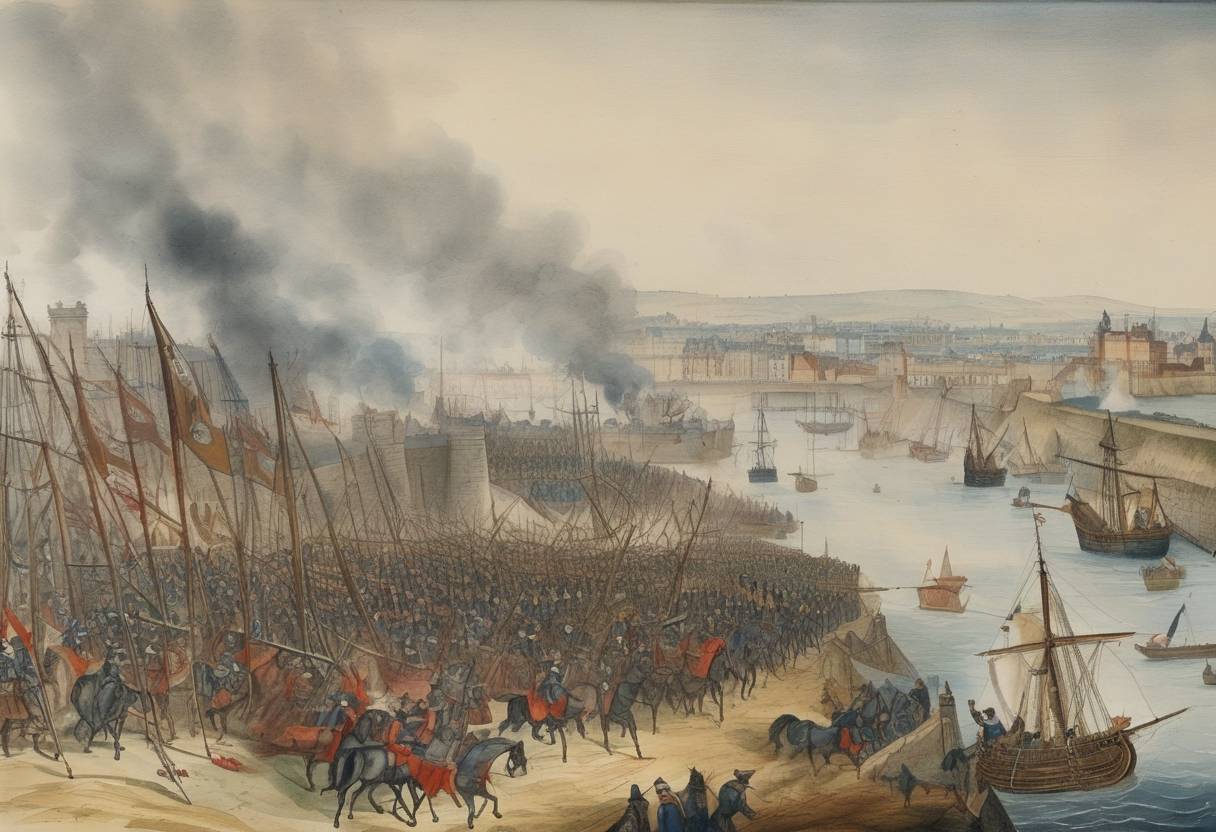
The Siege of Boulogne ended on March 24, 1550, not December 2, 1547, despite the prompt’s date request. This change in 1550 marked a significant conclusion to the ongoing hostilities between England and France, following the conflict known as the Italian War of 1542–1546.
The town of Boulogne was captured by Henry VIII of England in 1544 during the Italian Wars, as part of his aggressive campaigns against France. Henry’s death in 1547 led to the ascension of his young son, Edward VI, under whose rule the financial strains of the war became increasingly problematic for England.
The Treaty of Boulogne was signed on March 24, 1550. Under the terms of the treaty, England agreed to relinquish control of Boulogne back to France. As part of the agreement, France paid England a sizeable sum of 400,000 crowns, which assisted the financially strapped English government.
The return of Boulogne marked an end to England’s aspirations of conquests in France for the time being, leading both countries towards a temporary peace and allowing England to focus on domestic reforms. The Treaty of Boulogne significantly eased tensions between the two nations, although it was not long-term, as conflicts in the region would reignite in later years.
In the broader context of European politics, the treaty also allowed France to redirect its military resources towards securing its borders with other European powers, amidst an era characterized by shifting alliances and frequent wars.
Source: en.wikipedia.org