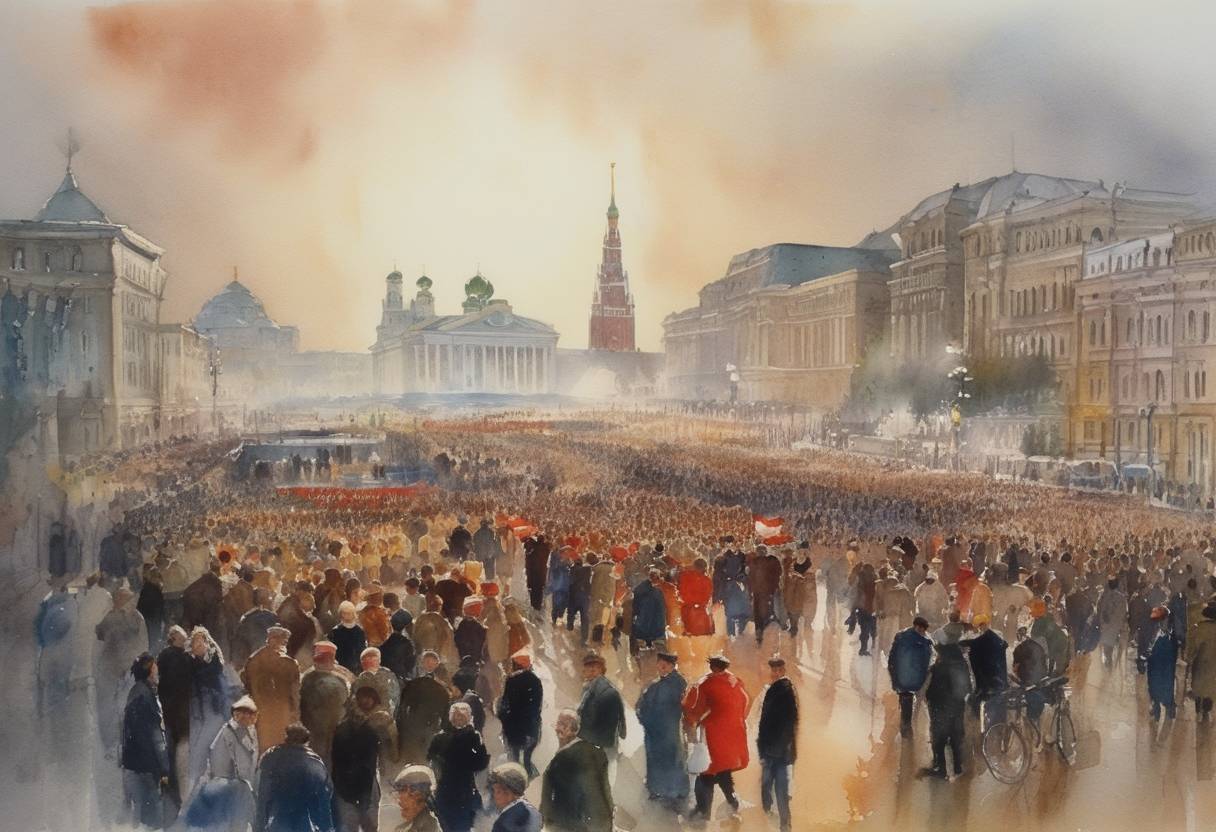
Mikhail Gorbachev’s Resignation: The End of the Soviet Union
On December 25, 1991, Mikhail Gorbachev resigned as President of the Soviet Union, marking one of the most significant geopolitical shifts of the 20th century. This day symbolized the formal conclusion of the Soviet Union’s existence and effectively ended the Cold War—a period characterized by intense rivalry between the United States and the Soviet Union after World War II.
Context Leading to the Resignation
Mikhail Gorbachev came to power in 1985 and introduced significant reforms in the Soviet Union, notably glasnost (openness) and perestroika (restructuring). These policies aimed to revitalize the Soviet economy and modernize the political landscape, which had faced stagnation for decades. However, they also unleashed forces that accelerated the disintegration of Soviet power.
In the late 1980s, nationalist movements gained strength across various Soviet republics. By 1991, several republics had declared independence, challenging the central Soviet authority. The failed coup attempt by hardliners in August 1991 further destabilized Gorbachev’s administration, weakening his political influence and accelerating calls for dissolution.
The Resignation Event
On the evening of December 25, 1991, Gorbachev delivered a television address to the Soviet people. In his poignant resignation speech, he acknowledged the profound changes in the world and indicated that the dissolution of the Soviet Union was an irreversible step towards establishing a new Commonwealth of Independent States (CIS). Gorbachev emphasized the achievements of his tenure such as increased political freedom and arms control agreements, but also recognized the limitations and challenges he faced.
During the address, Gorbachev highlighted the significant reduction in the threat of nuclear war and the increased political and cultural freedoms as successes of his leadership. By the end of his speech, he formally announced his resignation and transferred the powers of the presidency, including the command over nuclear weapons, to Boris Yeltsin, the President of Russia.
Aftermath and Historical Impact
Gorbachev’s resignation officially brought an end to the Soviet Union’s 69-year existence. The following day, on December 26, 1991, the Supreme Soviet’s upper chamber, the Soviet of the Republics, met for the last time and formally voted the Soviet Union out of existence.
This transition marked the end of communist rule in Russia, and the political landscape of Eastern Europe was forever altered. The dissolution of the USSR led to the independence of its 15 constituent republics and a shift in global power dynamics, significantly reducing Cold War tensions and accelerating a transition towards a new world order. The United States emerged as the world’s sole superpower, and the ideological and military confrontation between East and West was decisively concluded.
Gorbachev’s resignation and the subsequent dissolution of the Soviet Union remain pivotal moments in modern history, illustrating how internal reforms, coupled with external pressures, can lead to dramatic changes in world politics.