Publication of *Pride and Prejudice* by Jane Austen
1813 · London, United Kingdom
Pride and Prejudice by Jane Austen is first published in the United Kingdom.
September 25, 1818
The first-ever human blood transfusion using human blood was performed by British obstetrician James Blundell, marking a significant milestone in medical history.
London, United Kingdom | St. George's Hospital
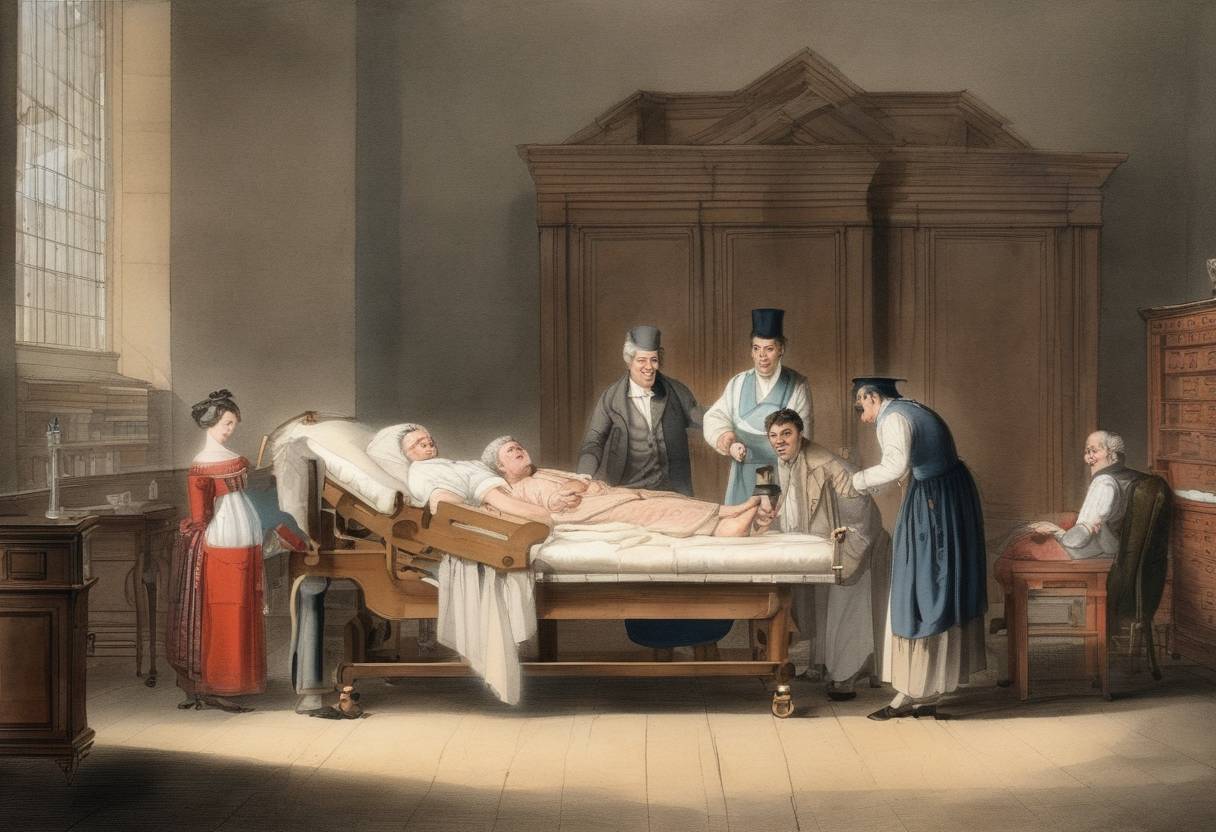
On September 25, 1818, British obstetrician James Blundell performed the first successful transfusion of human blood, marking a pivotal moment in medical history. This landmark event took place in the backdrop of early 19th-century medicine, a time when the understanding of blood circulation and compatibility was rudimentary.
Prior to Blundell’s experiments, blood transfusion was largely experimental and often involved animal blood, with attempts traced back to the 17th century. These early transfusions frequently ended in failure or complications such as fatal reactions due to the introduction of noncompatible blood types. This was due to a lack of understanding of blood groups, which were not discovered until the early 20th century.
James Blundell, motivated by the high mortality rate of postpartum hemorrhage, sought a way to safely restore blood volume in patients suffering from significant blood loss. He hypothesized that human donors could provide a viable source of blood for transfusion to patients in critical need.
The procedure conducted by Blundell involved transferring blood from a willing human donor to a patient suffering from severe hemorrhaging. He used a simple gravity-fed device he developed specifically for this purpose. This device consisted of a funnel and a tube, facilitating the direct transfer of blood. The transfusion was performed directly from arm to arm, embodying a breakthrough in both technique and understanding.
Blundell’s initial success laid the foundation for further advancements in transfusion medicine. Despite mixed results in subsequent attempts due to a lack of knowledge regarding blood group incompatibility and effective anticoagulants, his work initiated a renewed interest in the study of blood and its components. Blundell’s pioneering efforts eventually contributed to the development of safer transfusion techniques and the discovery of blood types in the early 20th century by Karl Landsteiner, which greatly reduced the risks associated with blood transfusions.
In sum, the successful transfusion performed by James Blundell on September 25, 1818, marks a significant milestone, as it paved the way for modern hematology and lifesaving transfusion practices that are now routine in medicine worldwide.
Source: exhibits.library.duke.edu