Conviction of Sirhan Sirhan for the Assassination of Robert F. Kennedy
1969 · Los Angeles, United States
Sirhan Sirhan was convicted of assassinating United States Senator Robert F. Kennedy.
October 3, 1995
O.J. Simpson is acquitted of the murders of Nicole Brown Simpson and Ron Goldman. The trial had taken place over much of the preceding year and received worldwide publicity.
Los Angeles, United States | Los Angeles Superior Court
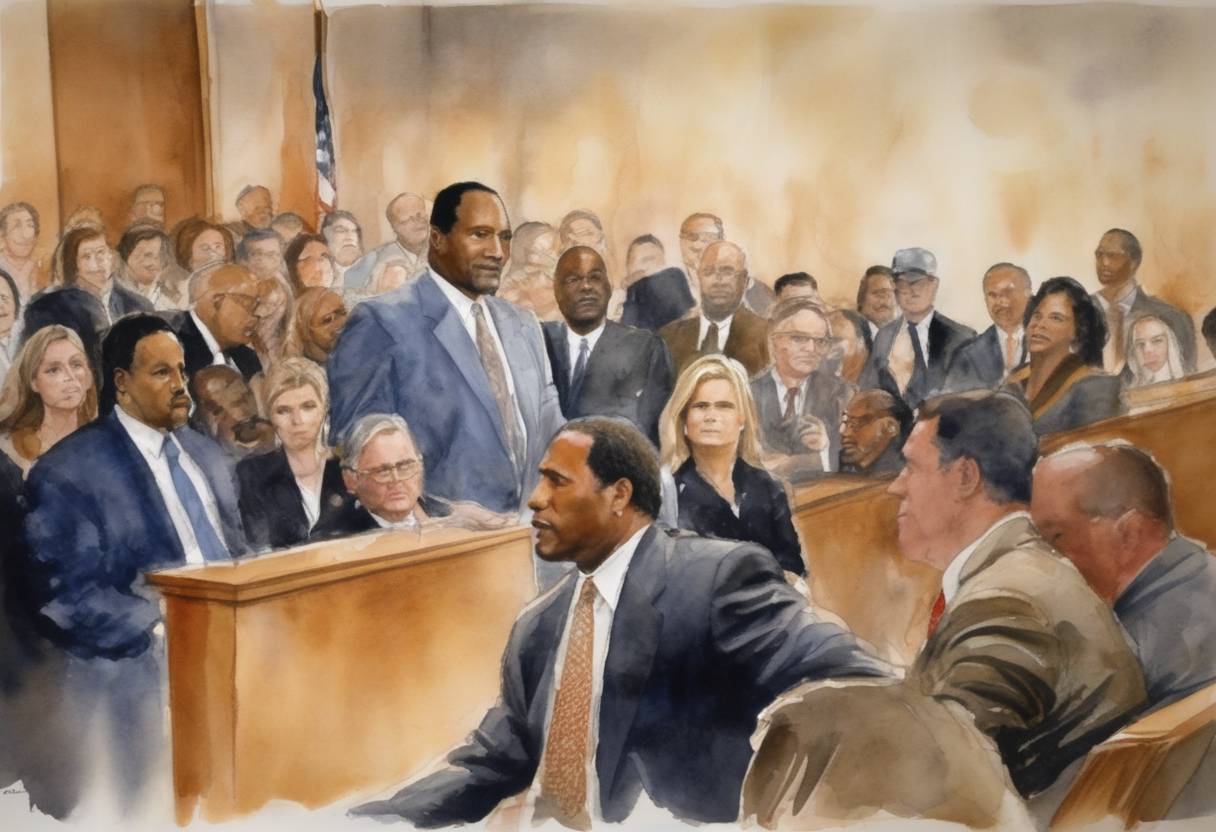
On October 3, 1995, Orenthal James “O.J.” Simpson was acquitted of the murders of his ex-wife, Nicole Brown Simpson, and her friend, Ron Goldman. This verdict concluded a trial that had captivated the nation and the world for over a year. The case, formally titled The People of the State of California v. Orenthal James Simpson, became one of the most highly publicized criminal trials in American history.
The murders occurred on the night of June 12, 1994, in the Brentwood area of Los Angeles. Nicole Brown Simpson and Ron Goldman were found stabbed to death outside her condominium. From the outset, suspicion quickly centered on O.J. Simpson, a former NFL star and actor, due to a history of domestic violence complaints made by Brown against Simpson.
The trial officially commenced on January 24, 1995, after a period of intense media coverage. Initially, what was labeled as the “Trial of the Century” aired live on television, bringing immense public scrutiny and debate. The defense team, known as the “Dream Team,” included high-profile attorneys such as Robert Shapiro, Johnnie Cochran, F. Lee Bailey, and Alan Dershowitz.
On the morning of October 3, 1995, the jury delivered a unanimous verdict of not guilty after four hours of deliberation. This decision was met with a deeply divided public response, closely aligning with racial and cultural lines. Many in the African American community viewed the acquittal as a victory against systemic racism, while others saw it as a failure of the justice system.
The trial’s aftermath reshaped and fueled ongoing conversations about race relations in America, criminal justice reform, and media ethics. In a separate civil trial in 1997, Simpson was found liable for the wrongful deaths and was ordered to pay $33.5 million in damages to the families of the victims.
The O.J. Simpson trial remains a landmark case in American legal history, often studied for its legal strategies, societal impact, and ongoing influence on the public perception of the justice system.
Source: www.britannica.com