The Reopening of the Royal Opera House in Covent Garden, London (1858)
1858 · London, England
The present Royal Opera House in Covent Garden, London, opened after being rebuilt following a fire.
September 17, 1809
The Royal Opera House in Covent Garden, London, is destroyed in a fire.
London, United Kingdom | Royal Opera House
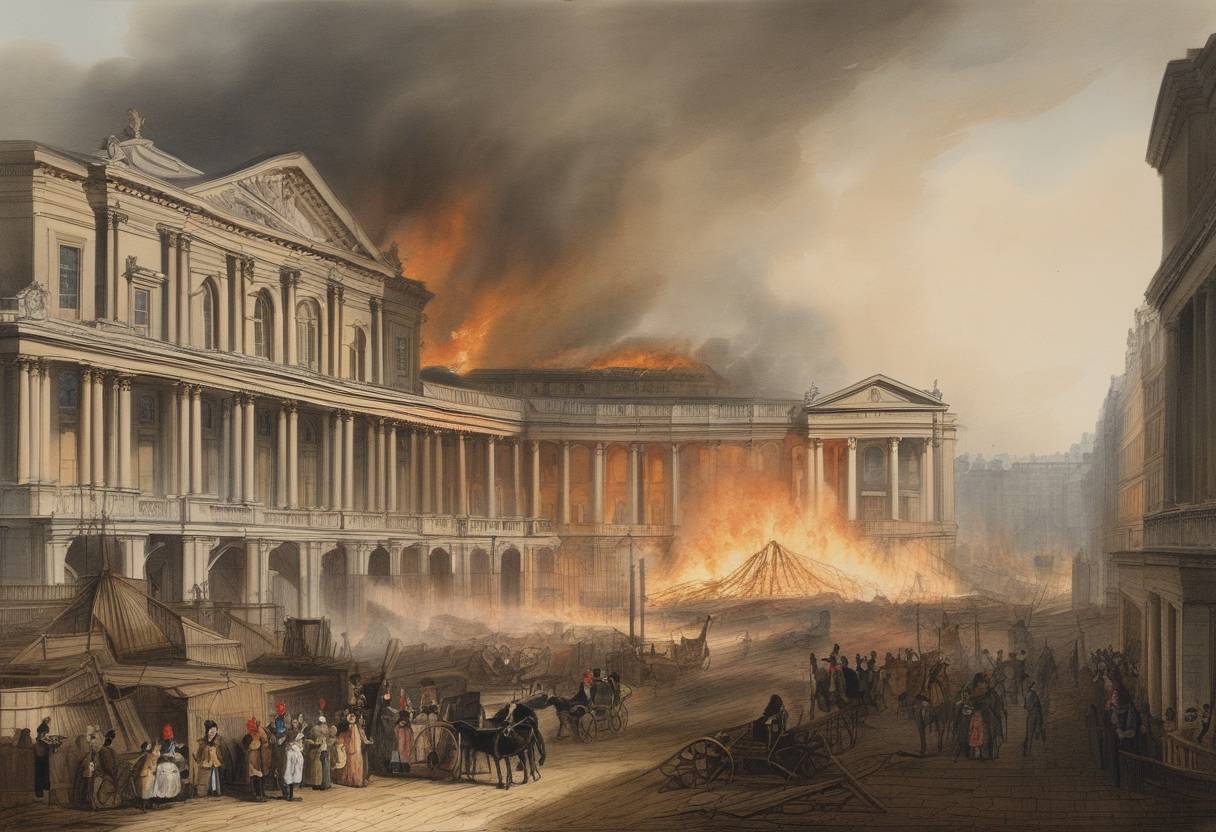
On the evening of September 17, 1809, a catastrophic fire consumed the Royal Opera House located in Covent Garden, London. This devastating event marked a significant moment in the history of one of the United Kingdom’s most prestigious cultural institutions.
The Royal Opera House, originally known as the Theatre Royal, was an integral part of London’s vibrant theatrical scene. Established in 1732, the venue became a cornerstone for operatic and theatrical performances, showcasing an array of productions that attracted audiences from across the city and beyond.
The fire on September 17, 1809, reportedly began during a rehearsal. The blaze quickly spread throughout the building, fueled by the wooden structure and the abundance of scenic materials and costumes stored on the premises. Despite efforts to save the theatre, the flames proved uncontrollable.
Chronology of Events:
The destruction of the Royal Opera House was a significant cultural loss. The venue’s closure left a void in London’s entertainment landscape, affecting performers, crew, and audiences alike. It also prompted discussions on fire safety in theatres, which eventually influenced regulations to safeguard other similar venues.
In response to the fire, reconstruction efforts began promptly. The new building, designed by architect Robert Smirke, opened in 1812. It featured advanced architectural techniques aimed at preventing such disasters in the future, including improved fire-proofing measures.
The legacy of this tragic event is reflected in modern practices focused on protecting cultural landmarks while ensuring the safety of performers and audiences. The Royal Opera House continues to be a vibrant hub for opera and ballet, celebrating its rich history and ongoing contribution to London’s cultural heritage.
Source: en.wikipedia.org